
Hexarelin: The Strongest GHRP for Mass and Strength
Hexarelin is the most potent GHRP ever studied. Discover how it spikes GH, drives lean mass, and supports heart health. Complete research guide for 2026.
- Published
- Reading time
- 19 min read
- Author
- By PeptidesFinder
On this page
Of all the growth hormone-releasing peptides ever developed in a laboratory, one stands above the rest in sheer potency.
That peptide is hexarelin.
Hexarelin produces the largest and fastest growth hormone spike of any GHRP studied to date. It does not just nudge the pituitary gland into releasing more growth hormone. It floods it with a signal so strong that researchers have measured GH peaks several times higher than those produced by its closest competitors.
For scientists studying muscle growth, fat metabolism, strength enhancement, and even cardiovascular repair, hexarelin is one of the most powerful tools in the research toolkit. But that power comes with important nuances. Hexarelin desensitizes faster than other GHRPs, and understanding how to work around that is the key to unlocking its full potential.
This guide covers everything: how hexarelin works, what the research shows, how it compares to other GHRPs, and how to source it responsibly. New to peptide research? Our Complete Beginner's Guide to Peptide Therapy gives you the foundation you need before diving in.
What Is Hexarelin? The Most Potent GHRP in Research
Hexarelin is a synthetic hexapeptide, meaning it is built from just six amino acids. Its full chemical name is His-D-2-MeTrp-Ala-Trp-D-Phe-Lys-NH2. It was developed in the 1990s by scientists at Europeptides in France as part of a broader effort to create compounds that could stimulate growth hormone release more effectively than what nature had provided.
It belongs to the GHRP (growth hormone-releasing peptide) family, alongside compounds like GHRP-2, GHRP-6, and ipamorelin. All GHRPs work by activating the same receptor in the brain, the ghrelin receptor (GHSR-1a). But hexarelin does it with a force unmatched by the others.
Research published in PMC (PubMed Central) confirms that hexarelin produces the highest peak GH responses of all synthetic GHRPs tested in both animal and human studies, establishing its position as the benchmark for GHRP potency.
The Ghrelin Receptor Connection
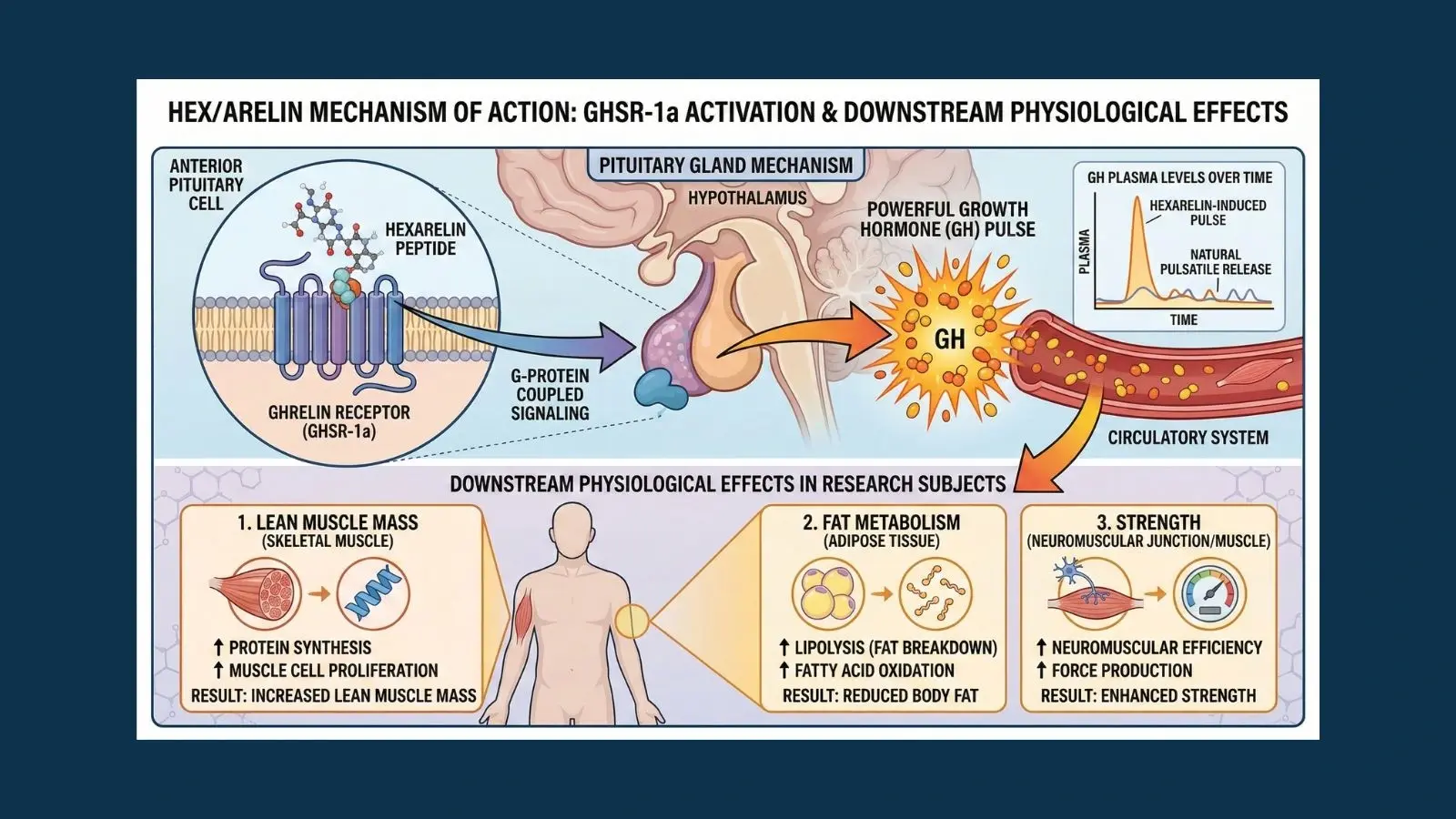
To understand why hexarelin is so powerful, you need to understand the ghrelin receptor. Ghrelin is your body's natural hunger hormone, and it also triggers GH release. The ghrelin receptor (GHSR-1a) sits in the hypothalamus and pituitary gland, and when activated, it sets off a chain reaction that causes the pituitary to release a burst of growth hormone.
Hexarelin was designed to bind to this receptor with exceptional affinity. The specific amino acid sequence and the presence of D-form amino acids (mirror-image versions of natural amino acids) make hexarelin resistant to enzymatic breakdown, giving it a longer window to activate its target before being cleared from the body.
The result is a stronger, more sustained receptor activation that produces a GH pulse significantly larger than what natural ghrelin or other GHRPs generate.
How Hexarelin Works: The Step-by-Step Mechanism
Step 1: Binding to GHSR-1a in the Hypothalamus and Pituitary
After administration, hexarelin enters circulation and crosses into the brain. It binds with high affinity to GHSR-1a receptors in two key areas: the arcuate nucleus of the hypothalamus and the somatotroph cells of the anterior pituitary.
The hypothalamic activation causes the release of GHRH (growth hormone-releasing hormone), which travels down to the pituitary and amplifies the signal. The direct pituitary activation simultaneously stimulates somatotrophs to release stored GH. This dual-action mechanism is one reason hexarelin produces such outsized GH responses.
Step 2: The GH Pulse
Within 15 to 30 minutes of hexarelin administration, a sharp spike in circulating growth hormone occurs. Studies have measured peak GH responses with hexarelin that are 2 to 4 times higher than those achieved with GHRP-2 or ipamorelin at equivalent doses.
This GH pulse is not just larger. It is also more rapid. Hexarelin reaches peak GH levels faster than most other GHRPs, which makes it particularly useful in research protocols designed to study the acute effects of GH on muscle tissue and metabolism.
Step 3: IGF-1 Upregulation
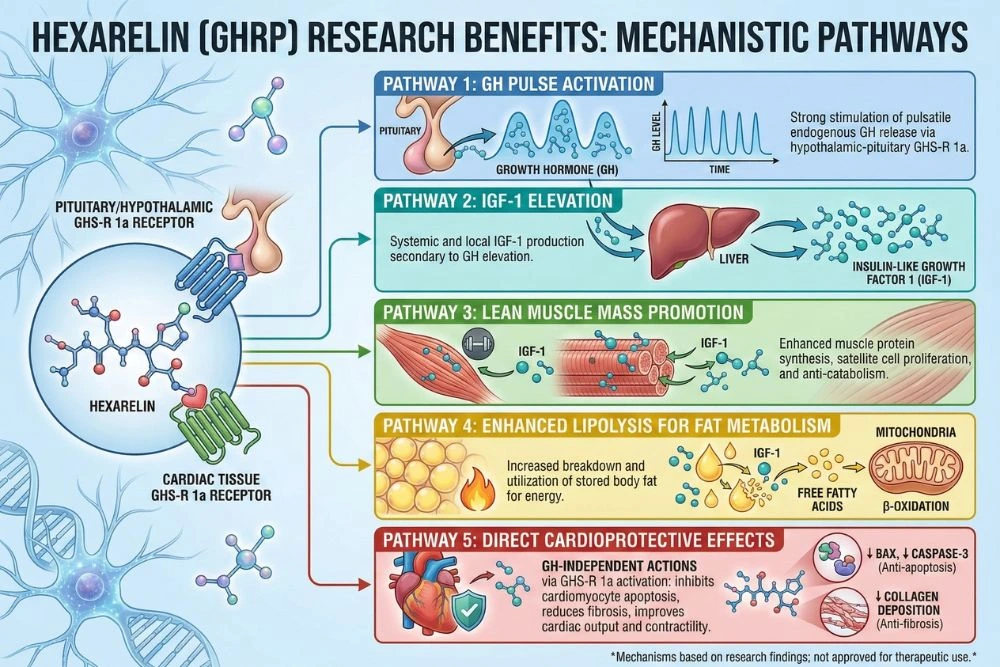
After the GH pulse, the liver responds by producing IGF-1 (insulin-like growth factor 1). IGF-1 is the primary downstream driver of muscle protein synthesis, satellite cell activation, and anabolic growth signaling in muscle tissue.
Research shows that hexarelin-induced GH spikes reliably elevate IGF-1 levels, which is the key mechanism behind its muscle-building effects. For a deep dive into IGF-1's role in muscle hyperplasia, see our guide on IGF-1 LR3 and Muscle Hyperplasia.
Step 4: Direct Receptor Activity Beyond GH
Here is where hexarelin separates itself from a simple GHRP. Research has found GHSR-1a receptors in cardiac tissue, blood vessels, and immune cells. Hexarelin activates these peripheral receptors directly, independent of GH release. This means hexarelin has biological effects in tissues throughout the body that do not rely on a GH spike to occur.
The most studied of these is the cardiac effect, which we will cover in detail shortly.
The Research Benefits of Hexarelin
Hexarelin's research profile is broad. Its effects extend beyond simple GH stimulation into muscle biology, fat metabolism, and cardiovascular science.
Benefit 1: Powerful Lean Mass Promotion
The primary reason hexarelin dominates GHRP research is its ability to stimulate lean muscle growth. The combination of a massive GH pulse followed by elevated IGF-1 creates a highly anabolic environment at the cellular level.
Growth hormone promotes the uptake of amino acids into muscle cells and increases protein synthesis. IGF-1 then activates satellite cells (muscle stem cells) and the PI3K/Akt/mTOR pathway, the master growth pathway inside muscle tissue. Together, these signals drive hypertrophy (increased muscle cell size) and, in optimal conditions, hyperplasia (new muscle cell formation).
A study published in PubMed found that hexarelin administration in older adults significantly increased GH and IGF-1 levels, with corresponding improvements in body composition markers, supporting its potential for research into age-related muscle loss.
Benefit 2: Enhanced Fat Metabolism
Growth hormone is one of the most powerful fat-mobilizing hormones in the human body. When GH levels rise, it triggers lipolysis, the breakdown of stored triglycerides in fat cells. These fatty acids are then released into circulation where they can be used as fuel.
Hexarelin's exceptionally high GH spike makes it particularly effective in research contexts studying fat metabolism. The greater the GH pulse, the stronger the lipolytic signal to adipose tissue. Hexarelin-based research has shown measurable reductions in subcutaneous and visceral fat in animal models with regular administration.
For broader context on how peptides drive fat loss at the cellular level, our guide on Peptides for Fat Loss covers the full metabolic picture.
Benefit 3: Strength and Recovery Support
GH and IGF-1 do not only build muscle. They also accelerate the repair of connective tissue, including tendons, ligaments, and cartilage. This makes hexarelin relevant for researchers studying recovery from injury and the maintenance of musculoskeletal integrity under stress.
Animal studies have shown that GH stimulation via hexarelin accelerates wound healing and collagen synthesis. Research subjects with elevated GH from hexarelin treatment demonstrated faster recovery from induced muscle damage, reduced inflammation markers, and improved tissue remodeling compared to controls.
Benefit 4: Cardiovascular Protection
This is perhaps the most surprising and scientifically compelling area of hexarelin research. Unlike most GHRPs, hexarelin has demonstrated direct cardioprotective effects that appear to be independent of its GH-releasing activity.
GHSR-1a receptors are present in cardiac muscle cells. When hexarelin binds to these receptors, it activates protective signaling cascades inside heart cells that reduce cell death during ischemia (loss of blood supply) and promote cardiac tissue repair.
A landmark study published in PMC Cardiovascular Research demonstrated that hexarelin reduced infarct size (the area of heart damage) in rat models of heart attack by up to 30 percent compared to controls, even when GH secretion was blocked. This confirmed that the cardioprotection was a direct receptor effect, not simply a consequence of elevated GH.
Researchers have since explored hexarelin as a model compound for studying myocardial protection, cardiac fibrosis prevention, and post-infarction recovery, opening a research avenue far beyond its original muscle-building applications.
Benefit 5: Anti-Aging Research Potential
GH levels decline steadily with age, beginning as early as the mid-20s. This decline is associated with reduced muscle mass, increased body fat, slower recovery, diminished sleep quality, and reduced cognitive function. The use of GHRPs to restore more youthful GH pulsatility is one of the core concepts in anti-aging peptide research.
Because hexarelin produces the strongest GH response of any GHRP, it has been studied as a benchmark compound for understanding what GH restoration can achieve in aging models. Research in elderly subjects has shown hexarelin can restore GH levels to ranges more typical of younger adults, with corresponding improvements in body composition and recovery markers.
Hexarelin vs. Other GHRPs: How It Stacks Up
Hexarelin is part of a family of GHRPs, but it is not interchangeable with the others. Understanding how it compares helps researchers select the right compound for their specific study objective.
Hexarelin vs. GHRP-2
GHRP-2 is the second most potent GHRP in research use. It also produces strong GH spikes and has a favorable side effect profile. The key differences are that hexarelin produces a larger GH peak but desensitizes faster, while GHRP-2 provides a slightly lower GH response but maintains more consistent stimulation over longer research periods. GHRP-2 also tends to cause less prolactin and cortisol elevation than hexarelin.
Hexarelin vs. GHRP-6
GHRP-6 is well-studied but noticeably less potent than hexarelin. It produces robust hunger stimulation through ghrelin pathways, which can be useful in appetite research but is a confounding variable in body composition studies. Hexarelin produces less appetite stimulation while delivering a stronger GH response. For pure GH stimulation research, hexarelin is the superior choice.
Hexarelin vs. Ipamorelin
Ipamorelin is often called the cleanest GHRP because it stimulates GH with minimal effect on cortisol, prolactin, or hunger. It is the most selective GHRP available. Hexarelin, by contrast, is the most potent. Ipamorelin is preferred for long-term research where hormonal cleanliness matters. Hexarelin is preferred when maximum GH output is the primary objective of the study.
For a detailed comparison of GH-stimulating peptides and how to select between them, CJC-1295 vs. Ipamorelin: Which Growth Hormone Secretagogue Is Best? will cover the full spectrum of options.
The Desensitization Problem: Hexarelin's Biggest Limitation
Every researcher studying hexarelin needs to understand one critical limitation: tachyphylaxis. This is the medical term for a compound becoming less effective with repeated use as the receptors it targets become desensitized.
Hexarelin desensitizes the GHSR-1a receptor faster than any other GHRP. With daily administration, GH response begins to decline within 2 to 4 weeks. With twice-daily administration, desensitization can occur even faster.
Research protocols typically address this through cycling strategies: using hexarelin for a set period, then pausing to allow receptor sensitivity to recover, before beginning another cycle. Some protocols combine hexarelin with GHRH analogs like CJC-1295 or Sermorelin, which work through a completely different receptor and can maintain GH output even as hexarelin's direct effect fades.
Research Protocols and Dosing Considerations
Important note: The information below is derived from published research studies conducted in controlled laboratory and clinical settings. Hexarelin is a research peptide not approved for human use outside clinical trials. This section is for educational and scientific reference only.
Standard Research Dosing Ranges
In published studies, hexarelin has been administered across a range of doses depending on the research objective:
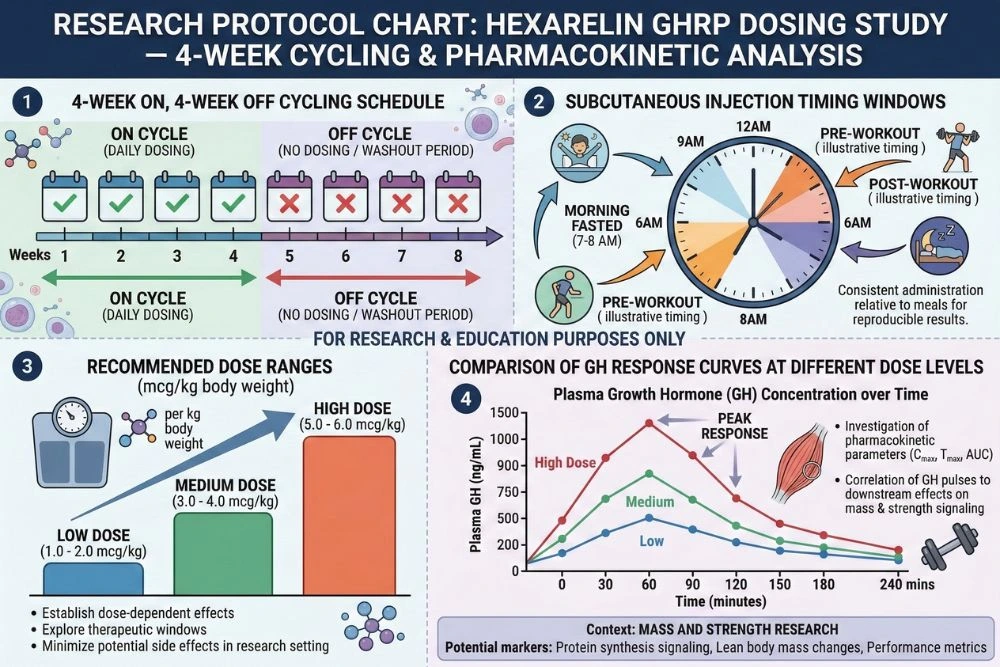
- Low-range research doses: 1 to 2 micrograms per kilogram of body weight, used when studying baseline GH response curves or in subjects with heightened sensitivity
- Mid-range research doses: 2 to 4 micrograms per kilogram, the most commonly studied range for GH pulse and body composition research
- High-range research doses: Up to 6 micrograms per kilogram, used in acute GH response studies or cardiovascular protection research where maximum receptor engagement is desired
In human clinical trials, typical administered doses have ranged from 100 to 200 micrograms per injection, administered subcutaneously or intravenously depending on protocol requirements.
Timing Protocols
Timing matters significantly with hexarelin because growth hormone release is inhibited by elevated blood glucose and elevated somatostatin. Research protocols generally specify administration in a fasted state to maximize GH response. The most studied timing windows are:
- Morning fasted: Maximizes GH pulse during the natural low-somatostatin window upon waking
- Pre-sleep: Aligns with the body's largest natural GH pulse, which occurs during slow-wave sleep
- Post-exercise fasted: Capitalizes on exercise-induced somatostatin suppression for amplified GH response
Cycling to Manage Desensitization
The most commonly used research cycling strategy for hexarelin is a 4-weeks-on, 4-weeks-off approach. This allows receptor sensitivity to partially recover during the off period before the next cycle begins.
Some protocols extend the off period to 6 to 8 weeks for full receptor recovery, particularly in longer-running studies where maintaining consistent GH response is important for data reliability.
Reconstitution and Storage
Hexarelin is supplied as lyophilized (freeze-dried) powder. It is reconstituted with bacteriostatic water before use. Once reconstituted, solutions should be refrigerated at 2 to 8 degrees Celsius and used within a reasonable timeframe to maintain peptide integrity.
For step-by-step reconstitution instructions and accurate dosing calculations, our Peptide Calculator Guide walks through the exact process.
Hexarelin and the Growth Hormone Axis: Stacking Strategies
Hexarelin works even better when paired with compounds that amplify its effects through complementary mechanisms. The most researched combination is hexarelin plus a GHRH analog.
Hexarelin plus GHRH Analogs (CJC-1295, Sermorelin)
GHRPs like hexarelin work on one side of the GH release equation by activating ghrelin receptors. GHRH analogs work on the other side by activating GHRH receptors. When both receptors are activated simultaneously, the resulting GH pulse is synergistically amplified, often 5 to 10 times greater than either compound alone.
This combination is one of the most studied in GH research and consistently produces the largest GH responses in published literature. It also partially offsets hexarelin's desensitization issue because the GHRH component continues to stimulate GH through a different pathway even as the ghrelin receptor sensitivity wanes.
Hexarelin plus IGF-1 LR3
For muscle hyperplasia research, combining hexarelin's GH-stimulating effects with IGF-1 LR3's direct muscle growth signaling creates a dual pathway approach. Hexarelin drives GH and the resulting natural IGF-1 rise, while exogenous IGF-1 LR3 provides a sustained, high-affinity signal to muscle tissue that bypasses the binding protein system.
This combination is explored in advanced anabolic research where maximum muscle tissue adaptation is the study objective. The two compounds operate on different receptors, which means their effects are largely additive rather than redundant.
Hexarelin in Cardiovascular Research Stacks
For cardioprotection research, hexarelin is sometimes studied alongside BPC-157, which has demonstrated direct healing effects on blood vessels and cardiac tissue through different receptor pathways. The combination provides complementary cardiac repair signals, with hexarelin activating GHSR-1a-mediated protection and BPC-157 supporting vascular healing and anti-inflammatory signaling.
Learn more about BPC-157's repair mechanisms in our comprehensive guide: BPC-157 Peptide: A Comprehensive Research Guide to Tissue Repair and Recovery.
Safety Profile and Research Considerations
Hexarelin has a well-characterized safety profile based on two decades of research. Understanding its side effect profile is essential for designing responsible research protocols.
Cortisol and Prolactin Elevation
Unlike the highly selective ipamorelin, hexarelin does stimulate modest increases in cortisol and prolactin alongside GH. These effects are generally transient and dose-dependent. In short-term research studies, the elevations have not been associated with adverse outcomes, but they are a relevant variable for researchers monitoring complete hormonal panels.
Water Retention
Elevated GH levels cause increased water and sodium retention due to GH's action on the kidneys. Research subjects on hexarelin protocols may exhibit mild edema, particularly in early cycles before the body adjusts. This is a common observation with all GHRPs and GHRHs and typically resolves with dose reduction or protocol pausing.
Hunger Stimulation
Hexarelin activates the ghrelin receptor, which is also involved in appetite regulation. While hexarelin produces less hunger stimulation than GHRP-6, some degree of appetite increase is a consistent observation at higher doses. Researchers studying body composition should account for potential caloric intake changes when designing study controls.
Tachyphylaxis Monitoring
As noted, receptor desensitization is the primary limitation of hexarelin research. Monitoring GH response through periodic blood sampling during research protocols allows researchers to identify desensitization onset and adjust cycling schedules accordingly, maintaining data quality over the full study duration.
Contraindications in Research Design
Research protocols involving hexarelin should account for pre-existing elevated IGF-1 or GH levels, active or prior malignancy (as GH can stimulate cell proliferation), and diabetic research models where GH-induced insulin resistance may confound metabolic data.
Hexarelin's Unique Cardiovascular Research Profile
The cardiac science surrounding hexarelin deserves its own dedicated exploration because it represents one of the most unexpected research discoveries in GHRP science.
How Hexarelin Protects the Heart
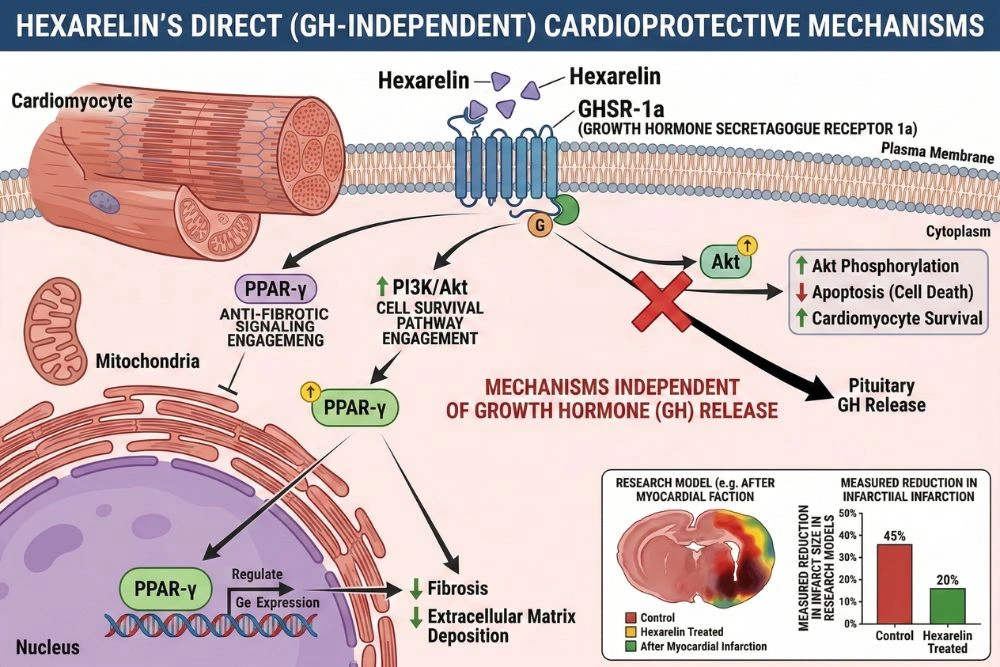
The heart contains GHSR-1a receptors on cardiac muscle cells. When hexarelin binds to these receptors, it activates the PI3K/Akt survival pathway inside cardiomyocytes, the same pathway that governs cell survival in muscle tissue. This activation reduces apoptosis (programmed cell death) in cardiac cells during ischemic events.
In simpler terms: when the heart is starved of oxygen during a heart attack, hexarelin signals cardiac cells to activate their survival mode rather than dying. The result is a smaller area of permanent damage after the event.
Research published in PMC Endocrinology demonstrated that hexarelin improved left ventricular function in rodent models of heart failure, with measurable improvements in cardiac output, reduced fibrosis, and lower inflammatory markers compared to control groups.
Anti-Fibrotic Effects
Cardiac fibrosis, the scarring of heart tissue after injury, is a major driver of long-term heart failure. Hexarelin has shown the ability to reduce fibrotic signaling in cardiac tissue models, potentially limiting the extent of permanent scarring after ischemic events.
This anti-fibrotic effect appears to be driven by hexarelin's modulation of PPAR-gamma (peroxisome proliferator-activated receptor gamma), a key regulator of fibroblast activity in cardiac tissue. This is a completely separate mechanism from its GH-stimulating effects, further confirming hexarelin's status as a multi-target research compound.
Sourcing Quality Hexarelin for Research
Hexarelin is a synthetic hexapeptide that requires precise chemical synthesis to produce correctly. Impurities, sequence errors, or incorrect amino acid configurations can dramatically alter biological activity and compromise research results.
What a Certificate of Analysis Should Show
Any hexarelin purchased for research purposes should come with a third-party Certificate of Analysis (CoA) that includes:
- HPLC purity analysis showing above 98 percent purity
- Mass spectrometry (MS) confirming the correct molecular weight (887.06 Da for hexarelin)
- Amino acid sequence verification confirming His-D-2-MeTrp-Ala-Trp-D-Phe-Lys-NH2
- Batch number and third-party laboratory certification
Not sure what to look for on a peptide CoA? Our guide on How to Read a Peptide Certificate of Analysis explains every section of a CoA document step by step.
Why Quality Matters for GHRP Research
Hexarelin's potency means that even small impurities or incorrect stereochemistry (L-form vs D-form amino acids) can substantially change its receptor binding behavior. A batch with even slightly wrong amino acid configuration may produce a blunted GH response that undermines the entire research protocol. Third-party testing is not optional for serious research.
Recommended Research Supplier
Peptides Finder connects researchers with verified suppliers who provide full third-party testing documentation for hexarelin and all major research peptides.
Browse Hexarelin Research Compounds at Peptides Finder
We may earn a commission from purchases made through links on this page.
Frequently Asked Questions
What makes hexarelin the strongest GHRP?
Hexarelin produces the highest peak growth hormone response of any synthetic GHRP ever studied. This is due to its unique amino acid sequence, including D-form amino acids that resist enzymatic breakdown and its exceptionally high binding affinity for the GHSR-1a ghrelin receptor. When hexarelin binds to GHSR-1a, it activates both the hypothalamus and the pituitary simultaneously, producing a dual-action GH release that is significantly larger than what GHRP-2, GHRP-6, or ipamorelin can achieve at equivalent doses.
How does hexarelin build muscle?
Hexarelin builds muscle through two primary pathways. First, its powerful GH pulse stimulates the liver to produce IGF-1, which activates the PI3K/Akt/mTOR pathway inside muscle cells, driving protein synthesis and satellite cell proliferation. Second, elevated GH directly promotes amino acid uptake in muscle tissue, creating a more anabolic cellular environment. The combination of high GH and elevated IGF-1 means muscle cells receive multiple simultaneous growth signals, making hexarelin one of the most effective research tools for studying muscle hypertrophy.
What is tachyphylaxis and how does it affect hexarelin research?
Tachyphylaxis is the rapid desensitization of a receptor after repeated exposure to a compound. With hexarelin, the GHSR-1a ghrelin receptor becomes progressively less responsive with repeated daily administration, causing GH response to decline within 2 to 4 weeks. Researchers manage this by cycling hexarelin in on-off patterns, typically 4 weeks on followed by 4 weeks off, to allow receptor sensitivity to recover. Some protocols combine hexarelin with GHRH analogs that work through a different receptor to maintain overall GH output during the receptor recovery period.
Does hexarelin have cardiovascular benefits?
Yes, and this is one of hexarelin's most remarkable research characteristics. Hexarelin activates GHSR-1a receptors on cardiac muscle cells independently of its GH-releasing activity. This direct cardiac binding activates the PI3K/Akt cell survival pathway in cardiomyocytes, reducing cell death during ischemic events. Research in animal models has shown hexarelin can reduce heart attack damage by up to 30 percent and improve cardiac function after injury. It also modulates PPAR-gamma signaling to reduce cardiac fibrosis. These effects make hexarelin uniquely valuable for cardiovascular protection research.
How does hexarelin compare to ipamorelin?
Hexarelin and ipamorelin are at opposite ends of the GHRP spectrum. Hexarelin is the most potent GHRP, producing the largest GH spikes but desensitizing quickly and causing modest cortisol and prolactin elevations. Ipamorelin is the most selective GHRP, producing clean GH release with virtually no effect on cortisol, prolactin, or appetite, and maintaining consistent receptor sensitivity over much longer periods. Researchers choose hexarelin when maximum GH output is the study objective and choose ipamorelin when hormonal selectivity and long-term consistency are more important than peak GH amplitude.
What dosing protocol is used in hexarelin research?
Published research has used hexarelin doses ranging from 1 to 6 micrograms per kilogram of body weight, with the 2 to 4 microgram per kilogram range being most common in human studies. Administration is typically subcutaneous, timed in fasted conditions to maximize GH response by avoiding somatostatin suppression from elevated blood glucose. Cycling protocols of 4 weeks on and 4 weeks off are standard to manage receptor desensitization. Combined protocols with GHRH analogs can extend the effective research window by maintaining GH stimulation through a separate receptor pathway.
What should I look for when sourcing hexarelin for research?
Quality hexarelin for research should come with a third-party Certificate of Analysis from an accredited laboratory confirming HPLC purity above 98 percent, mass spectrometry verification of the correct molecular weight (887.06 Da), and amino acid sequence confirmation. The presence of D-form amino acids in hexarelin's structure means that stereochemical accuracy is especially critical. Any supplier unable to provide independent third-party testing should be avoided, as even minor synthesis errors can significantly alter biological activity and compromise research data quality.
Conclusion: Hexarelin as the Gold Standard for GHRP Research
Hexarelin earned its reputation as the strongest GHRP through two decades of rigorous scientific study. No other growth hormone-releasing peptide produces a GH response of comparable magnitude. Its dual-site activation of hypothalamic and pituitary receptors, combined with its resistance to enzymatic breakdown, creates a GH pulse that researchers have consistently found to be in a class of its own.
Beyond its raw GH-stimulating power, hexarelin's direct cardiac receptor activity adds a dimension of biological significance that no other GHRP matches. The same compound that drives lean mass and fat loss in muscle research is simultaneously protecting heart tissue through completely independent mechanisms.
The key to successful hexarelin research lies in understanding its limitation: rapid receptor desensitization. Researchers who design their protocols around intelligent cycling strategies and synergistic GHRH combinations unlock the full potential of this remarkable peptide without sacrificing data quality over time.
For researchers in muscle biology, anti-aging science, metabolic optimization, and cardiovascular protection, hexarelin remains the benchmark GHRP that all others are measured against.
Explore the complete library of GHRP and GH-axis research guides at Peptides Finder, and stay current with the latest developments in growth hormone research.
Official Research Disclaimer
The information provided in this guide is for informational and educational purposes only. Hexarelin is sold as a research chemical. Research peptides are intended strictly for laboratory research and are not for human consumption or for the diagnosis, treatment, or prevention of any disease. All research should be conducted by qualified professionals in controlled environments with proper ethical oversight. This article does not constitute medical advice. Always consult a licensed healthcare provider before using any research compound. Never disregard professional medical advice or delay seeking it because of information you read online. The author and publisher disclaim any liability for adverse effects resulting from the use or application of the information contained herein.