
Peptides for Fat Loss: The Science of Metabolic Optimization and Lipolysis
Explore the latest research on peptides for fat loss. Learn about AOD-9604, Tesamorelin, 5-amino-1MQ & their mechanisms for lipolysis & visceral fat reduction.
- Published
- Updated
- Reading time
- 7 min read
- Author
- By PeptidesFinder

On this page
In the current landscape of health and longevity, the focus has shifted from simple calorie restriction to the complex science of metabolic optimization. Researchers are increasingly turning to peptides for fat loss to understand how targeted signaling can influence the way the body stores and burns energy. Unlike traditional stimulants that often come with systemic side effects, peptides act as precise biological messengers that communicate with specific receptors to initiate fat burning processes like lipolysis.
The study of these compounds is rooted in our growing understanding of human growth hormone and the various enzymes that regulate cellular metabolism. By utilizing bio-identical or synthetic sequences, researchers can explore ways to reduce stubborn visceral fat and improve overall body composition without the muscle wasting often associated with extreme weight loss.
How Peptides Influence Fat Loss: The Mechanisms
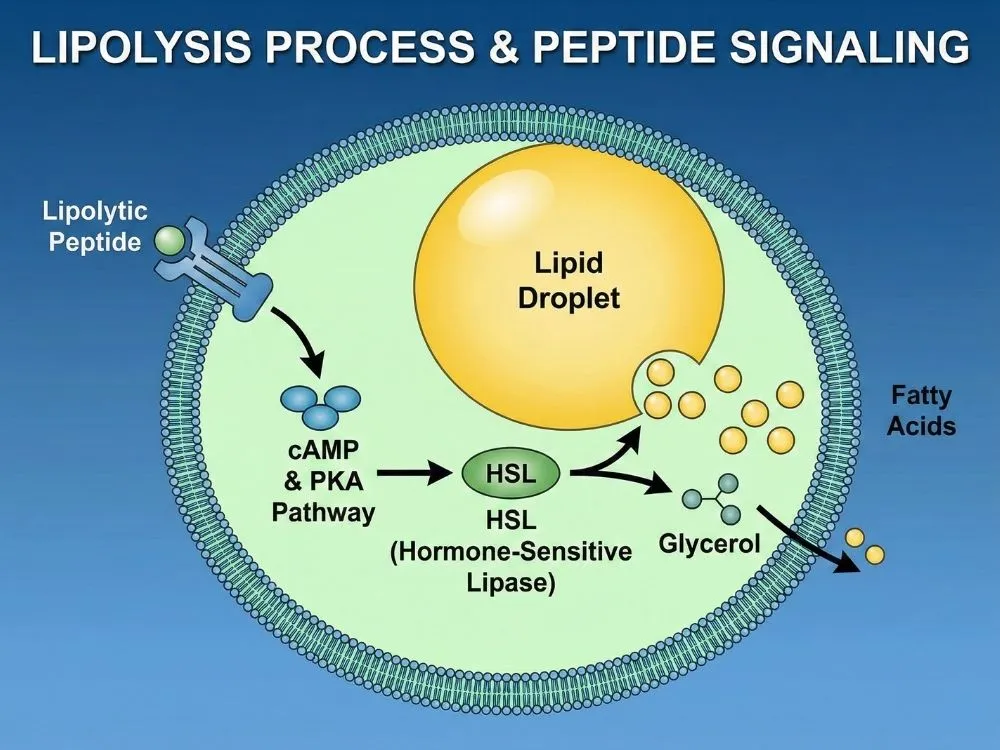
To evaluate the effectiveness of peptides for fat loss, it is necessary to understand the primary biological pathways they target. Most research compounds in this category work through one of three main mechanisms:
- Stimulating Lipolysis: This is the process where stored fats are broken down into glycerol and free fatty acids to be used as energy.
- Growth Hormone Secretion: Certain peptides signal the pituitary gland to release natural growth hormone, which has a systemic effect on fat oxidation and muscle preservation.
- Enzymatic Inhibition: Newer research explores compounds that block enzymes responsible for fat storage at the cellular level.
Understanding these pathways allows for a more "surgical" approach to metabolic research, focusing on fat reduction while maintaining the integrity of lean muscle tissue.
AOD-9604: The Lipolytic Fragment
One of the most extensively studied compounds in the field is AOD-9604. This peptide is a modified C-terminal fragment of human growth hormone (hGH). Specifically, it encompasses amino acids 177 to 191 of the hGH sequence.
What makes AOD-9604 a priority for fat loss research is that it retains the fat-burning properties of hGH without the unwanted effects on blood sugar or insulin sensitivity. Research published in The Journal of Endocrinology and Metabolism indicates that AOD-9604 stimulates lipolytic activity directly in fat cells. A primary study involving obese animal models showed a significant reduction in body fat gain and an increase in fat oxidation without affecting food intake. You can review the verified clinical findings on this mechanism here: Effects of hGH and its lipolytic fragment AOD-9604.
Tesamorelin: Reducing Visceral Adiposity
While some peptides target general body fat, Tesamorelin is a growth hormone-releasing hormone (GHRH) analogue specifically researched for its impact on visceral adipose tissue (VAT). Visceral fat is the deep abdominal fat that surrounds vital organs and is closely linked to metabolic disease.
Tesamorelin works by mimicking the body's natural GHRH to stimulate the endogenous release of growth hormone. Clinical trials have demonstrated that Tesamorelin can reduce visceral fat by approximately 15 percent to 20 percent over a six month period. Researchers find this compound particularly valuable because it helps improve the metabolic profile of the subject while specifically targeting the most "dangerous" type of fat. A detailed breakdown of these metabolic effects is available through the National Institutes of Health (NIH): Tesamorelin and reduction in visceral adiposity.
The Secretagogue Stack: CJC-1295 and Ipamorelin
In many laboratory settings, researchers explore the synergy between different signaling pathways. The combination of CJC-1295 and Ipamorelin is a common "stack" used to study sustained growth hormone elevation.
- CJC-1295: This is a GHRH analogue that provides a long-acting background signal for the release of growth hormone.
- Ipamorelin: This is a selective ghrelin receptor agonist that triggers short, potent pulses of growth hormone.
By pairing these two, researchers aim to mimic the body's natural "peaks and valleys" of hormone secretion. This approach is studied for its ability to enhance fat metabolism, improve sleep quality, and support the growth of lean muscle mass. However, because these sequences are highly potent, precision in dosing is critical for generating reliable data. A review of these interconnected peptide systems can be found here: Research and prospect of peptides in obesity treatment.
5-Amino-1MQ: Targeting the NNMT Enzyme
The cutting edge of fat loss research has moved toward a compound known as 5-amino-1MQ. Unlike the peptides mentioned above that work through the growth hormone axis, 5-amino-1MQ targets an enzyme called nicotinamide N-methyltransferase (NNMT).
NNMT is highly active in fat tissue and has been shown to slow down fat metabolism. By inhibiting this enzyme, 5-amino-1MQ effectively "revs up" the metabolism of fat cells. Preclinical studies have shown that inhibiting NNMT can reverse diet-induced obesity and reduce the size of adipocytes (fat cells). This compound represents a novel approach to weight management that focuses on the cellular energy factory. You can explore the foundational research on NNMT inhibitors here: Small molecule inhibitors of NNMT reverse obesity.
Precision and Reconstitution in Research
Regardless of the specific sequence being studied, the success of any experiment involving peptides for fat loss depends on mathematical accuracy. Peptides are typically delivered in a lyophilized (freeze-dried) state to maintain their stability.
To transform this powder into a usable solution, a researcher must calculate the exact volume of bacteriostatic water needed to reach the desired concentration. Even a minor calculation error can lead to inconsistent data or the waste of valuable research material. To ensure 100 percent accuracy in these protocols, many laboratories now utilize a Peptide Calculator to remove the element of human error from their mathematical equations.
Sourcing, Quality, and Third-Party Testing
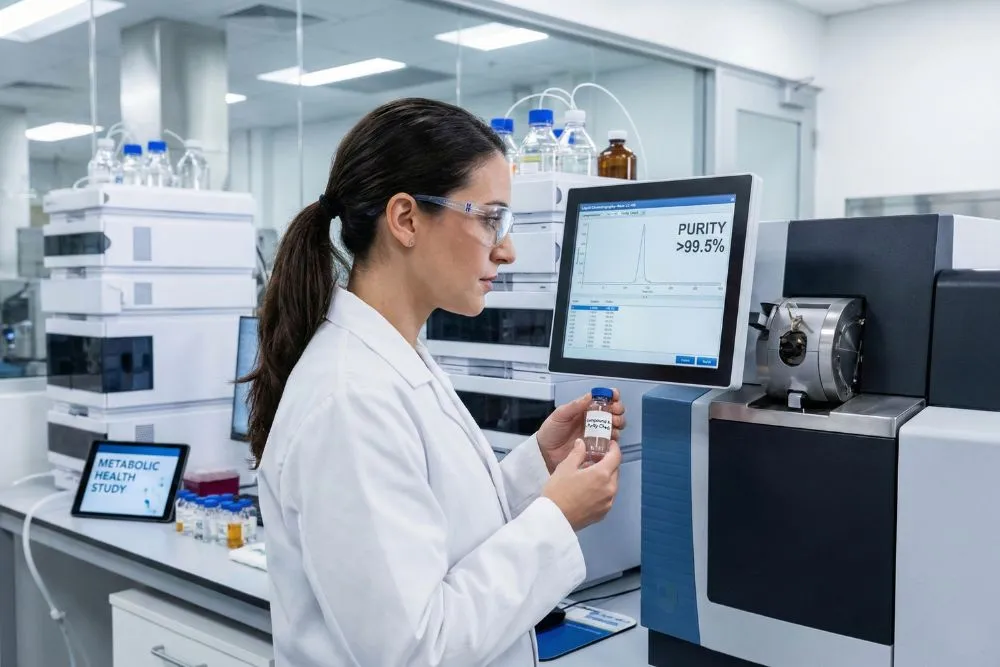
In a market where transparency is often lacking, researchers must prioritize the quality and purity of their compounds. The FDA has increased its scrutiny of the industry in 2025, specifically targeting misbranded materials.
A reputable source should always provide:
- Third-Party Testing: Verification of the compound's purity by an independent lab.
- Certificates of Analysis (COA): Documents that confirm the sequence and the absence of contaminants like heavy metals.
- Storage Guidelines: Detailed information on how to maintain the stability of the peptide before and after reconstitution.
For researchers seeking a comprehensive list of vetted providers and verified materials, the Peptides Finder Directory serves as a critical industry resource.
Conclusion: The Future of Metabolic Science
The study of peptides for fat loss is much more than a trend; it is a fundamental shift in how we understand human biology. By moving away from general interventions and focusing on specific cellular signals, researchers are unlocking new ways to manage body composition and metabolic health. As we continue to refine our understanding of these molecules, the potential for targeted, effective, and safe metabolic optimization continues to grow.
Frequently Asked Questions
Official Medical Disclaimer
The information provided in this guide is for informational and educational purposes only. Peptides and GLP-1 research compounds are intended strictly for laboratory research and are not for human consumption or for the diagnosis, treatment, or prevention of any disease. All research should be conducted by qualified professionals in a controlled environment. The statements regarding these products have not been evaluated by the Food and Drug Administration (FDA). Always consult your local laws and institutional guidelines regarding the use of peptides in research. Always seek the advice of your physician or other qualified health provider with any questions you may have regarding a medical condition.