
How to Use a Peptide Calculator for Accurate Research
Stop guessing your research math. Learn how to use a peptide calculator, determine the correct volume of water, and master sterile reconstitution safely.
- Published
- Updated
- Reading time
- 5 min read
- Author
- By PeptidesFinder
On this page
In the precise world of laboratory research, guessing is not an option.
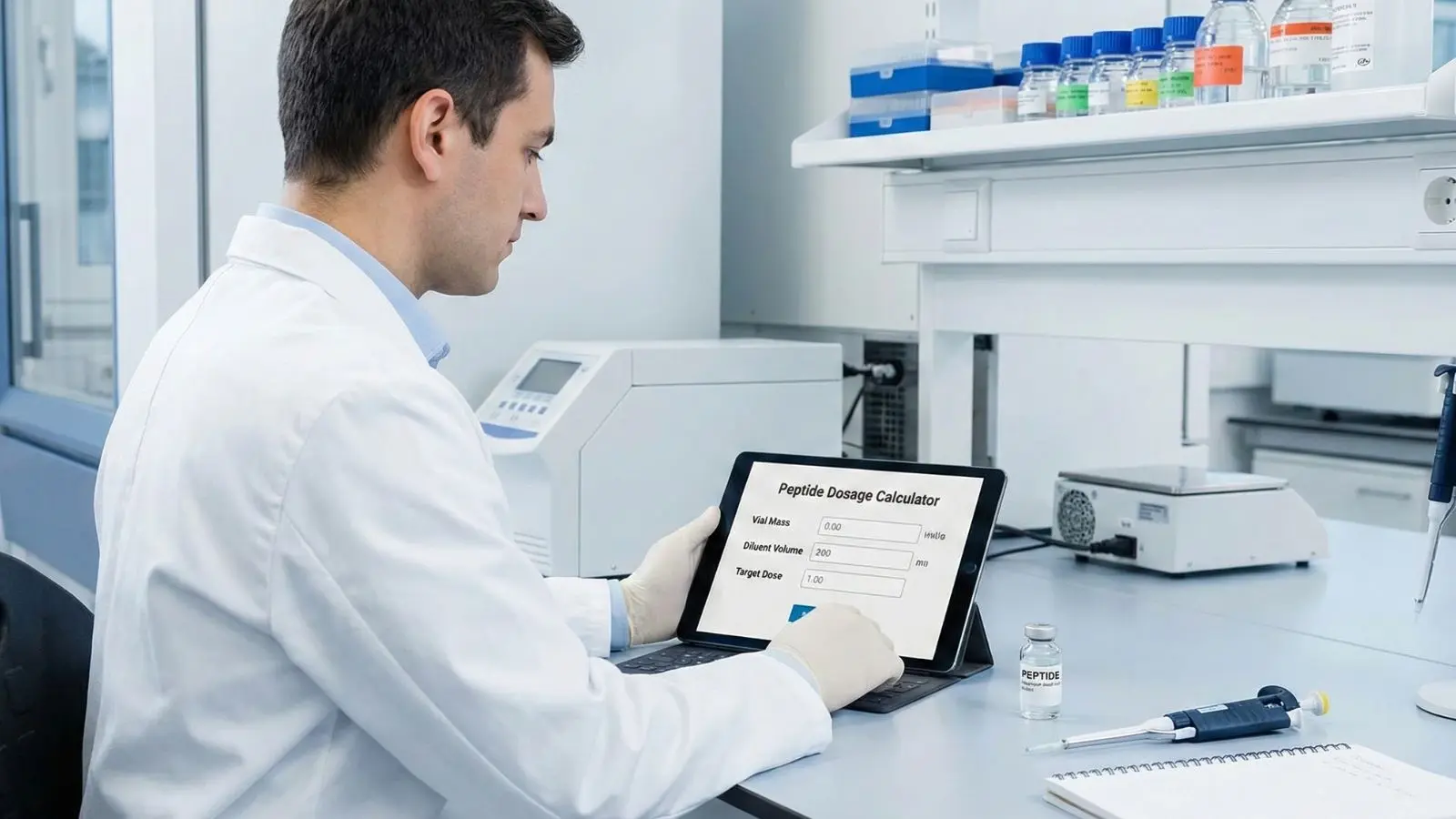
Whether you are studying tissue repair or metabolic function, the integrity of your data depends entirely on your math. If you are not using a Peptide Calculator to determine your measurements, you are introducing variables that can ruin your entire experiment.
Most peptides arrive as freeze dried powder (lyophilized) to keep them stable. To use them, you must turn that powder back into a liquid through a process called peptide reconstitution. This is where most errors happen.
If you try to "eyeball" the mixture, you risk creating a solution that is too strong or too weak. This can lead to wasted product, skewed data, or unexpected side effects in your test subjects. This guide will teach you the exact math, the sterile "Wall Method," and how to store your peptide solutions correctly.
The Math: Micrograms vs. Milligrams
Before you touch a syringe, you need to understand the units of measurement.
Peptides are measured in milligrams (mg) when they are in powder form, but research doses are usually measured in micrograms (mcg).
1 mg = 1,000 mcg
To get your peptide dosage right, you must balance three numbers:
- Total Amount of Peptide: This is the amount of powder in the bottle (e.g., 5mg).
- Volume of Water: The amount of water you add to the vial.
- Desired Dose: The specific amount you want to research (e.g., 250mcg).
Using a digital calculator removes the human error from this equation. For a deeper understanding of why purity and precise weight matter, read our guide on Scientific Peptides: How to Read a Certificate of Analysis (CoA).
Why "Bacteriostatic" Matters
You cannot use tap water or regular bottled water for this. You must use bacteriostatic water.
According to the National Library of Medicine, bacteriostatic water contains 0.9% benzyl alcohol. This additive stops bacteria from growing inside your vial. If you use plain water, bacteria can destroy the amino acids in your peptide within hours, rendering your research useless.
Step-by-Step Guide: The "Wall Method"
Reconstitution is a delicate art. Peptides are fragile chains. If you are too rough during mixing, you can break the chemical bonds.
Follow this protocol to protect the molecular structure.
Step 1: Prepare Your Station
Gather your supplies:
- Your peptide vial.
- Bacteriostatic water.
- An insulin syringe (1ml).
- Alcohol swabs.
Step 2: Sterilize
Use an alcohol swab to clean the rubber stoppers of both vials. Let them air dry for 10 seconds.
Step 3: Draw the Water
Decide on your volume of water. A standard choice is 2ml.
Pull the plunger back to the 2ml mark to fill the syringe with air.
Inject the air into the water vial (this equalizes pressure).
Flip the vial and pull the syringe plunger back to draw out exactly 2ml of water.
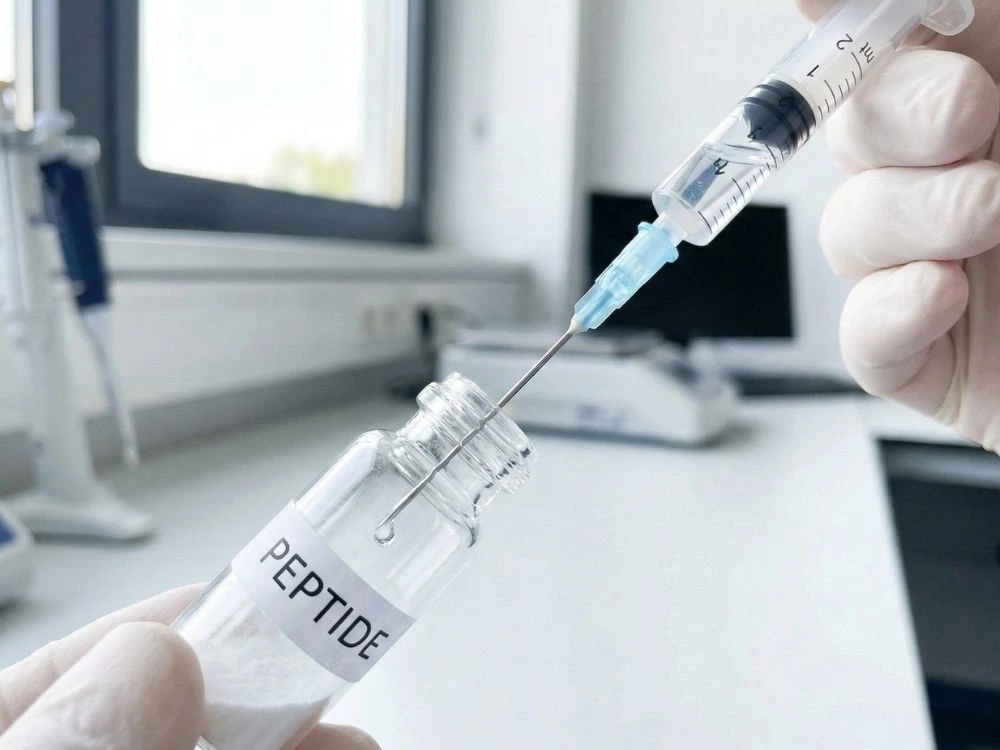
Step 4: The "Wall Method" Injection
Crucial Step: Do not spray water directly onto the powder.
Insert the needle into the peptide vial.
Aim the needle tip at the glass wall of the vial.
Gently push the plunger so the water trickles down the side of the glass.
Step 5: Dissolve Without Shaking
Once the water is added, remove the syringe.
NEVER shake the vial. Shaking creates shear stress that damages the peptide.
Instead, gently roll the vial between your hands until the liquid is clear.
Video: Proper Reconstitution Technique
Visual learners can watch this demonstration of the sterile reconstitution process.
How to Read the Syringe
Once your peptide is mixed, you need to draw your dose. This is where the Peptide Calculator saves the day.
Let’s say you have:
- 5mg vial (Total amount).
- 2ml water (Volume added).
- 250mcg (Desired dose).
The calculator will tell you to pull to the 10 unit mark on a standard U-100 syringe.
If you were to do this manually, you would need to calculate the concentration (2500mcg/ml) and divide your dose by that number. One small math error could mean giving a double dose.
Storage and Stability
Once mixed, your peptide is no longer stable at room temperature.
- Powder Form: Can be stored in the freezer for up to 24 months.
- Liquid Form: Must be stored in the refrigerator immediately.
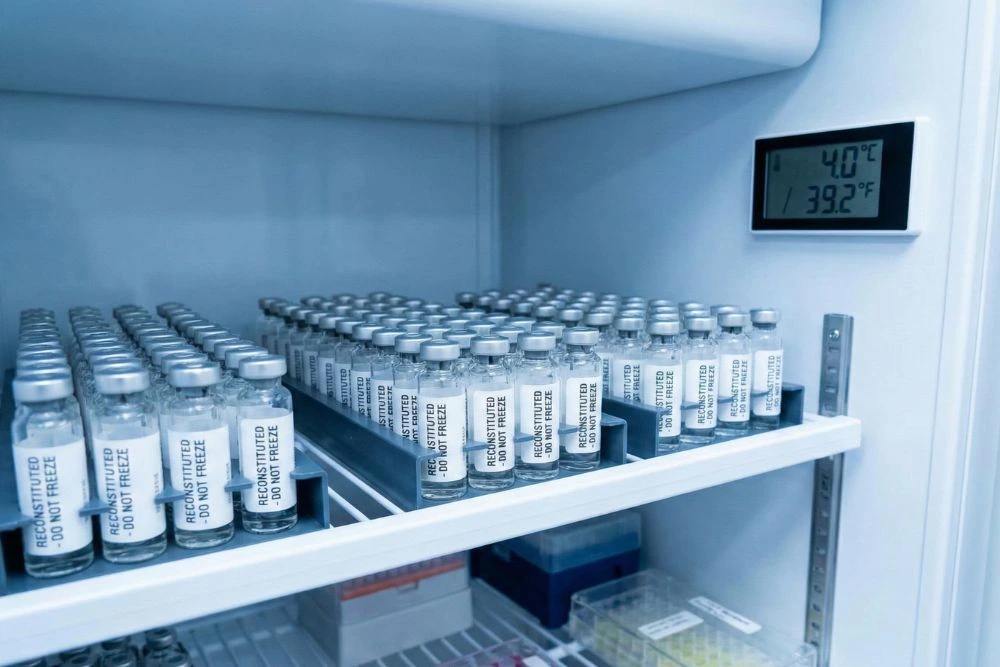
Research published on PubMed suggests that keeping peptides protected from light and heat is critical for maintaining potency. Most reconstituted solutions will degrade after 2 to 4 weeks, even in the fridge.
Frequently Asked Questions
Can I mix two peptides in one syringe?
While some researchers do this, it is generally discouraged. Mixing different sequences can lead to cross-reactions. For the cleanest data, keep your sequences separate.
What if the water is cloudy?
If your solution remains cloudy after gentle rolling, let it sit in the fridge for an hour. If it never clears, the peptide may be degraded or of poor quality. Always ensure you are sourcing from a vendor that provides third-party testing.
Why do I need to know the syringe size?
Calculators need to know if you are using a 1ml (U-100) or 0.5ml (U-50) syringe. The "tick marks" represent different volumes on different syringes. Using the wrong input will result in the wrong peptide dosage.
How much water should I add?
There is no single rule, but 1ml to 3ml is standard.
- Less water (1ml): Makes a concentrated solution. Good for large doses.
- More water (3ml): Makes a dilute solution. Good for very small micrograms (mcg) doses, as it makes it easier to measure on the syringe.
Conclusion
Precision is the difference between science and guessing.
By using a digital tool to handle the math, you eliminate human error and ensure that every dose is exact. Whether you are researching BPC-157 for recovery or testing other compounds, precise inputs equal precise outputs.
Internal Reference: Interested in recovery research? Read our guide on BPC-157 Peptide: A Comprehensive Research Guide.
Take the time to do the math, follow the sterile "Wall Method," and store your vials correctly. Your research results depend on it.
Official Research Disclaimer
The information provided in this guide is for informational and educational purposes only. Peptides are intended strictly for laboratory research and are not for human consumption or for the diagnosis, treatment, or prevention of any disease. All research should be conducted by qualified professionals in a controlled environment. The statements regarding these products have not been evaluated by the Food and Drug Administration (FDA). Always consult your local laws and institutional guidelines regarding the use of peptides in research.