
What Are Peptides? The Ultimate Beginner’s Guide to Peptide Therapy
What are peptides? We explain the science of bioactive compounds, their FDA status, and how they unlock benefits for muscle growth, anti-aging, and skin health.
- Published
- Updated
- Reading time
- 9 min read
- Author
- By PeptidesFinder
On this page
In the fast-changing world of health research, few topics have gotten as much attention as peptides.
You see them everywhere now. They are the "secret ingredient" in your skin care products, the science behind viral weight loss shots, and the topic of conversation in every gym. But for most people, the actual science is still confusing.
Are they proteins? Are they hormones? Or are they something else entirely?
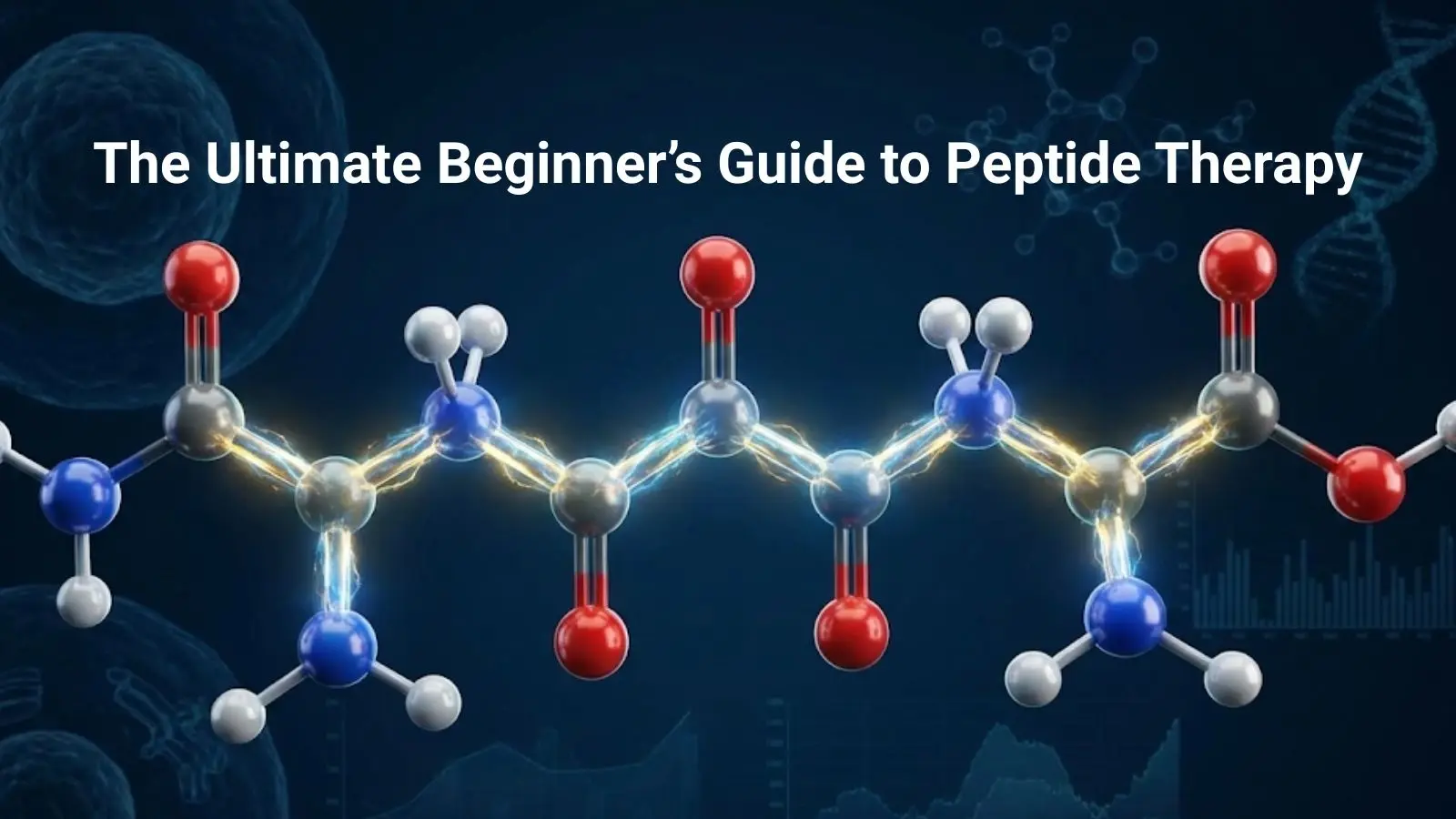
This guide is your starting point. We will strip away the hard words and explain exactly what are peptides, how these bioactive peptides work in your body, and why scientists are using them to help people live longer, healthier lives.
The Basics: Building Blocks of Life
To understand peptides, you first need to understand proteins.
Proteins are the "workers" inside your cells. They build muscle, digest food, and keep your heart beating. Proteins are made of long chains of tiny units called amino acids, which are scientifically known as the building blocks of proteins.
Think of amino acids like beads on a necklace.
- The Beads: These are the amino acids.
- The Peptide: A short necklace (usually 2 to 50 beads).
- The Protein: A long, tangled necklace (more than 50 beads).
Because they are essentially the "mini-versions" of proteins, peptides are found naturally in every cell of your body. But their size makes them special.
Proteins are big and clunky. They fold up into complex shapes and have a hard time moving around. Peptides, on the other hand, are small and fast. They can easily slip through tissues and enter cells. This makes them perfect messengers.
How They Work: The "Cellular Switch"
The main job of a peptide is to communicate.
Imagine your body is a busy construction site. The workers (your cells) are ready to build, but they need orders. They don't know what to do until the foreman tells them.
Peptides are the foreman.
They travel through your bloodstream looking for specific cells. When they find the right one, they attach to a "receptor" on the surface. This is like a key fitting into a lock. Once the key turns, the cell gets a message to start a specific job.
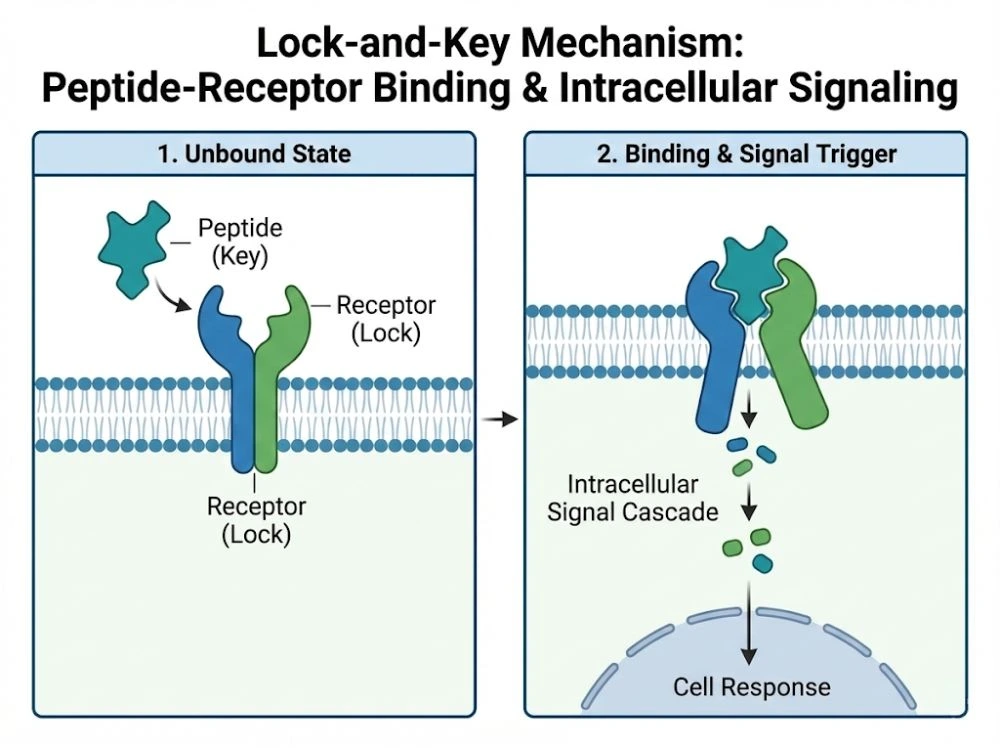
This job might be:
- "Start burning fat."
- "Fix this torn muscle tissue."
- "Make more collagen for the skin."
- "Boost the immune system."
Because they are so specific, they can target just one job without messing up the rest of the body. This is why peptide scientists call them "bioregulators" instead of just drugs.
Internal Reference: Learn about the people who discovered this in Peptide Scientists: The Pioneers Who Transformed Modern Medicine.
The 4 Main Types of Peptides
Not all peptides do the same thing. Scientists group them into four main categories based on how they act in the body.
-
Signal Peptides: These are the most common type used in anti-aging creams. They send a "signal" to the skin to fix itself.
Example: Palmitoyl pentapeptide-4 (Matrixyl). When you put this on your face, it tricks your skin into thinking it is damaged. Your skin responds by making more collagen to "repair" the damage, which smooths out wrinkles. -
Carrier Peptides: These act like delivery trucks. They carry trace minerals (like copper or magnesium) to where they are needed most.
Example: GHK-Cu. This peptide grabs onto copper atoms and delivers them to injured tissue. Copper is essential for enzymatic reactions that heal wounds. -
Neurotransmitter Inhibitors: These interact with your nerves. They block the signals that tell your muscles to contract.
Example: Argireline. This is often called "Botox in a jar." By relaxing facial muscles, it prevents dynamic wrinkles (the lines you get from smiling or frowning) from forming. -
Enzyme Inhibitor Peptides: Your body has enzymes that naturally break down collagen as you age. These peptides stop those enzymes from working. This slows down the aging process and keeps your skin firm for longer.
Peptides in Skincare: The Anti-Aging Revolution
One of the biggest areas for peptide research is skin health.
As we get older, the structural proteins in our skin (mostly collagen and elastin) start to break down. This structural collapse is what causes sagging and lines.
Regular moisturizers just sit on top of your face. They might make it feel soft for a few hours, but they don't fix the underlying problem. Peptides for anti-aging work differently, they signal your skin to rebuild itself from the inside out.
Video: Peptides in Skincare Explained
Watch this quick breakdown to see how these tiny molecules signal your skin to rebuild collagen.
Key Benefits for Your Skin
- Stronger Barrier: Carrier peptides help strengthen the skin barrier. This is your skin's outer shield. A strong barrier keeps moisture in and bacteria out.
- Less Redness: Studies show that using these creams can have anti-inflammatory properties. This means they calm down redness and swelling, making them great for sensitive skin.
- Better Texture: By boosting the production of new tissue, ingredients like skin care products containing peptides can improve skin thickness and texture over time.
Internal Reference: Want to dive deeper into skin repair? Read GHK-Cu Copper Peptides: The Science of Skin Regeneration.
The Spectrum of Benefits: Beyond Beauty
The benefits of peptide supplements go far beyond just looking young. They act on almost every system in your body.
-
Injury Recovery (BPC-157): This is famous among athletes and bodybuilders. It comes from a protein found in your stomach juices.
What it does: It signals the body to send more blood flow to injured areas. This helps heal tendons, ligaments, and gut issues much faster than normal. -
Weight Loss (GLP-1): You have probably heard of drugs like Ozempic or Wegovy. These are actually peptides!
What they do: They mimic a hormone called GLP-1. This hormone tells your brain, "I am full." By making you feel full faster, they help control your appetite and stabilize blood sugar.
Internal Reference: See our full guide in The Ultimate Guide to Peptides for Weight Loss. -
Building Muscle: Certain peptides trigger the release of Human Growth Hormone (HGH).
What they do: HGH is critical for building muscle fiber and burning fat. As we age, our natural HGH levels drop. Peptides can help bring those levels back up to a youthful range, supporting muscle growth and recovery after hard workouts. -
Immune System Support: Some bioactive peptides, like Thymosin Alpha-1, are essential for regulating the immune system. They help your body fight off viruses and infections more effectively. This is incredibly important for people with autoimmune issues or those who get sick often.
Natural Sources vs. Supplements
A common question is: "Can't I just eat more protein?"
The answer is yes and no.
When you eat a steak or drink a whey protein shake, your digestive system breaks those large proteins down into random amino acids. Your body then uses those amino acids to build whatever it needs at that moment.
Peptide supplements are different. They are specific sequences.
Think of it like this:
- Eating Protein: Sending a pile of lumber to a construction site. The workers might build a wall, or a floor, or a table. You don't know for sure.
- Taking Peptides: Sending a pre-built window frame. The workers know exactly where it goes and what to do with it.
While eating a high-protein diet provides the raw materials, specific peptide therapies provide the instructions.
Are They Safe? (FDA and Side Effects)
Generally, peptide supplements are considered safer than many synthetic drugs.
Why? Because your body already knows what they are. When a peptide breaks down, it just turns back into amino acids, nutrients that your body recycles.
FDA Approved vs. Research Chemicals
It is important to know the difference.
- FDA Approved: There are over 60 peptide drugs currently approved by the FDA. These include famous life-saving drugs like Insulin (for diabetes) and Semaglutide (for weight loss). These have been tested in huge clinical trials.
- Research Chemicals: Many other peptides (like BPC-157 or Melanotan) are still being studied. They are often sold for "laboratory research only" and are not yet approved for general human use.
Potential Side Effects
Even though they are natural, side effects can happen:
- Injection site reactions such as redness, itching, or small bumps
- Water retention or bloating
- Increased hunger from certain peptides (like GHRP-6)
- Potential issues for those with pre-existing conditions
How to Check Quality
In the research world, purity is everything. You are putting these into a living system, so they must be clean.
- Always Verify: Look for products that have been tested by a third party.
- Read the Lab Report: A reputable seller will always show a Certificate of Analysis (CoA). This document proves the product is pure and free of heavy metals or bacteria.
Internal Reference: Learn how to check your products in Scientific Peptides: How to Read a Certificate of Analysis (CoA).
Frequently Asked Questions
Are peptides the same as steroids?
No. Anabolic steroids are synthetic hormones that override your body's natural systems. Peptides are different, they act as "signals." They tell your body to produce its own hormones naturally. This usually results in fewer side effects compared to steroids.
Is this FDA approved?
Some are. There are currently over 60 FDA approved peptide drugs on the market, including Insulin and GLP-1 agonists like Semaglutide. However, many other compounds are still classified as research chemicals and are not yet approved for general human use.
How long does it take to see results?
It depends on the goal.
- Injuries: Users often feel relief from BPC-157 within 1 to 2 weeks.
- Skin: Collagen and anti-aging peptides usually take 4 to 8 weeks to show visible changes.
- Muscle/Fat: Peptides for building muscle can take 3 to 6 months to show full physical changes.
What is the difference between a peptide and a protein?
It comes down to size. Think of a chain of beads.
- Peptide: A short chain (less than 50 beads).
- Protein: A long, complex chain (more than 50 beads).
Because peptides are smaller, your body can absorb and use them much faster than large proteins.
Can peptides help the immune system?
Yes. Certain peptides like Thymosin Alpha-1 are specifically used to boost the immune system, helping the body fight off viruses and infections more effectively.
Conclusion
Peptides are the bridge between natural biology and modern medicine.
By understanding that these "mini-proteins" act as specific keys to unlock your body's potential, we can see why they are so popular. They offer a way to target specific problems like a weak skin barrier, a torn tendon, or slow metabolism without flooding the whole body with drugs.
Whether you want to smooth out wrinkles, heal an injury, or lose weight, these powerful little molecules are the future of health.
Official Medical Disclaimer
The information provided in this guide is for informational and educational purposes only. Peptides and GLP-1 research compounds are intended strictly for laboratory research and are not for human consumption or for the diagnosis, treatment, or prevention of any disease. All research should be conducted by qualified professionals in a controlled environment. The statements regarding these products have not been evaluated by the Food and Drug Administration (FDA). Always consult your local laws and institutional guidelines regarding the use of peptides in research. Always seek the advice of your physician or other qualified health provider with any questions you may have regarding a medical condition.