
AOD 9604 Reviews: Is This the "Anti-Obesity Drug" of the Future?
Explore AOD 9604 reviews backed by science. Learn how this HGH fragment targets fat loss, supports joints, and earned FDA GRAS status. Research guide 2026.
- Published
- Reading time
- 10 min read
- Author
- By PeptidesFinder
On this page
The search for a safe, effective anti-obesity treatment has been one of science's biggest challenges for decades. Most weight loss drugs come with serious trade-offs, including heart problems, mood changes, or dangerous hormonal side effects. That's why so many researchers and medical professionals have turned their attention to AOD 9604, a synthetic peptide fragment originally derived from human growth hormone (HGH).
AOD 9604 reviews from clinical trials, scientific studies, and early adopters in the medical community tell a fascinating story. This compound was specifically designed to capture one thing: the fat-burning power of HGH, without the risks that come with full growth hormone therapy.
In this guide, we'll walk through everything the research tells us about AOD 9604, from how it works at the cellular level to what clinical trials actually showed, what researchers say about its safety, and where it sits in the regulatory landscape today. If you've been reading about peptides for fat loss and wondering whether AOD 9604 deserves the hype, this article is for you.
What Is AOD 9604? A Quick Background
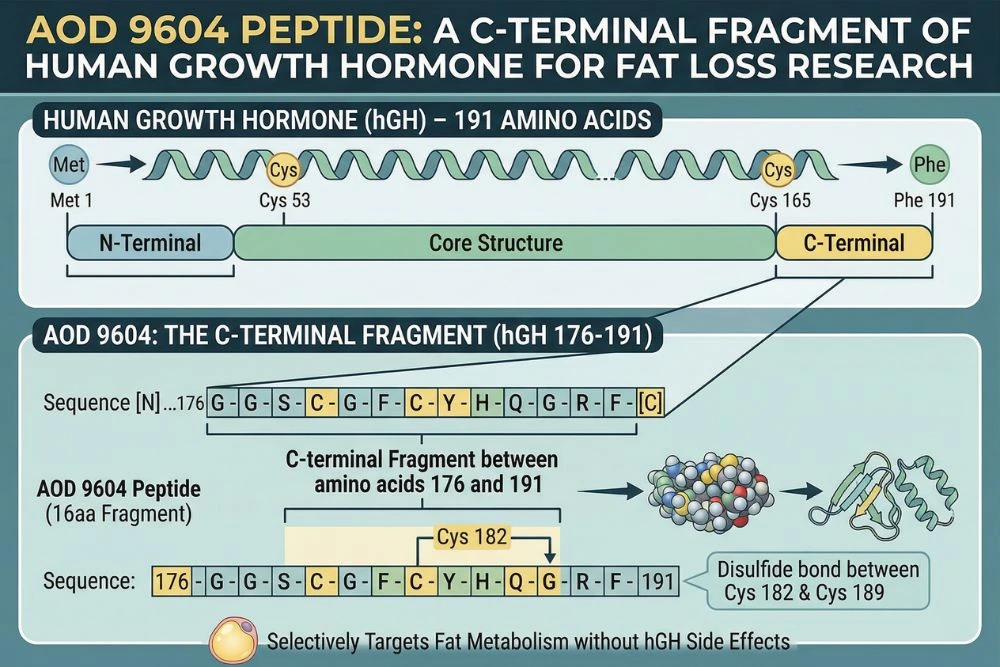
AOD 9604 stands for Advanced Obesity Drug 9604. It's a synthetic peptide that mirrors a small piece of the human growth hormone molecule, specifically the C-terminal fragment covering amino acids 176 to 191 of the HGH sequence. Researchers at Monash University in Australia developed it in the 1990s with one goal in mind: preserve HGH's fat-metabolizing effects while eliminating its undesirable side effects.
Normal HGH does many things in the body. It builds muscle, stimulates cell growth, and yes, promotes fat burning. But it also raises blood sugar, elevates IGF-1 (a growth factor linked to certain cancer risks), and can cause joint swelling, water retention, and other unwanted effects. AOD 9604 was engineered to take only the fat-burning properties off the shelf while leaving everything else behind.
The name might sound complex, but the concept is simple. Think of HGH as a Swiss army knife. AOD 9604 is just one of those tools, the sharp blade that cuts through fat, detached from the rest of the device.
Understanding what AOD 9604 is becomes easier when you already have a foundation in peptide science. If you're new to this space, our guide on what are peptides is a great starting point.
How Does AOD 9604 Work? The Science of Fat Burning
To understand AOD 9604 reviews from a scientific standpoint, you need to know how the peptide actually influences your body's fat systems. Its mechanism of action has been studied in multiple published research papers, and the core process involves two simultaneous effects on adipose (fat) tissue.
Stimulating Lipolysis
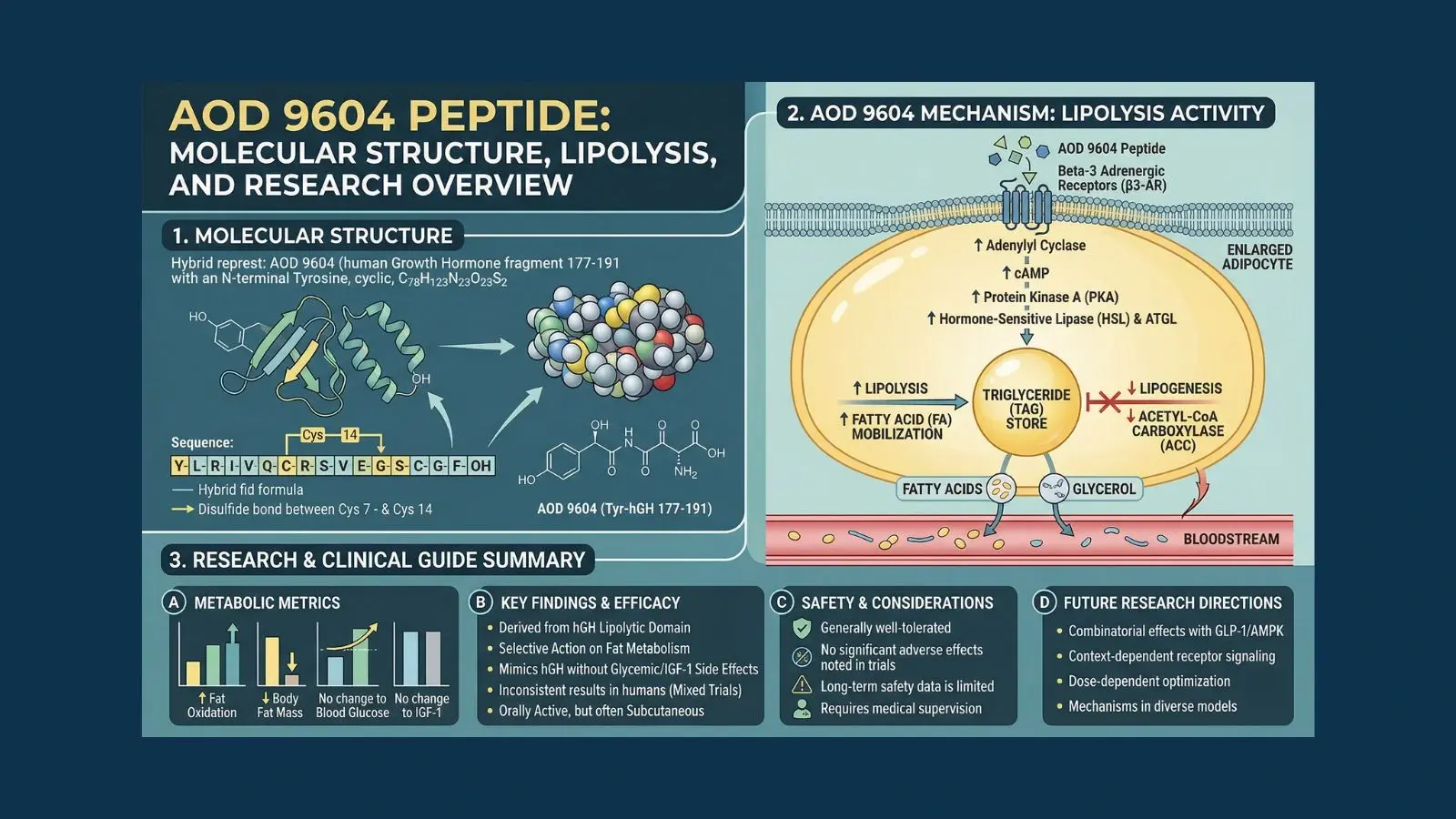
Lipolysis is the process of breaking down stored fat into free fatty acids that can be used for energy. AOD 9604 activates this process by working through the beta-3 adrenergic receptor pathway in white adipose tissue. These receptors, when activated, send a signal to fat cells to release their stored contents.
A landmark PubMed Study 2002 found that both full-length HGH and AOD 9604 significantly reduced body weight and increased fat oxidation in obese mice. Crucially, AOD 9604 achieved this without interacting with the HGH receptor itself, confirming it acts through a separate, more targeted pathway.
Inhibiting Lipogenesis
At the same time that it breaks down fat, AOD 9604 also blocks the formation of new fat. This process, called lipogenesis, is how your body converts excess calories into stored fat. By inhibiting this pathway, AOD 9604 works on two fronts: removing existing fat while preventing new fat from being made.
A follow-up PubMed Study 2002 exploring the role of beta-3 adrenergic receptors confirmed that AOD 9604 increased the expression of these lipolytic receptors in obese mice, helping to explain why obese individuals may benefit most from its effects. Obese fat tissue often has suppressed beta-3 receptor activity, and AOD 9604 appears to restore it.
No Impact on Blood Sugar or IGF-1
One of the most significant findings across multiple AOD 9604 reviews from clinical research is what this peptide does not do. Unlike full HGH therapy, AOD 9604 does not raise blood glucose levels, does not elevate insulin, and does not increase IGF-1 concentrations. This is a critical distinction for safety, particularly for people with diabetes, insulin resistance, or metabolic syndrome.
The peptide also does not bind to the HGH receptor, meaning it won't trigger the growth-promoting pathways associated with full HGH treatment. You get the fat-burning effect, and only the fat-burning effect.
AOD 9604 Clinical Trials: What the Studies Actually Showed
The clinical research history of AOD 9604 is both promising and instructive. Metabolic Pharmaceuticals, the Australian company that developed the compound, ran six Phase I/II randomized clinical trials involving approximately 900 participants. Here's an honest breakdown of what those trials found.
The Promising Phase II Results
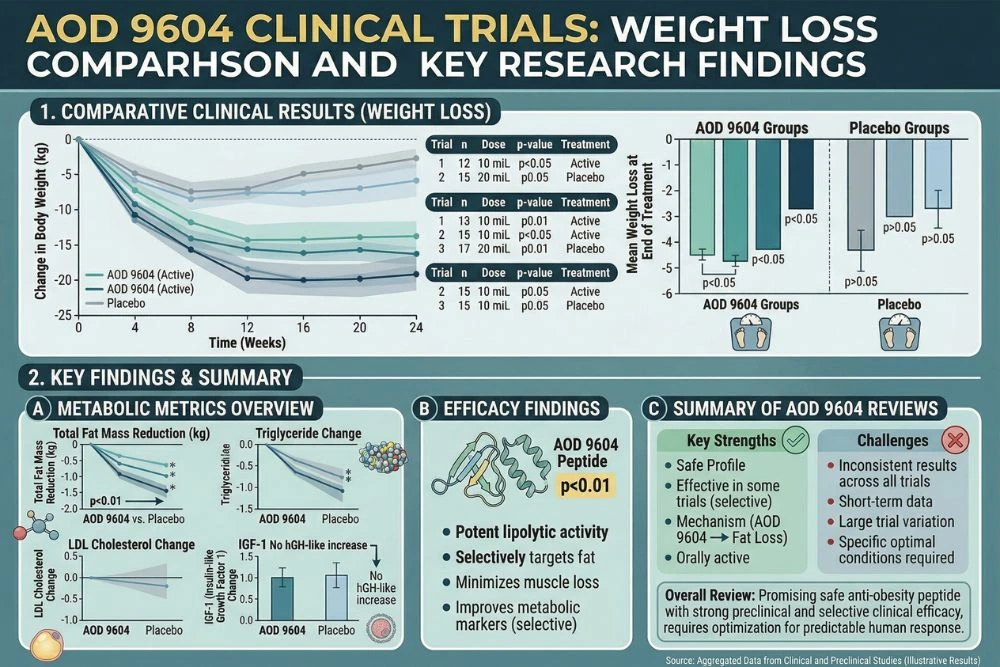
In a 12-week randomized, double-blind, placebo-controlled trial (METAOD005), participants who received 1 mg of AOD 9604 per day lost an average of 2.6 kg compared to 0.8 kg in the placebo group. That's a clinically meaningful difference in a relatively short window, especially given that no changes were required in diet or exercise.
A related PMC Review 2013 confirmed these findings and noted the drug's excellent tolerability profile across the Phase I and II studies, including no significant effects on blood sugar, cholesterol, or cardiovascular markers.
The Pivotal Trial and Why Development Stopped
The subsequent larger pivotal trial, METAOD006 (also known as the OPTIONS trial), enrolled 536 participants and ran for 24 weeks. In this extended study, AOD 9604 failed to produce statistically significant weight loss compared to placebo.
Based on this result, Metabolic Pharmaceuticals halted the formal drug development program in 2007. Researchers suggest several possible explanations. Weight loss trials are notoriously difficult because placebo effects are powerful, participant compliance varies, and longer studies expose the compound to a wider range of metabolic baselines. AOD 9604's effects may also be most pronounced when combined with lifestyle interventions rather than as a standalone treatment.
GRAS Status: An Important Regulatory Distinction
After the drug development program ended, AOD 9604 was evaluated through a different regulatory channel. It received Generally Recognized as Safe (GRAS) designation from the FDA for use as a food ingredient. This is a meaningful safety milestone. GRAS status means qualified scientific experts have reviewed the available data and concluded that the substance is safe for its intended use.
AOD 9604 Reviews: Safety Profile and Side Effects
One of the most consistent points across AOD 9604 reviews from clinical researchers is the peptide's favorable safety record. Across all six Phase I/II trials, involving around 900 participants, no serious adverse events were attributed to AOD 9604.
What Research Has Confirmed as Safe
Clinical studies confirmed that AOD 9604, at doses up to 1 mg per day for 12 weeks, did not produce meaningful changes in the following markers:
- Fasting blood glucose
- Insulin sensitivity
- IGF-1 levels
- Blood pressure
- Liver enzymes
- Cholesterol or lipid panels
An independent Journal of Endocrinology and Metabolism study examined chronic oral dosing in rats and monkeys over 6 to 9 months and found no genotoxicity, organ toxicity, or metabolic disruption.
Possible Side Effects Noted in Research
While major adverse events were absent, some mild effects were noted:
- Mild injection site reactions
- Temporary fatigue during initial dosing
- Occasional headaches
- Nausea in rare cases
These are consistent with the side effect profile seen across most injectable peptides and are considered minor and manageable.
Who Should Be Cautious
Even with its favorable safety profile, AOD 9604 remains a research compound. It is not FDA-approved as a pharmaceutical treatment. Populations who should exercise medical supervision include:
- Individuals with hormonal disorders
- People with active or prior hormone-sensitive cancers
- Pregnant or breastfeeding individuals
- Anyone with known peptide hypersensitivities
Beyond Fat Loss: Other Research Applications for AOD 9604
The scientific story of AOD 9604 doesn't end with weight management. Researchers have explored several other potential applications.
Joint and Cartilage Research
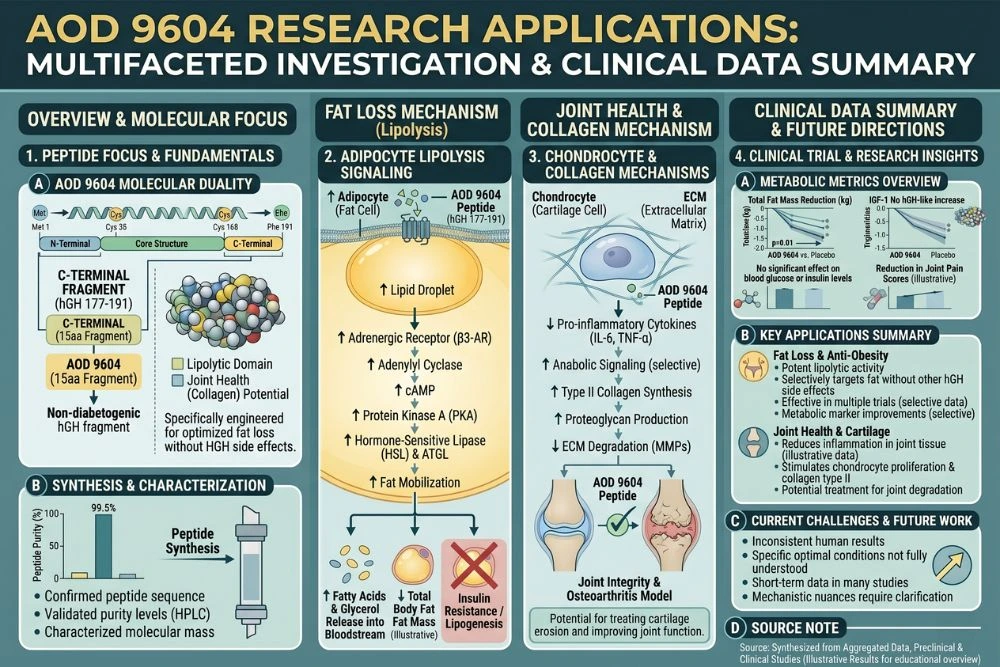
A PubMed Study 2015 found that intra-articular injections of AOD 9604 enhanced cartilage regeneration in a rabbit osteoarthritis model. When combined with hyaluronic acid, results were even better than either treatment alone.
If you're interested in tissue repair, explore our BPC-157 peptide guide.
Metabolic Syndrome and Insulin Resistance
Because AOD 9604 does not affect blood sugar or insulin, it may have potential roles in metabolic syndrome research, helping reduce body fat without harming glycemic control.
Bone Health
Early research suggests AOD 9604 promotes stem cell differentiation into bone cells, supporting osteogenesis and possibly aiding bone density over time.
Dosing and Research Protocols for AOD 9604
Based on existing research, AOD 9604 protocols commonly include:
Typical Research Dosing
- 300 mcg per day via subcutaneous injection
- Clinical trials tested up to 1 mg per day
- Commonly administered in the morning for better metabolic alignment
Research Duration
Most studies ran for 12–24 weeks. Shorter durations under 8 weeks show limited measurable changes.
Common Research Stacking Protocols
- CJC-1295/Ipamorelin for combined GH support
- BPC-157 for tissue repair and anti-inflammatory support
- Tesamorelin for visceral fat reduction
For broader peptide research, see the ultimate guide to peptides for weight loss.
AOD 9604 vs. Other Weight Loss Approaches
AOD 9604 vs. Full HGH Therapy
Full HGH therapy burns fat but raises IGF-1 levels and has greater side effect risks. AOD 9604 provides targeted fat metabolism without these concerns.
AOD 9604 vs. GLP-1 Agonists
GLP-1 agonists like semaglutide suppress appetite and have strong FDA-backed data. AOD 9604 acts on fat cell metabolism and has smaller-scale research evidence. For more, read GLP-1 agonists vs. peptides comparison.
AOD 9604 vs. Lifestyle-Only Approaches
AOD 9604 adds modest benefits beyond diet and exercise but is most effective when combined with them.
Where to Source AOD 9604 for Research
AOD 9604 is available as a research peptide. When sourcing, prioritize:
- Third-party Certificates of Analysis
- HPLC purity ≥98%
- Mass spectrometry verification
- Batch-specific testing
- Transparent manufacturing details
Peptides Finder maintains a verified supplier directory. Browse verified AOD 9604 suppliers here
Frequently Asked Questions
What is AOD 9604 and how does it differ from regular HGH?
AOD 9604 is a synthetic peptide fragment derived from amino acids 176–191 of human growth hormone (HGH). Full-length HGH affects growth and metabolism, while AOD 9604 isolates fat-burning functions without increasing IGF-1 or blood glucose.
What do AOD 9604 reviews from clinical trials say about its effectiveness?
Phase II trials showed an average 2.6 kg reduction versus 0.8 kg placebo loss in 12 weeks, but the pivotal 24-week trial failed to reach significance. It appears most effective alongside lifestyle changes.
Is AOD 9604 safe to use in research settings?
Across 900 participants in six trials, no serious adverse events were reported. Safety markers stayed normal. Long-term animal studies confirmed no genotoxicity, and it holds FDA GRAS status for food ingredient use.
What is the FDA regulatory status of AOD 9604?
AOD 9604 is not FDA-approved as a drug but has GRAS designation for food use. It remains a research chemical and is not authorized for human therapeutic use.
Does AOD 9604 have any benefits beyond fat loss?
Research suggests cartilage regeneration, potential osteogenesis, and metabolic support roles, but all are at exploratory stages.
How is AOD 9604 typically dosed in research protocols?
Typical dosing is 300 mcg per day via subcutaneous injection for 12–24 weeks. Clinical trials used up to 1 mg daily without major safety issues.
How does AOD 9604 compare to GLP-1 drugs like semaglutide?
Semaglutide suppresses appetite and delivers large-scale clinical outcomes; AOD 9604 acts directly on fat cells but lacks FDA approval or equal data depth.
Conclusion
Based on all available AOD 9604 reviews, this peptide shows a unique and scientifically interesting mechanism, a solid safety record, and modest fat loss effects. It was well-designed to extract HGH's fat-burning benefits without hormonal side effects. While it does not match GLP-1 agonists in potency, its safety and emerging research areas—such as cartilage and bone health—suggest an ongoing future role in metabolism research.
Understanding the future of peptide science means learning from compounds like AOD 9604 that helped define targeted peptide therapy.
Official Research Disclaimer
The information provided in this guide is for informational and educational purposes only. AOD 9604 is sold as a research chemical. Research peptides are intended strictly for laboratory research and are not for human consumption or for the diagnosis, treatment, or prevention of any disease. All research should be conducted by qualified professionals in controlled environments with proper ethical oversight. AOD 9604 has not been approved by the FDA as a drug for any therapeutic indication, including obesity treatment. This article does not constitute medical advice. Always consult a licensed healthcare provider before using any research compound. Never disregard professional medical advice or delay seeking it because of information you read online. The author and publisher disclaim any liability for adverse effects resulting from the use or application of the information contained herein.