
The Future of Peptide Science: Trends in Regenerative Medicine
Where is peptide science heading in 2026? We explore the latest trends in regenerative medicine, from AI-driven drug discovery to personalized peptide vaccines.
- Published
- Updated
- Reading time
- 6 min read
- Author
- By PeptidesFinder
On this page
If you have been following the explosion of interest in compounds like GLP-1 agonists or BPC-157, you might think we have reached the peak of peptide science. The reality is that we are just getting started.
The global landscape of pharmaceuticals is shifting away from traditional "small molecule" drugs (like aspirin) and towards biologic signaling. According to a recent Peptide Therapeutics Market Report, the industry is projected to nearly double over the next decade.
Why the sudden surge? Because peptides offer a unique "Goldilocks" solution in medicine. They are more specific and less toxic than small-molecule drugs but smaller and cheaper to manufacture than complex biologics like antibodies. This guide explores the cutting-edge trends that are defining the future of regenerative medicine in 2026.
Trend 1: AI-Driven Peptide Discovery
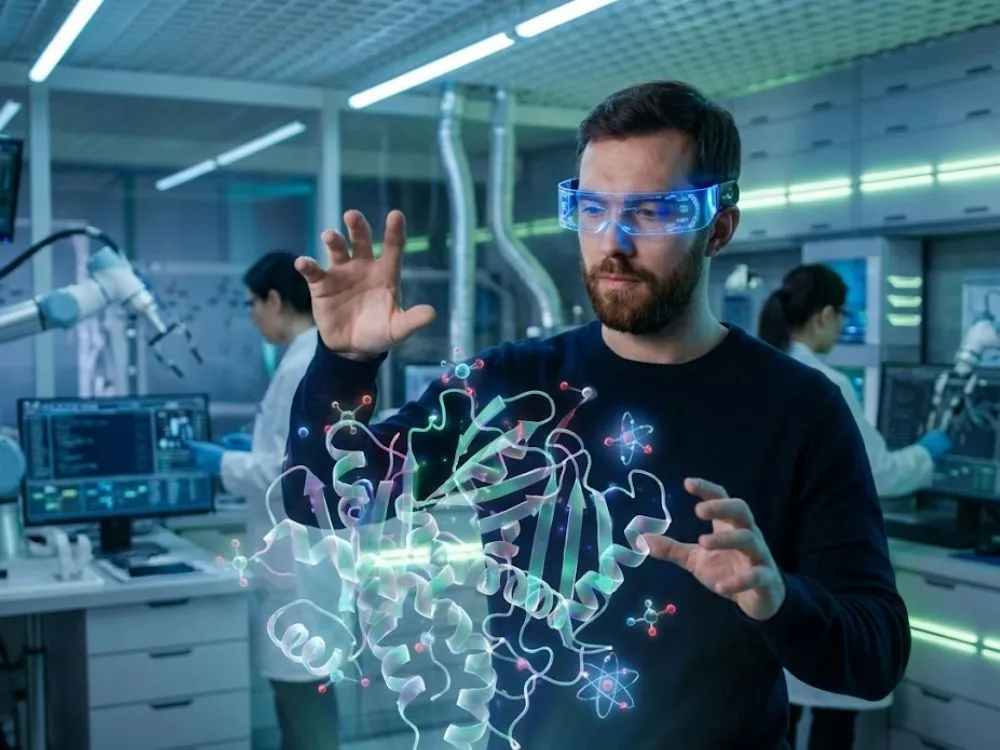
The traditional method of finding new drugs involves a lot of trial and error. Historically, scientists would synthesize thousands of compounds, test them one by one, and hope for a "hit." Today, Artificial Intelligence is flipping this script.
Machine learning algorithms can now predict how a peptide will fold, bind, and interact with a cell receptor before it is ever synthesized in a lab.
The Impact of Generative Biology:
- Speed: What used to take years of laboratory screening now takes months of computational modeling.
- Precision: AI can design "de novo" peptides—sequences that do not exist in nature—specifically tailored to lock onto a difficult target, such as a tumor cell or a drug-resistant bacteria.
A study published in Nature Biomedical Engineering highlights how deep learning is currently being used to generate novel antimicrobial peptides. These computer-designed molecules are proving effective against "superbugs" that have developed resistance to traditional antibiotics, opening a new front in the war against infection.
Trend 2: The Rise of "Smart" Peptides
One of the biggest challenges in peptide therapy has always been delivery. If you swallow a peptide, your stomach acid usually destroys it before it can work. This is why many current therapies require subcutaneous injections.
The future lies in "Smart" Peptides, specifically Cell-Penetrating Peptides (CPPs). These are sequences designed to act like a molecular Trojan Horse, carrying a therapeutic payload directly through a cell membrane.
Applications in Research:
- Neuroprotection: Delivering drugs across the Blood-Brain Barrier to treat conditions like Alzheimer's.
- Gene Editing: Carrying CRISPR-Cas9 tools directly into the nucleus of a cell to repair genetic defects at the source.
We discuss the mechanics of this technology in our deep dive on Cell-Penetrating Peptides: The Science of Molecular Delivery.
Trend 3: Personalized Peptide Vaccines
The concept of a "vaccine" is evolving. In oncology (cancer research), scientists are moving away from one-size-fits-all treatments like chemotherapy and towards personalized peptide vaccines.
This approach targets neoantigens—mutated proteins that are unique to a specific patient's tumor.
- Sequencing: Doctors biopsy a patient's tumor and sequence its DNA.
- Design: They identify specific mutations that appear only on the cancer cells.
- Synthesis: A custom peptide cocktail is synthesized to mimic these mutations.
- Activation: The patient is injected with this peptide vaccine, training their immune system to hunt down only the cells displaying that specific mutation.
This represents the holy grail of oncology: a treatment that is highly lethal to cancer but leaves healthy tissue completely unharmed.
Trend 4: Cosmetic Bio-Hacking
While medical applications are vital, the cosmetic industry is driving massive innovation in peptide synthesis. The focus is shifting from simple "anti-aging" creams to biomimetic peptides that actively signal cellular repair.
Compounds like GHK-Cu paved the way, but the next generation of cosmetic peptides aims to mimic the body's own growth factors more closely.
- Elastin-Stimulating Peptides: Designed to restore the "snap" and elasticity to aging skin.
- Hair Follicle Signaling: Peptides that wake up dormant hair follicles to reverse balding by signaling the anagen (growth) phase.
For a look at the foundational science of cosmetic peptides, read our article on GHK-Cu Copper Peptides: The Science of Skin Regeneration.
The Challenge: Stability and Regulation
Despite the promise, challenges remain. The primary hurdle is stability. Peptides are fragile and degrade quickly in the body. To solve this, chemists are developing "stapled peptides" (peptides chemically locked into a specific shape) and "cyclized peptides" (ring-shaped peptides) that can survive longer in the bloodstream.
This is why understanding the difference between a linear chain and a cyclic structure is so important. You can learn more about these structural differences in our post on Cyclic Citrullinated Peptide (CCP).
Furthermore, as synthesis becomes easier, regulation must keep up. The FDA is currently working to establish clearer guidelines for these novel compounds to ensure safety without stifling innovation.
Frequently Asked Questions
Conclusion
The future of peptide science is not just about finding new drugs; it is about rewriting the rules of medicine. From AI designing custom molecules to vaccines that train our immune system, we are moving from an era of "treating symptoms" to an era of "signaling repair."
For the researcher and the patient alike, 2026 marks the beginning of a new golden age in biotechnology. As we continue to unlock the secrets of these amino acid chains, the line between "incurable" and "treatable" will continue to blur.
Official Medical Disclaimer
The information provided in this guide is for informational and educational purposes only. Peptides and GLP-1 research compounds are intended strictly for laboratory research and are not for human consumption or for the diagnosis, treatment, or prevention of any disease. All research should be conducted by qualified professionals in a controlled environment. The statements regarding these products have not been evaluated by the Food and Drug Administration (FDA). Always consult your local laws and institutional guidelines regarding the use of peptides in research. Always seek the advice of your physician or other qualified health provider with any questions you may have regarding a medical condition.