
Cell-Penetrating Peptides: The Science of Molecular Delivery and Cellular Entry
Explore the science of cell-penetrating peptides. Learn how these sequences facilitate the delivery of therapeutic cargo into cells through research studies.
- Published
- Reading time
- 6 min read
- Author
- By PeptidesFinder
On this page
In the field of drug discovery and peptide science, one of the most significant challenges is the "delivery problem." While researchers have identified countless molecules that could potentially treat or prevent metabolic disorders, many of these compounds are too large or too polar to cross the protective barrier of the cell membrane. This is where cell-penetrating peptides (CPPs) have become an essential area of study.
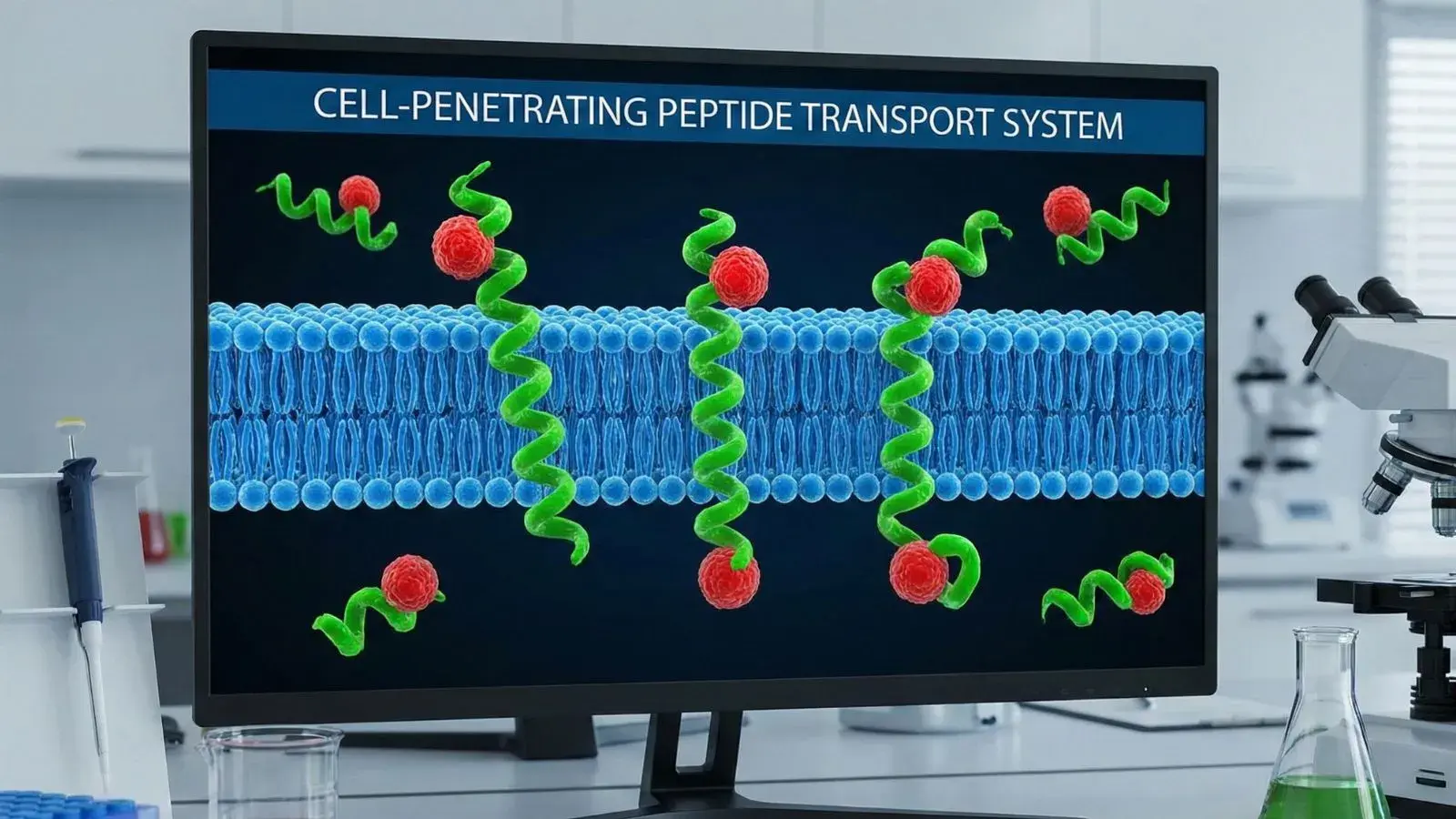
CPPs are short sequences of amino acids, typically fewer than 30 in length, that possess the remarkable ability to facilitate the uptake of various molecular "cargoes" into cells. From proteins and DNA to imaging agents and nanoparticles, these peptides serve as the molecular delivery trucks of modern biotechnology. This guide explores the discovery, classification, and mechanisms of action that make these compounds a high-priority target for clinical research in 2026.
The History of Cellular Entry: The Discovery of TAT
The study of cell-penetrating peptides began in the late 1980s with a surprising discovery involving the HIV-1 virus. Researchers found that a specific protein produced by the virus, known as "Trans-Activator of Transcription" or TAT, could be taken up by cells in a culture medium. By 1994, it was determined that a very small fragment of this protein, a sequence of just 11 amino acids, was responsible for this translocation.
Since the discovery of TAT, hundreds of other CPPs have been identified or synthetically engineered. These include naturally derived sequences like "Penetratin," which is found in the Antennapedia homeodomain of Drosophila, as well as purely synthetic versions designed for maximum efficiency. You can review the foundational history of these delivery sequences on PubMed here: Cell-penetrating peptides: From discovery to clinics.
Classification of Cell-Penetrating Peptides
Not all CPPs function in the same way. Researchers generally classify these molecules into three categories based on their physical and chemical properties:
- Cationic Peptides: These are the most common type and are characterized by a high concentration of positively charged amino acids, such as arginine and lysine. The positive charge allows them to interact with the negatively charged components of the cell membrane.
- Amphipathic Peptides: These sequences contain both hydrophilic (water-attracting) and hydrophobic (water-repelling) sections. This dual nature allows them to "weave" through the lipid bilayer of the cell.
- Hydrophobic Peptides: These are composed primarily of non-polar amino acids and are researched for their ability to cross membranes with high efficiency despite having low charge.
Mechanisms of Action: How They Cross the Membrane
-
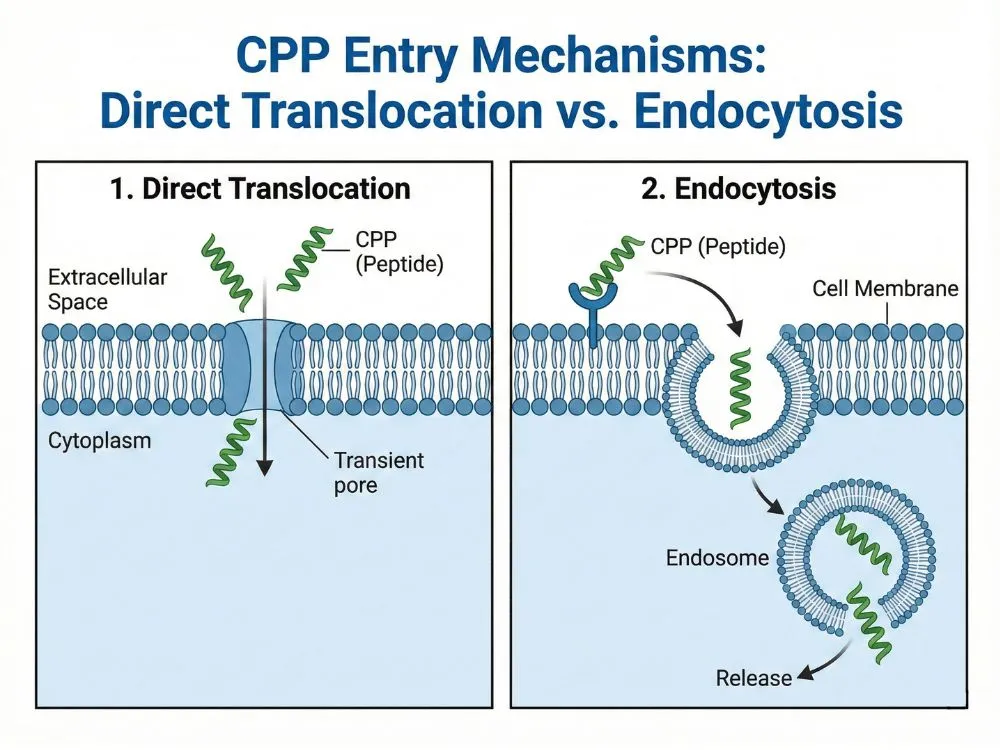
Direct Translocation
In this mechanism, the peptide interacts so strongly with the cell membrane that it physically destabilizes the lipid bilayer, allowing the peptide and its cargo to pass directly into the cytoplasm. This is often referred to as "pore formation" or the "carpet model." -
Endocytosis
The most widely accepted entry method for larger cargoes is endocytosis. In this process, the cell membrane wraps around the peptide, creating a small bubble (vesicle) that pulls the compound into the cell. Researchers are currently focused on "endosomal escape," ensuring the peptide can break out of this bubble once inside to reach its final target. Detailed findings on these entry mechanisms are available through the National Institutes of Health (NIH): Cell-penetrating peptides: Mechanisms and applications.
Targeted Research Applications in 2026
Because CPPs can deliver almost anything into a cell, their potential applications in research are vast.
Delivery of Genetic Material
Researchers are using cell-penetrating peptides to deliver siRNA and DNA into cells to study gene expression. Traditional methods of gene delivery often involve viral vectors, which can be unstable or trigger immune responses. CPPs offer a safer, non-viral alternative for precise genetic research.
Crossing the Blood-Brain Barrier
The blood-brain barrier (BBB) is the most restrictive membrane in the human body, protecting the brain from toxins. However, it also prevents many beneficial research compounds from reaching neurological targets. Specific CPPs are being studied for their ability to "piggyback" compounds across the BBB to research treatments for neurodegenerative conditions. You can explore the validated research on peptide-mediated brain delivery here: Peptides as a strategy for crossing the blood-brain barrier.
Cancer Research and Imaging
In oncology research, CPPs are being engineered to target cancer cells specifically while ignoring healthy ones. By attaching fluorescent imaging agents to these peptides, researchers can visualize tumors with extreme precision, aiding in the development of more accurate diagnostic tools.
Precision in the Lab: The Role of Reconstitution

When conducting studies involving the delivery of cargo, the concentration of the CPP is vital. If the concentration is too low, the delivery will fail. If it is too high, it may become toxic to the cells being studied.
Most research-grade CPPs are provided in a lyophilized state to ensure they do not degrade before use. To achieve the exact concentration required for a specific cell line, researchers must calculate the precise volume of bacteriostatic water needed. To remove human error and ensure data reproducibility, it is highly recommended to use a peptide calculator before beginning any delivery protocol.
Quality Control and COA Verification
As the FDA increases its oversight of the research compound industry in 2026, the quality of your materials has never been more important. A reliable source for CPPs must provide transparency in their manufacturing process.
Always ensure your provider offers:
- Third-Party Testing: Verification that the peptide sequence is correct and free of byproducts.
- Certificate of Analysis (COA): A detailed report on the purity and molecular weight of the batch.
- Optimal Storage Data: Instructions on how to maintain the stability of the peptide-cargo complex.
For researchers looking for a comprehensive list of vetted providers and high-purity sequences, the Peptides Finder Directory serves as a critical industry starting point.
Frequently Asked Questions
Official Medical Disclaimer
The information provided in this guide is for informational and educational purposes only. Peptides and GLP-1 research compounds are intended strictly for laboratory research and are not for human consumption or for the diagnosis, treatment, or prevention of any disease. All research should be conducted by qualified professionals in a controlled environment. The statements regarding these products have not been evaluated by the Food and Drug Administration (FDA). Always consult your local laws and institutional guidelines regarding the use of peptides in research. Always seek the advice of your physician or other qualified health provider with any questions you may have regarding a medical condition.