
Thymosin Alpha 1: The Gold Standard for Immune Optimization
Learn how Thymosin Alpha 1 boosts immune function via TLR activation. FDA-approved for hepatitis B & cancer. Complete dosing, safety & clinical guide.
- Published
- Updated
- Reading time
- 17 min read
- Author
- By PeptidesFinder
On this page
By the time you turn 60, your thymus gland has shrunk to less than 15% of its original size.
This small organ tucked behind your sternum is responsible for training T cells, the elite special forces of your immune system. As it atrophies with age (a process called thymic involution), your immune function deteriorates. You become more vulnerable to infections, your vaccine responses weaken, and your cancer surveillance systems lose their edge.
This decline isn't inevitable.
Thymosin alpha 1 is a 28-amino acid peptide naturally produced by the thymus gland that acts as a master regulator of immune function. Originally isolated in the 1970s at the University of Texas, it has since been developed into a pharmaceutical drug (brand name Zadaxin or thymalfasin) with FDA orphan drug status for hepatitis B and regulatory approval in over 30 countries for conditions ranging from chronic viral infections to cancer immunotherapy.
Unlike trendy peptides with limited human data, thymosin alpha 1 represents something rare in the peptide world: clinical validation. We're talking about decades of use in millions of patients, peer-reviewed studies across multiple therapeutic areas, and a safety profile so clean that serious adverse events are virtually nonexistent.
This guide explains how thymosin alpha 1 works at the molecular level, why it's considered the gold standard for immune optimization, the clinical evidence supporting its use in hepatitis, cancer, sepsis, and COVID-19, and what researchers need to know about dosing, administration, and safety in 2026.
What Is Thymosin Alpha 1? A Naturally Occurring Thymic Peptide
To understand thymosin alpha 1, you need to understand where it comes from and why your body produces it.
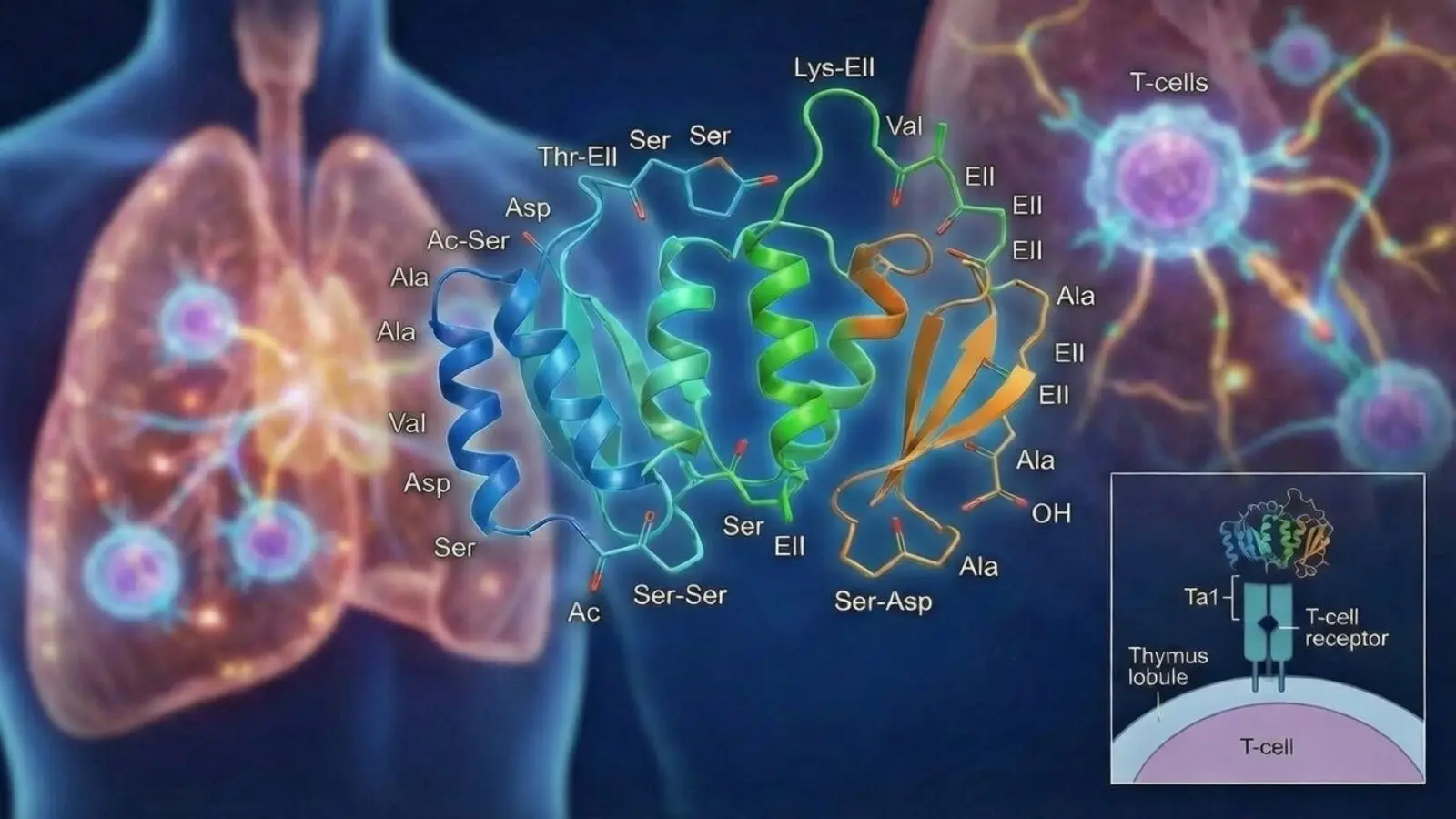
Thymosin alpha 1 is a 28-amino acid peptide (molecular weight 3.1 kDa) that is cleaved from a larger 109-amino acid precursor protein called prothymosin alpha. This cleavage is performed by the enzyme legumain in thymic epithelial cells.
The full amino acid sequence is:
Ac-Ser-Asp-Ala-Ala-Val-Asp-Thr-Ser-Ser-Glu-Ile-Thr-Thr-Lys-Asp-Leu-Lys-Glu-Lys-Lys-Glu-Val-Val-Glu-Glu-Ala-Glu-Asn
The thymus gland produces thymosin alpha 1 throughout life, but production peaks in childhood and declines progressively after puberty. By age 50, thymic output of T cells and thymic peptides has dropped by more than 90%. This immunosenescence contributes to increased infection rates, reduced vaccine efficacy, and higher cancer incidence in older adults.
According to comprehensive reviews published in PMC, thymosin alpha 1 was originally isolated by Dr. Allan Goldstein and colleagues at the University of Texas Medical Branch in Galveston in the 1970s. Initial research focused on its role in T cell maturation, but subsequent decades of investigation revealed far broader immunomodulatory properties.
Pharmaceutical Development and Regulatory Status
The synthetic version of thymosin alpha 1, marketed under the brand name Zadaxin (also called thymalfasin), has been developed as a pharmaceutical product and approved in multiple countries:
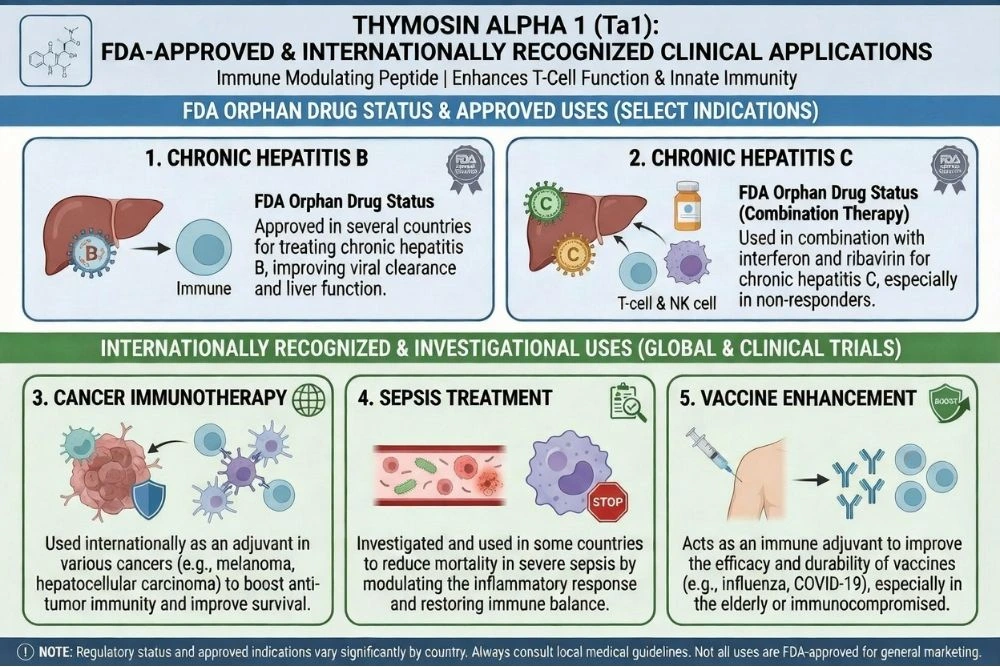
- FDA Orphan Drug Status for chronic hepatitis B (granted in the United States).
- Full regulatory approval in China, Russia, Philippines, Mexico, and multiple other countries for hepatitis and cancer.
- Extensive clinical use in over 30 countries for more than three decades.
- Safety record documented in millions of patient-years of exposure.
This regulatory validation is what separates thymosin alpha 1 from research peptides that have never progressed beyond animal studies or small pilot trials.
Thymosin Alpha 1 vs. Thymosin Beta 4: What's the Difference?
The thymus produces multiple peptide hormones. The two most researched are thymosin alpha 1 and thymosin beta 4 (TB4), but they have completely different structures and functions:
- Thymosin Alpha 1: 28 amino acids, primarily modulates immune function through Toll-like receptor (TLR) signaling on dendritic cells and T lymphocytes.
- Thymosin Beta 4: 43 amino acids, primarily promotes tissue repair and angiogenesis through actin-binding and cell migration.
While both are valuable research compounds, thymosin alpha 1 has far more extensive clinical validation, regulatory approval, and documented safety data. TB4 remains primarily a research peptide with no FDA approval for any indication.
To understand how peptides work in the body and how they differ from proteins, read our guide on What Are Peptides? The Ultimate Beginner's Guide to Peptide Therapy.
The Mechanism: Toll-Like Receptor Activation and Immune Enhancement
Thymosin alpha 1 doesn't work like a traditional drug that blocks a receptor or inhibits an enzyme. Instead, it acts as an immunomodulator, fine-tuning multiple branches of the immune system through a cascade of signaling events.
Primary Action: Toll-Like Receptor Signaling
The molecular mechanism of thymosin alpha 1 centers on Toll-like receptors (TLRs), a family of pattern recognition receptors that detect pathogen-associated molecular patterns (PAMPs) and danger signals.
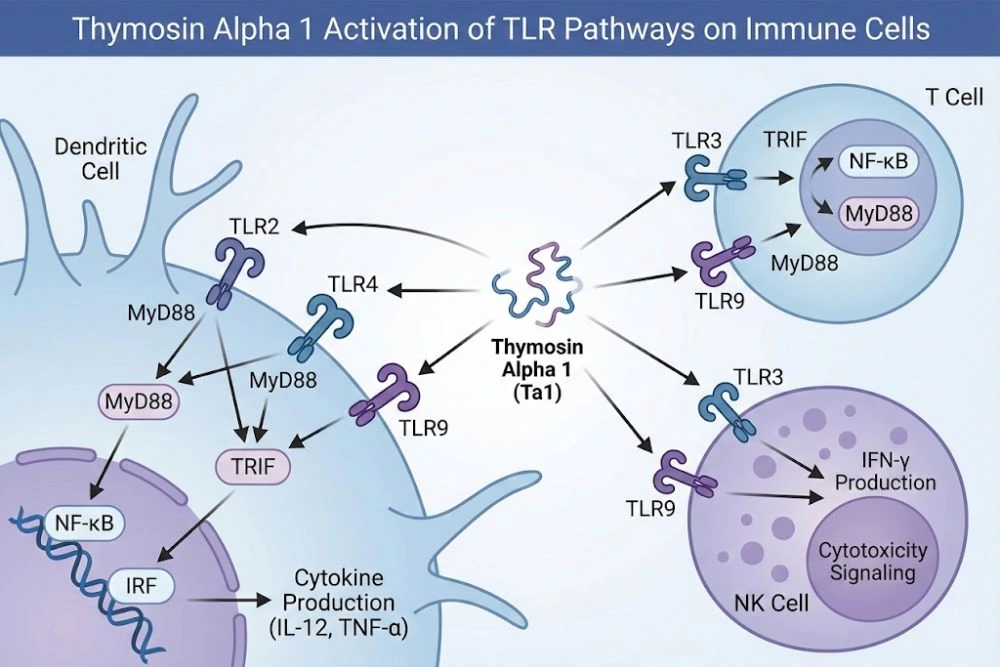
Research published in MDPI Molecules demonstrates that thymosin alpha 1 binds to and activates TLR2 and TLR9 on dendritic cells. Additional studies show interaction with TLR3, TLR4, and TLR7 in different immune cell populations.
Once TLRs are activated, thymosin alpha 1 triggers three major downstream signaling pathways:
- IRF3 Pathway leads to production of Type I interferons (IFN-α and IFN-β), which establish an antiviral state in cells and enhance immune surveillance.
- NF-κB Pathway induces pro-inflammatory cytokines (IL-6, IL-12, TNF-α) that activate adaptive immune responses.
- p38 MAPK Pathway promotes dendritic cell maturation and T cell differentiation.
This TLR-mediated signaling explains why thymosin alpha 1 enhances immunity against viral infections, improves vaccine responses, and augments anti-tumor immunity.
Effects on Specific Immune Cell Populations
Thymosin alpha 1 modulates virtually every major immune cell type. Here's how:
Dendritic Cells (Antigen-Presenting Cells)
Dendritic cells are the bridge between innate and adaptive immunity. They capture antigens, process them, and present them to T cells to initiate adaptive immune responses.
Thymosin alpha 1:
- Promotes dendritic cell maturation and activation.
- Upregulates MHC class II expression (essential for antigen presentation).
- Increases production of IL-12 and IL-18 (cytokines that prime T cell responses).
- Enhances migration to lymph nodes where T cell priming occurs.
T Lymphocytes (CD4+ Helper Cells and CD8+ Cytotoxic Cells)
According to studies cited in PubMed, thymosin alpha 1 has direct effects on T cell function:
- Stimulates T helper cell (CD4+) proliferation and cytokine production.
- Enhances cytotoxic T cell (CD8+) killing of infected or malignant cells.
- Increases IL-2 receptor expression (making T cells more responsive to growth signals).
- Promotes differentiation of naive T cells into effector cells.
- Restores lymphocyte counts in immunodeficiency states.
This explains why thymosin alpha 1 is particularly valuable in conditions characterized by T cell exhaustion or depletion, such as chronic viral infections, cancer, and sepsis.
Natural Killer (NK) Cells
NK cells provide rapid innate immune responses against viruses and tumors without requiring prior sensitization.
Thymosin alpha 1:
- Activates cytotoxic function of NK cells.
- Enhances tumor surveillance and viral clearance.
- Increases production of IFN-γ (a potent antiviral and anti-tumor cytokine).
B Lymphocytes (Antibody-Producing Cells)
While thymosin alpha 1's primary effects are on cell-mediated immunity, it also influences humoral immunity:
- Enhances antibody production in response to vaccination.
- Improves vaccine response in elderly and immunocompromised populations.
- Supports long-term B cell memory formation.
Research published in Nature Scientific Reports elegantly summarizes this: "Thymosin alpha 1 acts as an endogenous regulator of both inflammatory and adaptive immune responses through its primary action on cells of the innate immune system."
Clinical Applications: From Hepatitis to Cancer Immunotherapy
Unlike many peptides that remain trapped in preclinical research, thymosin alpha 1 has decades of clinical use across multiple therapeutic areas. Here's the evidence.
FDA-Approved and Regulated Uses
1. Chronic Hepatitis B
Thymosin alpha 1 received FDA orphan drug designation for chronic hepatitis B and has been extensively studied in this indication.
Clinical evidence shows:
- Used in combination with interferon-alpha or nucleoside analogs.
- Improves HBeAg seroconversion rates (a marker of viral suppression).
- Enhances viral clearance and normalization of liver enzymes.
- Typical protocol: 1.6 mg subcutaneously twice weekly for 6 to 12 months.
- May reduce progression to cirrhosis and hepatocellular carcinoma.
A comprehensive review in PubMed analyzing multiple trials concluded that thymosin alpha 1 significantly improves virological and biochemical responses in chronic hepatitis B patients.
2. Chronic Hepatitis C
Thymosin alpha 1 is approved in several countries (including China, Russia, and the Philippines) for chronic hepatitis C, particularly in combination with pegylated interferon and ribavirin (the standard pre-direct-acting-antiviral era treatment).
Benefits include:
- Improved sustained virological response (SVR) rates.
- Reduced treatment-related neutropenia (low white blood cell counts).
- Better tolerance of interferon therapy.
While direct-acting antivirals (DAAs) have largely replaced interferon-based regimens in developed countries, thymosin alpha 1 remains valuable in resource-limited settings and in patients with contraindications to DAAs.
3. Cancer Immunotherapy (Adjuvant)
Thymosin alpha 1 is approved in multiple countries as an adjuvant therapy for various cancers, including:
- Hepatocellular carcinoma (liver cancer).
- Melanoma.
- Non-small cell lung cancer.
- Gastric cancer.
- Colorectal cancer.
The mechanism is enhancement of tumor-infiltrating lymphocytes (TILs), the immune cells that attack cancer. Thymosin alpha 1 is often combined with chemotherapy, radiation, or checkpoint inhibitors to boost anti-tumor immunity.
Studies cited in PMC show that patients receiving thymosin alpha 1 alongside standard cancer treatment have:
- Improved progression-free survival.
- Better quality of life scores.
- Reduced chemotherapy-induced immunosuppression.
- Enhanced response to checkpoint inhibitors like pembrolizumab.
Typical dosing for cancer: 1.6 mg subcutaneously 2 to 3 times weekly throughout chemotherapy and for 3 to 6 months post-treatment.
Emerging and Off-Label Applications
Sepsis and Critical Illness
Sepsis causes immune paralysis, where the immune system becomes hyporesponsive to pathogens. Thymosin alpha 1 can reverse this state.
A meta-analysis published in Frontiers in Immunology found that thymosin alpha 1 significantly reduces mortality in severe sepsis patients, particularly those with acute pancreatitis-related sepsis.
ICU protocols typically use 1.6 mg daily for 5 to 7 days during the acute phase.
COVID-19 and Viral Pneumonia
During the COVID-19 pandemic, multiple studies evaluated thymosin alpha 1 as an adjunct therapy for severe cases. The rationale was straightforward: COVID-19 causes T cell exhaustion and lymphopenia, and thymosin alpha 1 restores lymphocyte counts.
Research documented in PMC showed:
- Reduced mortality in severe COVID-19 patients.
- Faster recovery of lymphocyte counts.
- Shortened hospital stays.
- Reduced need for mechanical ventilation.
While COVID-19 treatments have evolved with antivirals and monoclonal antibodies, thymosin alpha 1 remains a valuable tool for severe cases with immune dysregulation.
Vaccine Enhancement
Elderly individuals and immunocompromised patients often have poor responses to vaccines. Thymosin alpha 1 can boost vaccine efficacy.
Studies show that when given alongside influenza vaccination, thymosin alpha 1:
- Increases antibody titers.
- Enhances seroconversion rates (the percentage achieving protective immunity).
- Improves T cell responses to vaccine antigens.
Typical protocol: 1.6 mg subcutaneously on the day of vaccination and 3 to 7 days post-vaccination.
Autoimmune Diseases
This may seem paradoxical. How can an immune-enhancing peptide help autoimmune conditions where the immune system is overactive?
The answer lies in immune balance. Research published in PMC found that patients with autoimmune diseases (including psoriatic arthritis, lupus, and rheumatoid arthritis) have low serum levels of thymosin alpha 1.
When supplemented, thymosin alpha 1:
- Restores regulatory T cell (Treg) function.
- Rebalances Th1/Th2/Th17 cytokine profiles.
- Reduces disease activity scores.
- Improves quality of life.
This application remains investigational and should only be pursued under medical supervision.
Interested in other peptides for recovery and immune support? See our guide on BPC-157 Peptide: A Comprehensive Research Guide to Tissue Repair and Recovery.
Thymosin Alpha 1 Dosing: Clinical Protocols and Administration
Dosing thymosin alpha 1 is more straightforward than many peptides because decades of clinical use have established clear protocols.
Standard Clinical Dosing by Indication
For Chronic Hepatitis B or C:
- Dose: 1.6 mg subcutaneously.
- Frequency: Twice weekly (typically Monday and Thursday or Tuesday and Friday).
- Duration: 6 to 12 months minimum, often extended based on viral response.
- Often combined with antiviral therapy for synergistic effect.
For Cancer Immunotherapy:
- Dose: 1.6 mg subcutaneously.
- Frequency: Twice weekly or three times weekly.
- Duration: Throughout chemotherapy or radiation plus 3 to 6 months maintenance.
- Some protocols use 3.2 mg for aggressive cancers (double dose).
For Sepsis or Critical Care:
- Dose: 1.6 mg IV or subcutaneous.
- Frequency: Daily during acute phase.
- Duration: 5 to 7 days or until immune parameters normalize.
For General Immune Support (Off-Label):
- Dose: 0.8 to 1.6 mg subcutaneous.
- Frequency: Once or twice weekly.
- Duration: 3 to 6 month cycles with 1 to 2 month breaks.
Administration Technique
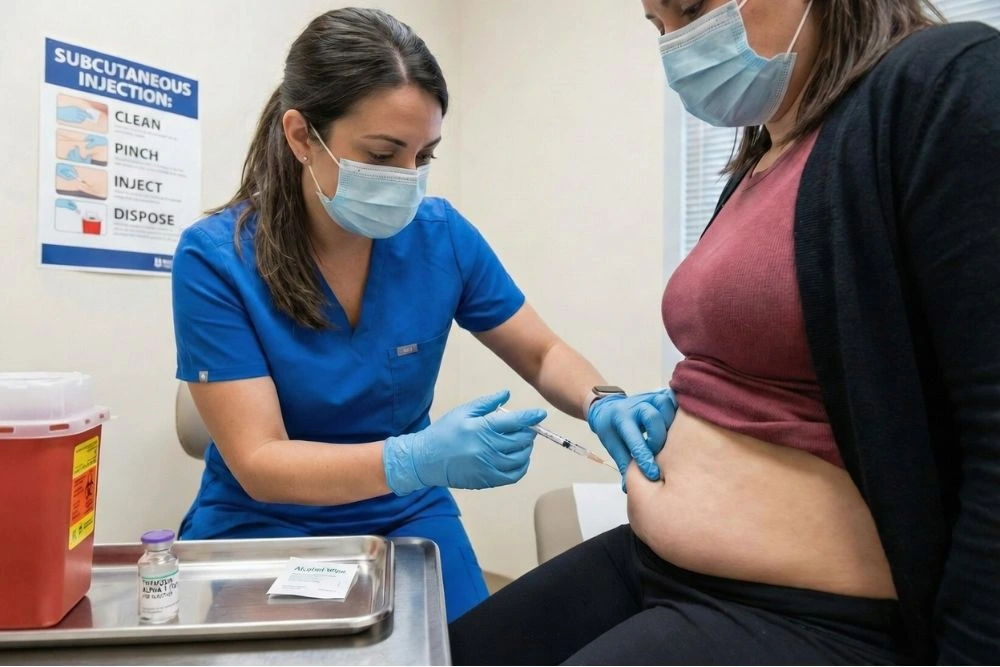
Thymosin alpha 1 is administered via subcutaneous injection, similar to insulin. The standard sites are:
- Abdomen (2 inches away from navel).
- Anterior thigh (upper outer quadrant).
- Upper arm (if administered by another person).
Reconstitution: Thymosin alpha 1 comes as lyophilized powder requiring reconstitution with sterile bacteriostatic water. Use the "Wall Method" (inject water down the side of the vial, never directly onto powder) to prevent peptide degradation. Gently swirl, do not shake.
Storage: Store lyophilized powder in freezer. After reconstitution, refrigerate and use within 14 days.
Need help with reconstitution math? Use our Peptide Calculator for Accurate Research to ensure precise dosing.
Timing Considerations
Thymosin alpha 1 can be administered at any time of day, but some clinicians prefer evening dosing to align with natural immune circadian rhythms. The immune system is most active at night, so supporting it during peak activity may enhance effects.
Take consistently for best results. If using twice weekly, maintain a regular schedule (e.g., Monday and Thursday) rather than irregular intervals.
Safety Profile: Why Thymosin Alpha 1 Is Exceptionally Well-Tolerated
One of the most remarkable aspects of thymosin alpha 1 is its safety record.
Common Side Effects (Generally Mild)
In clinical trials involving thousands of patients over decades, side effects have been minimal:
- Injection site reactions (mild redness, slight discomfort) in approximately 10% of patients.
- Transient flu-like symptoms (rare, occurring in less than 5%).
- Mild fatigue or drowsiness (occasional, typically resolves after first few doses).
Serious Adverse Events (Virtually Nonexistent)
This is where thymosin alpha 1 truly stands apart from many pharmaceutical agents:
- No reported cases of organ toxicity.
- No significant drug interactions.
- No receptor downregulation or tolerance development.
- No withdrawal syndrome upon discontinuation.
- Can be safely combined with chemotherapy, antivirals, antibiotics, and other medications.
A comprehensive safety review published in PMC concluded: "In extensive clinical trials involving thousands of patients, thymosin alpha 1 demonstrated an excellent safety profile with adverse events comparable to placebo."
Contraindications and Cautions
While thymosin alpha 1 is remarkably safe, there are some theoretical considerations:
- Active autoimmune disease (theoretical concern, though studies actually show benefit in certain conditions).
- Pregnancy and breastfeeding (insufficient data, use caution).
- Acute severe infections with high fever (may enhance inflammatory response in theory, though not reported in practice).
Why It's So Safe: The Endogenous Advantage
The reason thymosin alpha 1 has such a clean safety profile is simple: your body produces it naturally.
You're not introducing a foreign molecule that the immune system might react against. You're supplementing an endogenous peptide that declines with age. It's the difference between replacing natural thyroid hormone versus taking a synthetic stimulant.
This also explains why thymosin alpha 1 doesn't suppress immune function even with long-term use. Unlike corticosteroids or immunosuppressants, it works with the immune system's natural regulatory mechanisms.
Pharmaceutical-Grade Thymosin Alpha 1: Zadaxin and Quality Concerns
Not all thymosin alpha 1 is created equal.
FDA-Approved and International Products
The original and most rigorously tested form of thymosin alpha 1 is Zadaxin (thymalfasin), manufactured by SciClone Pharmaceuticals and licensed partners.
Zadaxin characteristics:
- Manufactured under strict cGMP (current Good Manufacturing Practice) standards.
- Third-party tested for purity, potency, and sterility.
- Available by prescription in countries where approved.
- Guaranteed peptide content and stability.
Thymosin alpha 1 is approved and available in over 30 countries including China, Russia, Philippines, Mexico, and multiple European and Asian nations.
United States Availability
In the United States, thymosin alpha 1 has FDA orphan drug status for hepatitis B but is not widely prescribed. However:
- It can be prescribed off-label by physicians.
- Some compounding pharmacies produce it.
- Research-grade versions are sold "for research use only."
Research-Grade Products: Quality Control Concerns
Many peptide suppliers sell thymosin alpha 1 as a research chemical. Quality varies dramatically:
- Actual peptide content may be significantly lower than labeled.
- Impurities and degradation products may be present.
- Sterility is not guaranteed (risk of bacterial contamination).
- Storage conditions may be inadequate.
If purchasing research-grade thymosin alpha 1, always:
- Demand third-party certificates of analysis (CoA).
- Verify HPLC purity testing (should be greater than 98%).
- Check mass spectrometry confirmation.
- Ensure proper lyophilization and packaging.
Learn how to evaluate peptide quality: Scientific Peptides: How to Read a Certificate of Analysis (CoA).
Peptide Stacking: Synergistic Combinations with Thymosin Alpha 1
Thymosin alpha 1 can be combined with other peptides for complementary effects.
Thymosin Alpha 1 + BPC-157
This is a popular combination for post-surgical recovery or managing chronic inflammatory conditions:
- Thymosin alpha 1: Immune support and prevention of infection.
- BPC-157: Tissue repair and healing acceleration.
- Synergy: Faster healing with reduced infection risk.
Thymosin Alpha 1 + Thymosin Beta 4
Both are thymic peptides but work through different mechanisms:
- Thymosin alpha 1: Immune modulation via TLR signaling.
- Thymosin beta 4: Tissue repair via actin binding and cell migration.
- Combined: Comprehensive healing and immune support.
Some regenerative medicine clinics use both together for optimal results.
For comprehensive muscle recovery and immune support stacking strategies, see Peptides for Muscle Growth: The Ultimate Stacking Guide
Frequently Asked Questions
How long does it take to see results with thymosin alpha 1?
Effects on immune markers (lymphocyte counts, cytokine levels) can be seen within 1 to 2 weeks. Clinical benefits for infections or vaccine response may take 4 to 6 weeks. For chronic conditions like hepatitis, full assessment requires 3 to 6 months of consistent use.
Can I take thymosin alpha 1 if I have an autoimmune disease?
Counterintuitively, research shows benefits in certain autoimmune conditions by restoring immune balance rather than simply boosting immunity. Studies in psoriatic arthritis and lupus patients showed reduced disease activity and improved immune markers. However, this should only be done under medical supervision with careful monitoring. The paradox is explained by thymosin alpha 1's ability to restore regulatory T cell function.
Is thymosin alpha 1 legal to buy in the United States?
It has FDA orphan drug status for hepatitis B but is not widely prescribed in the US. Physicians can prescribe it off-label. Research-grade versions are sold legally "for research purposes only" with the disclaimer that they are not for human consumption. Consult local regulations and work with a healthcare provider.
What's the difference between thymosin alpha 1 and thymosin beta 4?
These are different peptides with different functions. Thymosin alpha 1 (28 amino acids) primarily modulates immune function through Toll-like receptor signaling on dendritic cells and T lymphocytes. Thymosin beta 4 (43 amino acids) primarily promotes tissue repair and angiogenesis through actin binding. Both are produced by the thymus but work through distinct molecular mechanisms.
Can thymosin alpha 1 prevent colds and flu?
While primarily studied for serious infections and immune deficiency, its mechanism suggests it could enhance general immune surveillance. Studies show it improves vaccine response to influenza, and anecdotal reports suggest fewer infections in users. However, controlled studies specifically on common cold prevention are lacking. The immune-enhancing effects are well-documented, so some preventive benefit is plausible.
How long can I safely use thymosin alpha 1?
Clinical protocols range from 6 months to several years. In hepatitis trials, patients used it for 12 to 24 months. In cancer immunotherapy, it's often used throughout treatment plus maintenance. There is no evidence of tolerance development or safety concerns with long-term use. Some patients cycle 3 months on, 1 month off, though continuous use appears safe. The endogenous nature of the peptide means your body recognizes it as a natural molecule.
Conclusion: The Gold Standard for Immune Optimization
In a peptide landscape filled with hype, unproven claims, and gray-market products, thymosin alpha 1 stands apart.
It's one of the few immune peptides with:
- FDA orphan drug designation and regulatory approval in 30+ countries.
- Three decades of clinical use in millions of patients.
- Peer-reviewed evidence across hepatitis, cancer, sepsis, and vaccine enhancement.
- A safety record so clean that serious adverse events are virtually nonexistent.
- Well-understood mechanism through Toll-like receptor signaling.
Whether you're researching immune enhancement protocols, managing chronic viral infections, supporting cancer treatment, or simply optimizing immune function as you age, thymosin alpha 1 offers a scientifically validated pathway backed by decades of clinical data.
As thymic function declines with age, supplementing thymosin alpha 1 restores what time takes away. It's not about creating superhuman immunity. It's about maintaining the robust, balanced immune function you had in your youth.
That's why it's the gold standard.
Ready to explore more evidence-based peptide therapies? Start with our Ultimate Beginner's Guide to Peptides.
Official Research Disclaimer
The information provided in this guide is for informational and educational purposes only. Thymosin alpha 1 is a pharmaceutical product with FDA orphan drug status and regulatory approval in multiple countries for specific medical conditions. In the United States, it should only be used under physician supervision. Research-grade peptides are intended strictly for laboratory research and are not for human consumption or for the diagnosis, treatment, or prevention of any disease. All research should be conducted by qualified professionals in controlled environments with proper ethical oversight. The statements regarding these products have not been evaluated by the Food and Drug Administration (FDA) for all applications discussed. Always consult your local laws and institutional guidelines regarding the use of peptides in research. Always seek the advice of your physician or other qualified health provider with any questions you may have regarding a medical condition. Never disregard professional medical advice or delay seeking it because of information you read online.