
Peptides for Muscle Growth: The Ultimate Stacking Guide
Master peptides for muscle growth with stacking protocols for CJC-1295, Ipamorelin, IGF-1 LR3, BPC-157. Complete dosing, timing & safety guide.
- Published
- Updated
- Reading time
- 12 min read
- Author
- By PeptidesFinder
On this page
Building muscle is simple in theory. Train hard, eat enough protein, sleep well, and repeat.
But what if you could accelerate the process? What if you could recover faster, build more muscle per training session, and break through plateaus that have stalled your progress for months?
This is where peptides for muscle growth come in.
Peptides are short chains of amino acids that signal your body to produce more growth hormone, enhance protein synthesis, activate satellite cells, and speed up recovery. Unlike steroids that directly add hormones to your body, peptides work with your natural systems.
Research published in PMC shows that growth hormone secretagogues can increase muscle mass by stimulating local IGF-1 production in muscle tissue. Studies demonstrate that the effects are IGF-1 dependent and work through autocrine and paracrine signaling.
This guide covers everything you need to know about using peptides to build muscle. You will learn which peptides work best, how to stack them for maximum results, the right doses and timing, and how to manage side effects safely.
What Are Peptides for Muscle Growth?
Peptides are molecules made up of amino acids. While proteins are long chains of hundreds of amino acids, peptides are shorter (usually 2 to 50 amino acids).
When you inject specific peptides, they send signals to your body. Some tell your pituitary gland to make more growth hormone. Others directly activate muscle cells to grow. Some help repair damaged tissue.
Want to understand the basics first? Check out our Complete Guide to Peptides.
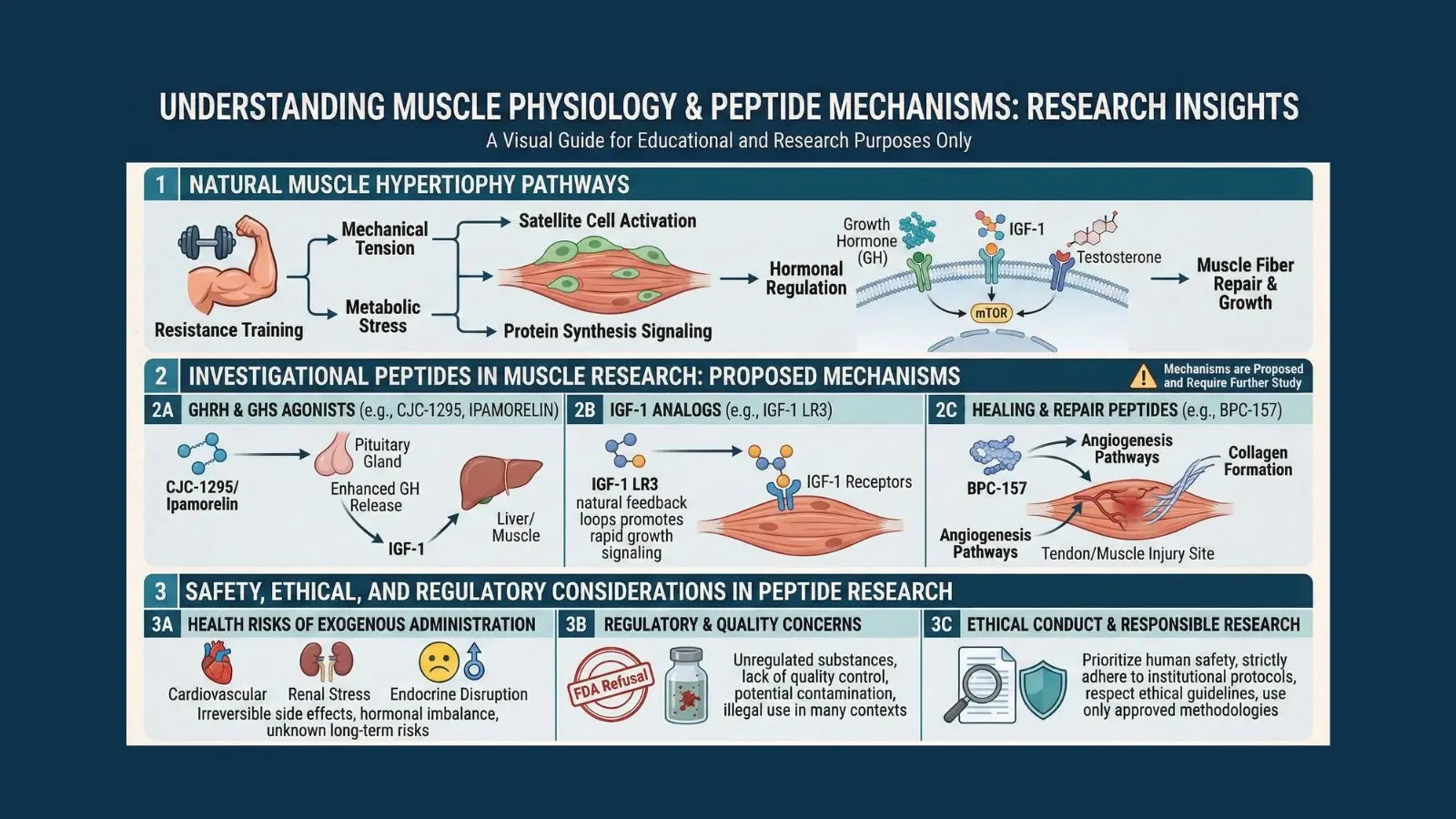
How Peptides Build Muscle
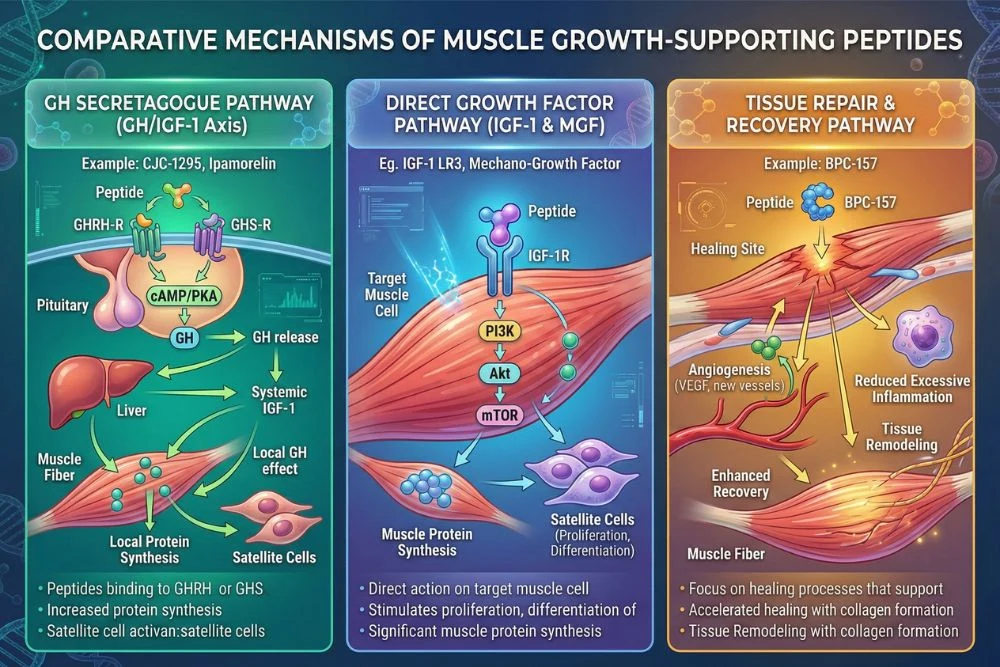
Most muscle-building peptides work through one of three main pathways:
- Growth Hormone Secretagogues: These peptides signal your pituitary gland to release more growth hormone. More GH means more IGF-1, which drives protein synthesis and muscle growth.
- Direct Growth Factors: Some peptides (like IGF-1 LR3) directly activate growth pathways in muscle cells without needing to go through GH first.
- Recovery and Repair Peptides: These help heal muscle tissue, tendons, and ligaments faster so you can train more frequently.
According to research in PubMed, growth hormone secretagogues promote pulsatile GH release that is subject to negative feedback, preventing supra-therapeutic levels and their side effects.
The Best Peptides for Muscle Growth
Not all peptides are created equal. Here are the most effective options backed by research and real-world results.
1. CJC-1295 + Ipamorelin (The Gold Standard Stack)
This is the most popular peptide combination for muscle growth, and for good reason.
CJC-1295 is a modified version of growth hormone-releasing hormone (GHRH). It has a long half-life of 6 to 8 days, which means it provides sustained GH release.
Ipamorelin is a growth hormone-releasing peptide (GHRP) that triggers immediate spikes in GH. It has a short half-life of about 2 hours but produces strong, fast-acting results.
When you combine them, you get the best of both worlds. CJC-1295 provides steady, background GH elevation while Ipamorelin creates powerful pulses.
Dosing Protocol:
- CJC-1295: 100 to 300 mcg
- Ipamorelin: 100 to 300 mcg
- Frequency: 1 to 2 times daily (morning and before bed)
- Cycle: 5 days on, 2 days off to prevent receptor desensitization
- Duration: 12 to 16 weeks
2. IGF-1 LR3 (Direct Muscle Growth)
While CJC-1295 and Ipamorelin work by increasing GH, IGF-1 LR3 skips that step and goes straight to the muscle cells.
IGF-1 LR3 is a modified version of Insulin-like Growth Factor-1 with a much longer half-life (20 to 30 hours versus 12 minutes for natural IGF-1). It activates the PI3K/Akt/mTOR pathway in muscle cells, which directly triggers protein synthesis and satellite cell activation.
Learn more in our detailed guide: IGF-1 LR3: The Mechanism of Muscle Hyperplasia.
Dosing Protocol:
- Dose: 20 to 80 mcg per day
- Timing: Post-workout or morning
- CRITICAL: Eat 30 to 50g carbs within 30 minutes to prevent hypoglycemia
- Cycle: 4 to 6 weeks on, 4 to 6 weeks off
3. BPC-157 (Recovery and Injury Repair)
BPC-157 stands for Body Protection Compound-157. While it does not directly build muscle, it dramatically accelerates recovery, which allows you to train harder and more frequently.
BPC-157 helps repair tendons, ligaments, muscles, and even gut tissue. Many athletes use it to recover from injuries that would normally take months to heal.
Full details here: BPC-157 Peptide Guide.
Dosing Protocol:
- Dose: 250 to 500 mcg
- Frequency: 1 to 2 times daily
- Duration: 4 to 8 weeks for injury healing, or ongoing for recovery support
4. Tesamorelin (Fat Loss While Building Muscle)
Tesamorelin is FDA-approved for reducing visceral belly fat. It works by stimulating growth hormone release specifically to target deep abdominal fat.
Many people stack tesamorelin with muscle-building peptides to improve body composition. You build muscle while simultaneously burning stubborn fat.
Learn more: Tesamorelin: FDA-Approved Visceral Fat Loss Guide.
Dosing Protocol:
- Dose: 1 to 2 mg
- Frequency: Once daily before bed
- Duration: 12 to 24 weeks
Advanced Stacking Protocols for Maximum Results
Stacking means combining multiple peptides to get better results than using any single peptide alone. Here are the most effective stacks.
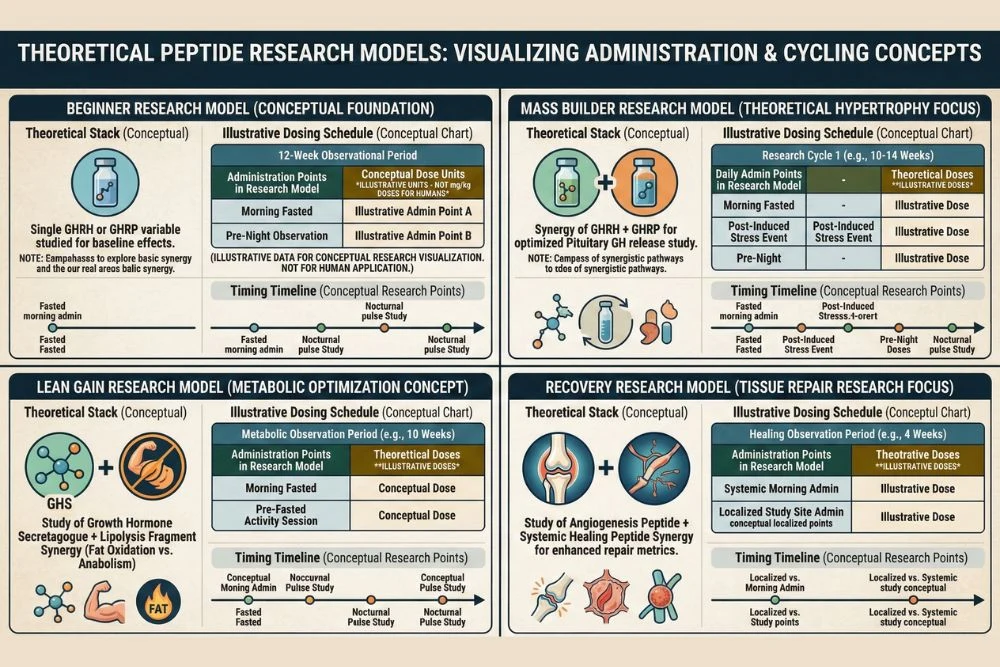
Stack 1: The Mass Builder
This stack maximizes muscle growth through multiple pathways.
Peptides:
- CJC-1295: 200 mcg before bed
- Ipamorelin: 200 mcg before bed
- IGF-1 LR3: 40 to 60 mcg post-workout
How it works: CJC-1295 and Ipamorelin work together to keep GH elevated. IGF-1 LR3 adds a direct muscle growth signal. You get sustained GH release, immediate GH pulses, and direct activation of muscle protein synthesis.
Expected results: Users typically gain 8 to 12 pounds of lean muscle over 12 to 16 weeks with proper training and nutrition.
Stack 2: The Recovery Stack
This stack helps you train more frequently by speeding up recovery.
Peptides:
- BPC-157: 250 mcg twice daily
- TB-500: 2.5 mg twice weekly
- CJC-1295: 100 mcg before bed
How it works: BPC-157 and TB-500 both promote tissue repair but work through different mechanisms. Adding CJC-1295 provides growth hormone support for overall recovery.
Best for: Athletes recovering from injuries, older individuals, or anyone who wants to train 5 to 6 days per week without overtraining.
Stack 3: The Lean Gain Stack
This stack builds muscle while burning fat.
Peptides:
- Ipamorelin: 200 mcg post-workout and before bed
- IGF-1 LR3: 40 mcg post-workout
- Tesamorelin: 1 mg before bed
How it works: This combination maximizes nutrient partitioning. Your body sends nutrients to muscle instead of fat. Tesamorelin specifically targets visceral fat breakdown.
Best for: Individuals who want to build muscle and lose body fat at the same time. Perfect for body recomposition.
Stack 4: The Beginner Stack
If you are new to peptides, start here.
Peptides:
- CJC-1295: 100 mcg before bed
- Ipamorelin: 100 mcg before bed
- BPC-157: 250 mcg once daily (optional for recovery support)
Why start here: Lower doses minimize side effects while you learn how your body responds. The CJC-1295/Ipamorelin combo is the safest and most well-tolerated peptide stack.
Progression: After 4 to 8 weeks, you can increase doses or add IGF-1 LR3 if desired.
Dosing, Timing, and Administration
Getting your doses right is critical for both results and safety.
Reconstitution Basics
Most peptides come as lyophilized powder that you need to mix with bacteriostatic water before injecting.
- Draw bacteriostatic water into your syringe
- Insert needle into peptide vial at 45-degree angle
- Aim water at inside wall of vial (never directly onto powder)
- Gently swirl (never shake)
- Store powder in freezer before mixing, reconstituted solution in fridge
Need help calculating doses? Use our Peptide Calculator.
Injection Technique
Most muscle-building peptides are injected subcutaneously (under the skin).
Common injection sites:
- Abdomen (2 inches from navel)
- Thigh (upper outer area)
- Upper arm (if someone else injects)
Important: Rotate injection sites to prevent tissue buildup. Use proper sterile technique. Discard used needles safely.
Timing Your Injections for Maximum Effect
When you inject matters almost as much as what you inject.
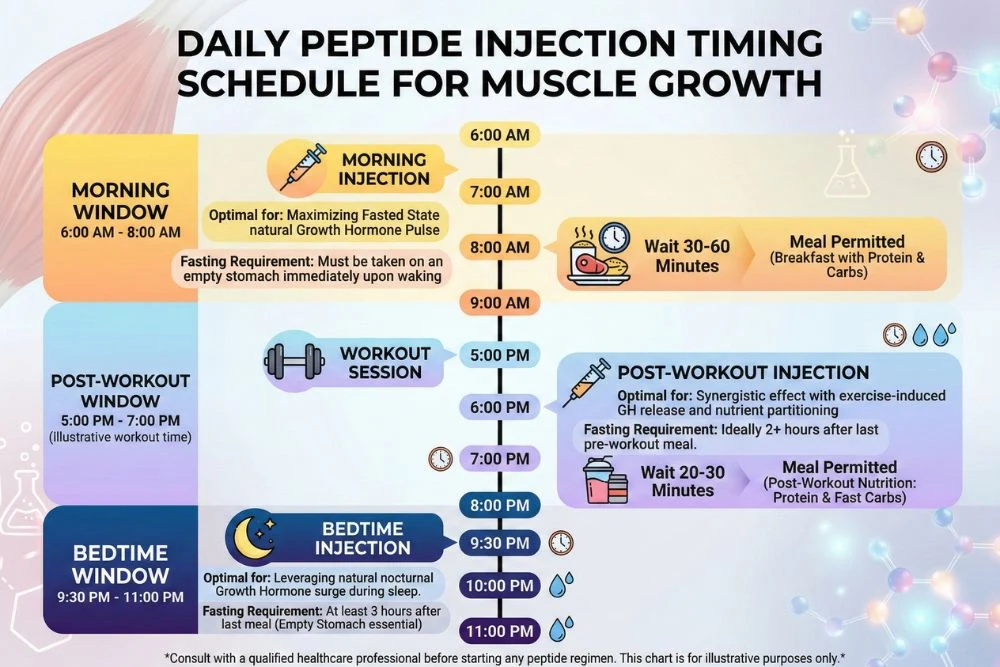
Morning (fasted): Best for Ipamorelin alone. Creates a strong GH pulse when your stomach is empty.
Post-workout: Ideal for IGF-1 LR3. Your muscles are primed for growth signals.
Before bed: Perfect for CJC-1295 + Ipamorelin. Aligns with natural nighttime GH release.
General rule: Take peptides on an empty stomach (1 hour before or 2 hours after eating) for best absorption. Exception: IGF-1 LR3 requires carbs within 30 minutes.
Cycling Protocols to Prevent Tolerance
Your body adapts to peptides over time. Cycling prevents receptor desensitization.
Option 1 (Weekly Cycling):
- 5 days on, 2 days off
- Best for: CJC-1295/Ipamorelin stacks
- Advantage: Maintains sensitivity while allowing near-daily use
Option 2 (Monthly Cycling):
- 4 to 6 weeks on, 4 to 6 weeks off
- Best for: IGF-1 LR3
- Advantage: Prevents long-term receptor downregulation
Option 3 (Quarterly Cycling):
- 12 to 16 weeks on, 4 to 8 weeks off
- Best for: Comprehensive muscle-building protocols
- Advantage: Maximum gains in one focused period
Managing Side Effects and Safety Considerations
Peptides are generally well-tolerated, but you need to know what to watch for.
Common Side Effects
Water Retention: Some users hold extra water, especially with GH peptides. This usually goes away after 2 to 3 weeks. Drink more water and reduce sodium if it bothers you.
Joint Stiffness: Rapid muscle growth can cause temporary joint discomfort. Increase stretching, use collagen peptides, and consider adding fish oil.
Injection Site Reactions: Mild redness or soreness is normal. Rotate sites and use proper technique.
Hunger Changes: Ipamorelin can increase appetite (which helps with bulking). Plan your meals accordingly.
Fatigue: Some people feel tired after injecting GH peptides. Take them before bed if this affects you.
Serious Side Effects to Watch For
Hypoglycemia (Low Blood Sugar): This is the main concern with IGF-1 LR3. Always eat carbs after injecting. Keep glucose tablets handy. Never inject fasted.
Numbness or Tingling: Can indicate carpal tunnel syndrome from water retention. Usually temporary but may require dose reduction.
Elevated Blood Sugar: Long-term GH elevation can affect insulin sensitivity. Monitor fasting glucose if using peptides for extended periods.
When to Stop and Seek Help
Stop using peptides immediately and contact a healthcare provider if you experience:
- Severe headaches or vision changes
- Persistent nausea or vomiting
- Chest pain or shortness of breath
- Signs of allergic reaction (rash, swelling, difficulty breathing)
- Extreme fatigue or weakness
Maximizing Results While Minimizing Risks
Follow these guidelines for the best outcome:
- Start with lower doses and increase gradually
- Get blood work done before starting (check baseline GH, IGF-1, fasting glucose)
- Monitor blood sugar if using IGF-1 LR3
- Work with a knowledgeable healthcare provider
- Take regular breaks (cycling)
- Use high-quality, tested peptides only
Quality Matters: Sourcing High-Grade Peptides
Not all peptides are created equal. Quality varies dramatically between suppliers.
What to Look For
When buying peptides for muscle growth, make sure the supplier provides:
- Third-party lab testing (HPLC purity analysis showing 98% or higher)
- Mass spectrometry confirmation
- Sterility testing
- Proper vacuum-sealed packaging
- Certificates of analysis (CoA) for each batch
Learn how to read these reports: How to Read a Certificate of Analysis.
Where to Buy Quality Peptides for Muscle Growth
When sourcing peptides for muscle growth research, quality is non-negotiable. We recommend verified suppliers with consistent third-party testing and good track records.
Disclosure: We may earn a commission from purchases made through links on this site. We only recommend suppliers we trust and have personally vetted for quality, purity, and customer service.
Red Flags to Avoid
Do NOT buy peptides from suppliers who:
- Refuse to provide certificates of analysis
- Have prices significantly lower than market rate
- Make exaggerated claims about results
- Ship from unknown countries with no quality standards
- Have no verifiable customer reviews or third-party validation
Frequently Asked Questions
How long until I see results from peptides for muscle growth?
Most people notice improved recovery within 1 to 2 weeks. Visible muscle growth typically appears after 4 to 6 weeks of consistent use combined with proper training and nutrition. Maximum results usually require 12 to 16 weeks. Remember that peptides enhance your results, they do not replace hard work in the gym.
Can women use these peptides safely?
Yes. Unlike anabolic steroids, growth hormone peptides work through natural pathways and do not cause masculine side effects. Women typically use the same dosing protocols as men. However, women who are pregnant or breastfeeding should not use any peptides.
Do I need to cycle peptides or can I use them year-round?
Cycling is recommended to prevent receptor desensitization. Most protocols involve 12 to 16 weeks on followed by 4 to 8 weeks off. Some people use a 5 days on, 2 days off weekly schedule. Taking breaks allows your receptors to upregulate and maintains effectiveness over time.
Can I stack peptides with other supplements like creatine or protein powder?
Absolutely. Peptides work synergistically with traditional supplements. Creatine, protein powder, and BCAAs complement peptide use perfectly. In fact, getting enough protein (1 gram per pound of body weight) is essential when using growth peptides, otherwise you will not have the building blocks needed for muscle growth.
Will I lose my gains after stopping peptides?
Muscle built with peptides is real muscle tissue. As long as you continue training and eating properly, you will keep your gains. However, enhanced recovery will return to normal, so you may not be able to train as frequently or intensely without peptide support. Think of peptides as performance enhancers, not muscle creators.
Are peptides for muscle growth legal to use?
Peptides are sold as research chemicals in many countries. They are not FDA-approved for muscle building or anti-aging purposes. Competitive athletes should note that growth hormone secretagogues are banned by WADA (World Anti-Doping Agency). Always check your local regulations and sport-specific rules before using any peptides.
Conclusion: Building Muscle the Smarter Way
Peptides for muscle growth offer a scientifically validated pathway to accelerate your results.
By working with your natural growth hormone system, activating muscle protein synthesis, and speeding up recovery, the right peptide stack can help you build more muscle, break through plateaus, and train more effectively.
But peptides are tools, not magic. They work best when combined with:
- Progressive resistance training
- Adequate protein intake (1g per pound of body weight)
- Sufficient sleep (7 to 9 hours per night)
- Consistent effort over time
If you are serious about maximizing your muscle growth, using peptides under proper guidance can give you a real edge. Just remember to start conservatively, monitor your response, source high-quality products, and work with a knowledgeable healthcare provider.
Ready to get started? Check out our Complete Guide to Peptides for beginners.
Official Research Disclaimer
The information provided in this guide is for informational and educational purposes only. Peptides discussed in this article are sold as research chemicals and are not FDA-approved for muscle building or anti-aging purposes. Research peptides are intended strictly for laboratory research and are not for human consumption or for the diagnosis, treatment, or prevention of any disease. All research should be conducted by qualified professionals in controlled environments with proper ethical oversight. The use of growth hormone secretagogues and other peptides carries risks including but not limited to hypoglycemia, water retention, and hormonal imbalances. This article does not constitute medical advice. Always consult a licensed healthcare provider before using any research compound. Never disregard professional medical advice or delay seeking it because of information you read online. Competitive athletes should be aware that many peptides discussed are banned by WADA and other sporting organizations. The author and publisher disclaim any liability for adverse effects resulting from the use or application of the information contained herein.