
The Best Tirzepatide Vendors for Laboratory Research
Looking for the best tirzepatide vendors for lab research? Discover the top third-party tested sources for research-grade tirz in 2026 and why quality matters.
- Published
- Reading time
- 17 min read
- Author
- By PeptidesFinder
On this page
Tirzepatide is the most scientifically significant metabolic peptide to enter the research space in years. As the first dual GIP and GLP-1 receptor agonist ever developed, it does something no prior compound could do: it activates two separate satiety hormone pathways simultaneously, producing metabolic effects that substantially exceed what single-receptor agonists like semaglutide achieve. The clinical trial data behind tirzepatide is not just impressive by peptide research standards. It is impressive by any pharmacological standard.
That scientific credibility has created a large and growing demand for tirzepatide in laboratory research settings. And as with every high-demand research peptide, that demand has attracted a wide range of suppliers, ranging from operations with rigorous quality standards to those selling products that may bear little resemblance to what the label claims.
For a researcher, the consequences of sourcing from the wrong vendor are serious. Impure tirzepatide produces unreliable results. Misidentified tirzepatide introduces unknown variables that invalidate your data entirely. And tirzepatide is a structurally complex 39-amino-acid peptide with a fatty acid modification, which makes it one of the harder compounds in the space to synthesize correctly. The margin for error is small, and the analytical testing required to confirm identity and purity is non-negotiable for any serious research protocol.
This guide covers the science behind why tirzepatide has become such a significant research compound, what separates a reliable vendor from a risky one, and the two vendors we recommend for third-party verified tirzepatide in 2026.
Top Pick: NextGen Peptides
NextGen Peptides is our top recommendation for tirzepatide in 2026. Among currently active peptide vendors, NextGen has one of the strongest community standing records available, with over 400 Trustpilot reviews consistently recognizing product quality, shipping reliability, and customer service. Multiple independent reviewers have specifically confirmed that peptides from NextGen matched their provided COA documentation when independently tested. That external validation is the most meaningful signal a vendor can earn, and NextGen has earned it across a broad catalog that includes GLP-1 class compounds like tirzepatide.
Tirzepatide is a structurally complex peptide, and its 39-amino-acid sequence with a C18 fatty acid modification requires more demanding synthesis standards than simpler research peptides. NextGen's track record of consistent documentation quality across their catalog is particularly relevant for a compound where synthesis errors are harder to detect visually and have a larger impact on biological activity.
NextGen ships domestically with most orders arriving within 2 to 3 business days. Their ordering and fulfillment process has been described by returning customers as among the most professional in the market. Researchers who need a primary vendor capable of sourcing tirzepatide alongside the full range of core research peptides will find NextGen a straightforward and reliable choice.
Runner-Up: Ascension Peptides
Ascension Peptides earns the runner-up position on the strength of their documentation transparency. Every product page on their site links directly to third-party Certificates of Analysis, so researchers can review purity data and mass spectrometry identity confirmation before placing an order. For researchers who treat pre-purchase COA review as a required step in their sourcing protocol, this accessibility removes friction that most vendors still create.
Ascension holds a 4.8 out of 5 star Trustpilot rating with reviewers specifically citing their clean documentation practices, fast US domestic shipping, and responsive customer support. They have maintained continuous operations through the regulatory disruptions of 2024 and 2025, which is a meaningful operational stability signal in a market where several vendors went dark during that period. Their catalog covers GLP-1 class compounds including tirzepatide alongside growth hormone secretagogues, healing peptides, nootropics, and specialty research compounds.
For documentation-first researchers who want independent COA verification accessible before any purchase commitment, Ascension Peptides is the natural fit.
Additional Resource: Peptides Finder Vendor Directory
Researchers who want to compare additional verified vendors alongside NextGen and Ascension can use the Peptides Finder vendor directory. The directory is curated to list suppliers who meet documentation and testing standards, giving researchers a starting point for vendor evaluation beyond the two we recommend directly in this guide.
What Is Tirzepatide and Why Does It Matter for Research?
Tirzepatide is a synthetic 39-amino-acid peptide that acts as a dual agonist at two metabolic hormone receptors: the GIP receptor (glucose-dependent insulinotropic polypeptide receptor) and the GLP-1 receptor (glucagon-like peptide-1 receptor). It was developed by Eli Lilly and approved by the FDA in 2022 under the brand name Mounjaro for type 2 diabetes, and subsequently approved as Zepbound for chronic weight management. The approval history and clinical mechanism of this class of compound is covered in depth in our guide on GLP-1 Drugs Explained: The Science Behind the Weight Loss Revolution.
What makes tirzepatide structurally and mechanistically distinct is the dual receptor activity. Prior to tirzepatide, the most advanced approved compounds in this space were single GLP-1 receptor agonists. Tirzepatide's addition of GIP receptor activation adds a second, complementary metabolic signaling pathway that amplifies the effects of GLP-1 stimulation rather than simply duplicating them.
The Dual Receptor Mechanism: GIP Plus GLP-1
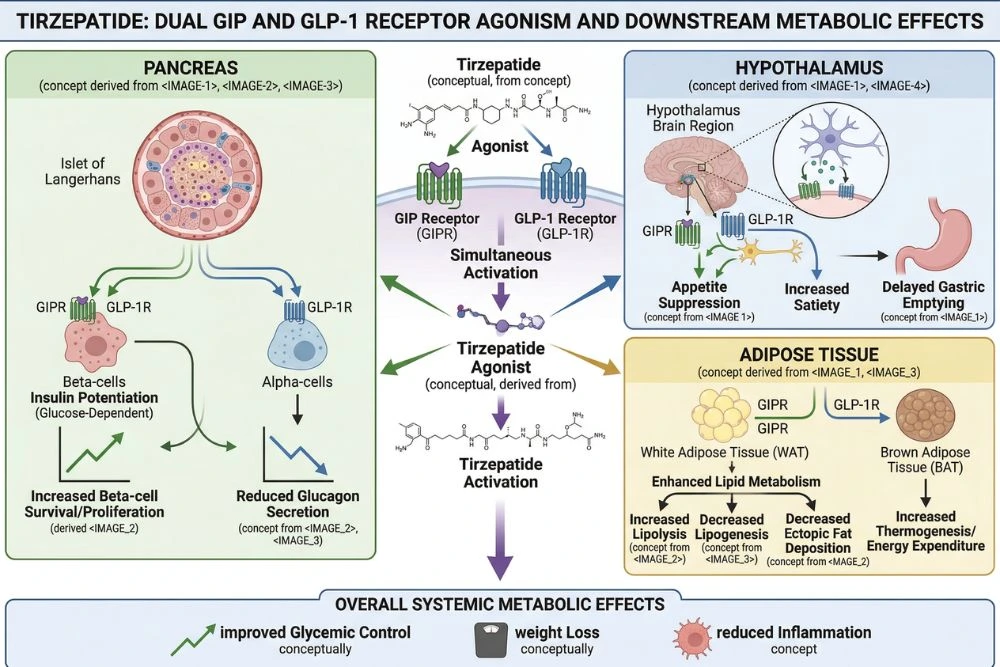
GLP-1 (glucagon-like peptide-1) is a gut hormone released after meals that stimulates insulin secretion, suppresses glucagon, slows gastric emptying, and produces satiety signals in the hypothalamus. GIP (glucose-dependent insulinotropic polypeptide) is a second gut hormone released in response to fat and carbohydrate consumption that potentiates insulin release and, in the central nervous system, modulates appetite and energy expenditure. Research published in Nature Medicine demonstrated that tirzepatide's dual agonism produces weight loss outcomes that significantly exceed what GLP-1 mono-agonism achieves, supporting the hypothesis that GIP and GLP-1 pathways have additive or synergistic effects in metabolic regulation.
The molecular design of tirzepatide reflects this dual target. Its amino acid sequence is optimized for binding affinity at both receptors, and a C18 fatty acid modification is attached via a linker to extend its half-life and allow once-weekly dosing. This fatty acid modification is one of the reasons that tirzepatide synthesis is technically demanding: the fatty acid must be conjugated correctly, and the peptide's overall structure must remain intact for the compound to bind its two target receptors with the correct affinity profile.
The SURPASS Trial Data: Why Researchers Are Paying Attention
The SURPASS clinical trial program, which included more than 40,000 participants across multiple trials, established tirzepatide's metabolic efficacy in human subjects with a rigor that most research peptides cannot approach. The SURPASS-2 trial, published in the New England Journal of Medicine, showed that tirzepatide produced superior HbA1c reductions and weight loss compared to semaglutide 1 mg across all three dose levels tested (5 mg, 10 mg, and 15 mg weekly).
The SURMOUNT-1 trial, focused specifically on weight management in non-diabetic participants with obesity, found that tirzepatide at 15 mg weekly produced a mean weight reduction of 22.5 percent of body weight over 72 weeks. These are outcomes that rival the results of bariatric surgery in some analyses, and they have driven significant scientific interest in the compound's mechanisms beyond simple appetite suppression.
Researchers studying metabolic optimization, adipose tissue biology, insulin signaling, and the neuroscience of satiety have found tirzepatide's dual receptor mechanism an exceptionally useful research tool. For foundational context on GLP-1's role in metabolic regulation, our guide on What Is Glucagon-Like Peptide-1? The Hormone Behind the Hype explains the biology behind these effects.
Why Tirzepatide Sourcing Is Harder Than Most Research Peptides
Tirzepatide presents sourcing challenges that are more significant than most research peptides, for reasons rooted in its structural complexity. Understanding why helps explain why vendor selection matters more for tirzepatide than for simpler compounds.
The Synthesis Complexity Problem
Most research peptides used in laboratory settings are relatively short sequences, ranging from 5 to 20 amino acids, with straightforward linear structures. Tirzepatide is a 39-amino-acid sequence with a specific branching structure and a C18 fatty acid modification attached via a gamma-glutamic acid linker. Synthesizing this correctly requires more advanced manufacturing capabilities than shorter, linear peptides.
The fatty acid modification is particularly important. It is not decorative. The C18 fatty acid is what enables tirzepatide to bind to albumin in the bloodstream, extending its half-life from hours to approximately five days and enabling once-weekly dosing. Without the correct fatty acid modification, the compound's pharmacokinetic profile changes fundamentally. A tirzepatide analog missing or incorrectly attaching the fatty acid chain will behave differently in biological systems and produce research data that does not reflect the reference compound.
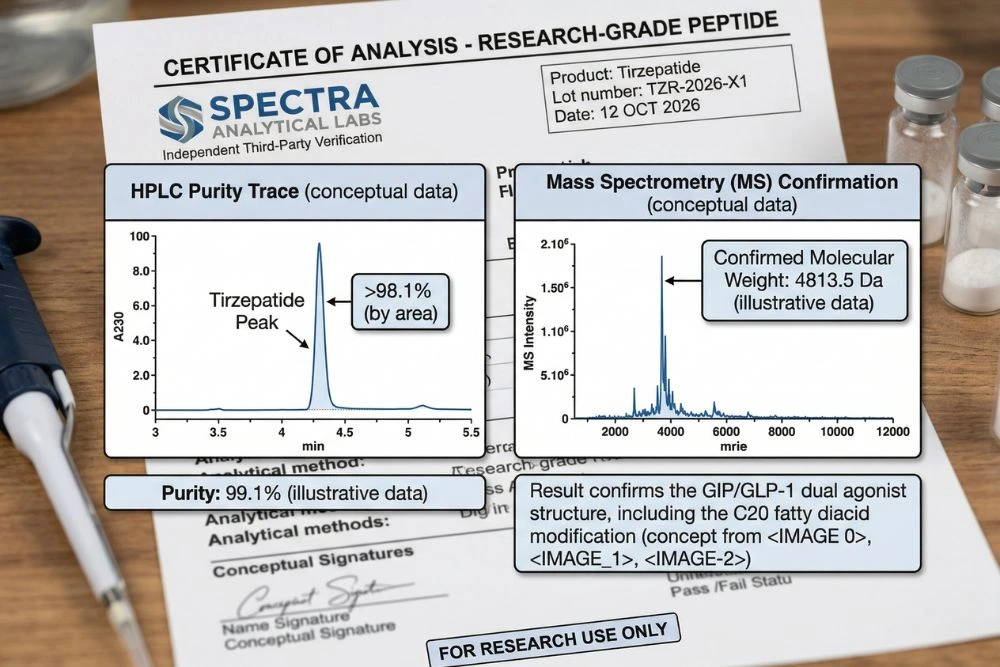
This means that verifying tirzepatide identity requires mass spectrometry that can confirm not just the peptide backbone but also the fatty acid modification. HPLC purity alone is insufficient for a compound of this complexity. Vendors who provide only basic HPLC data without mass spectrometry identity confirmation are not meeting the documentation standard that tirzepatide research requires.
What Complete Tirzepatide Documentation Should Include
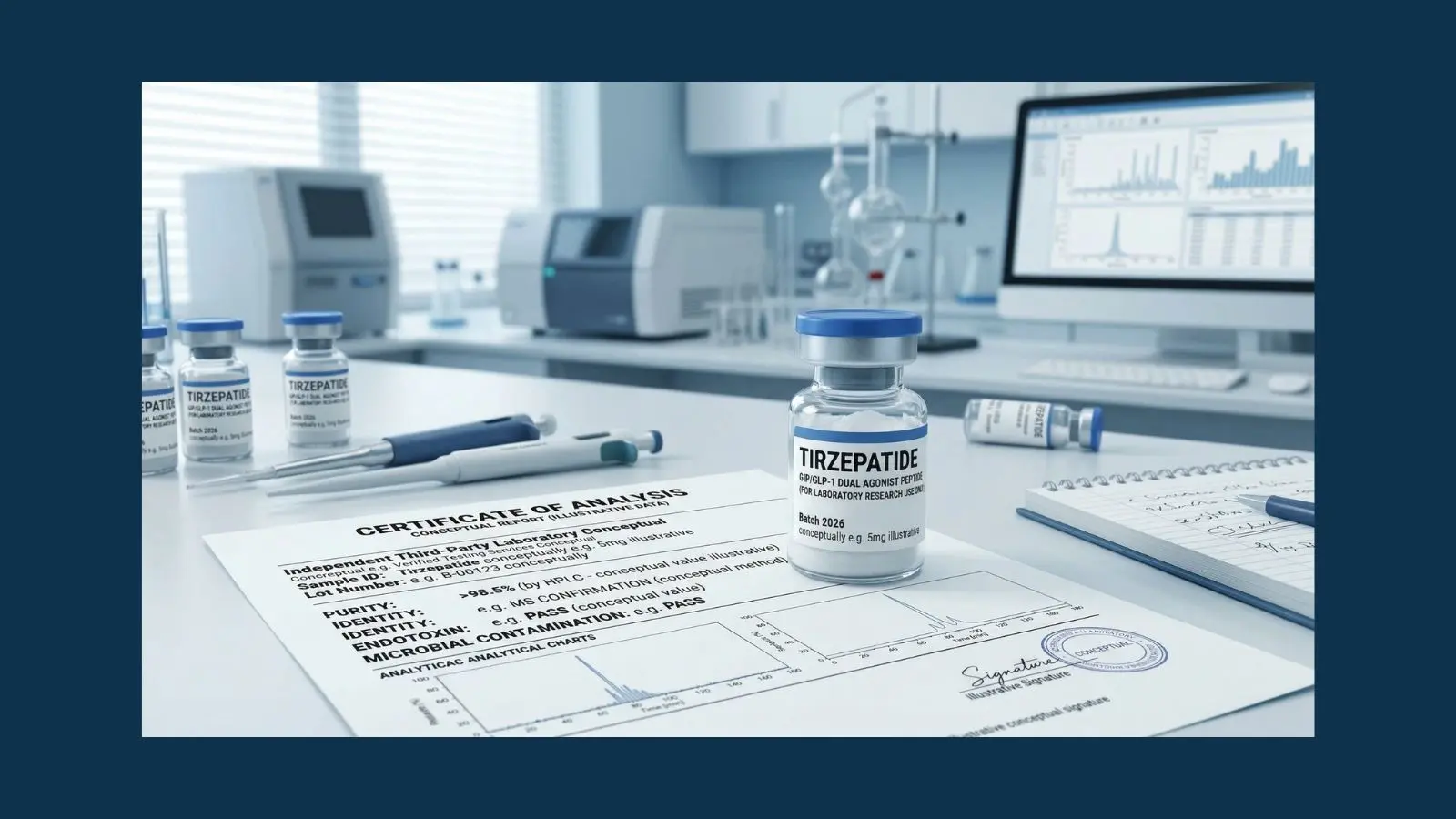
For tirzepatide specifically, a complete third-party Certificate of Analysis should confirm:
- HPLC purity analysis showing above 98 percent purity with the chromatographic trace included
- Mass spectrometry (MS) identity confirmation verifying the correct molecular weight (4813.5 Da for tirzepatide) and confirming the fatty acid modification is present and correctly attached
- Sequence verification confirming the full 39-amino-acid backbone
- Lot or batch number that matches the label on your vial
- Third-party laboratory name from an independent accredited facility with no financial relationship to the vendor
Not sure how to read a Certificate of Analysis? Our complete guide on How to Verify Peptide Quality: Reading a Certificate of Analysis (COA) walks through every section of peptide testing documentation and explains what to look for and what to flag as insufficient.
The 2025 Vendor Landscape Shift
The FDA's enforcement actions against several major peptide compound distributors in mid-2025 reshaped the US research peptide market significantly. Several established vendors exited the market or significantly curtailed their operations during this period. The vendors who maintained uninterrupted operations through this period carry substantially lower sourcing risk than those who went dark and relaunched under new branding, or who are new entrants taking advantage of the market gap.
For tirzepatide specifically, this context matters because the compound's popularity and FDA-approved pharmaceutical status make it a target for lower-quality suppliers entering the market during periods of reduced competition. Operational continuity through 2024 and 2025 is a meaningful quality signal that distinguishes established, compliant operations from opportunistic ones.
How to Evaluate Any Tirzepatide Vendor
The criteria for evaluating a tirzepatide vendor are the same as for any research peptide, with the addition of the mass spectrometry requirement specific to tirzepatide's complex structure. Here is the complete evaluation framework:
-
Non-Negotiable: Third-Party COA with Mass Spec
For tirzepatide, a Certificate of Analysis from the vendor's own in-house testing is not acceptable documentation. The COA must come from an independent accredited third-party laboratory. The testing must include both HPLC purity and mass spectrometry identity confirmation. Vendors who cannot or will not provide this documentation for tirzepatide should be eliminated from consideration regardless of their pricing or marketing claims. -
Independent Community Reputation
Vendor reputation on the vendor's own website or social media is not reliable evidence. The only useful reputation signals come from independent platforms where the vendor cannot control or remove reviews. Trustpilot is the primary platform for this purpose in the research peptide space. A vendor with a large number of independently verified reviews specifically mentioning product quality and documentation accuracy provides meaningfully different information than one with limited or absent independent review history. -
Operational Continuity
How long has the vendor been operating, and did they maintain operations through the 2025 enforcement period? Vendors with multi-year operating histories and no gaps in service during the 2024 to 2025 period carry substantially lower risk than newer entrants. This is not about brand recognition. It is about demonstrated ability to operate responsibly within the research chemical framework over an extended period. -
Catalog Breadth and Specialization
Does the vendor specialize in peptides, or is tirzepatide one of dozens of unrelated research chemicals they carry? Peptide-specialist vendors are more likely to have the synthesis relationships, quality control processes, and technical knowledge required to source and verify a compound as complex as tirzepatide. Our guide on the Top 5 Most Reliable Peptide Vendors Online in 2026 provides broader context on evaluating vendor specialization across the research peptide space.
Tirzepatide in Research: What Scientists Need to Know
Tirzepatide is an FDA-approved pharmaceutical under the brand names Mounjaro and Zepbound. As a research chemical, it occupies a distinct category from its pharmaceutical counterpart. Understanding this distinction is important for any researcher working with tirzepatide.
Research Chemical vs. Pharmaceutical Tirzepatide
Research-grade tirzepatide and pharmaceutical tirzepatide (Mounjaro/Zepbound) are distinct products with different regulatory contexts. Pharmaceutical tirzepatide is manufactured under FDA-regulated current good manufacturing practice (cGMP) standards, is approved for specific therapeutic indications, and requires a prescription. Research-grade tirzepatide is synthesized as a research chemical for laboratory use only. It is not intended for human consumption, is not manufactured under cGMP standards, and is not interchangeable with the pharmaceutical product for any clinical purpose. For a clear explanation of how research peptides differ from approved therapeutic compounds, see our guide on GLP-1 Agonists vs. Peptides: Medications vs. Research Compounds.
Research Applications of Tirzepatide
Laboratory research with tirzepatide has focused primarily on several areas where the compound's dual receptor mechanism offers unique scientific value:
- Metabolic biology: Understanding how simultaneous GIP and GLP-1 receptor activation affects insulin secretion, glucagon suppression, and glucose homeostasis at the cellular level.
- Adipose tissue research: Studying the mechanisms by which dual receptor agonism affects fat cell biology, including lipid metabolism, adipokine secretion, and adipose tissue mass regulation.
- Appetite and satiety neuroscience: Investigating how hypothalamic GIP and GLP-1 receptor activation interact to modulate feeding behavior and energy expenditure.
- Comparative receptor pharmacology: Using tirzepatide alongside selective GIP and GLP-1 agonists to dissect the individual and combined contributions of each receptor pathway.
- Peptide formulation research: Studying the pharmacokinetic properties of fatty acid-modified peptides, using tirzepatide's C18 albumin-binding modification as a model for extended half-life peptide design.
Working with Tirzepatide in the Laboratory
Tirzepatide for research is supplied as a lyophilized powder. Reconstitution is typically performed using sterile bacteriostatic water. The compound is generally soluble under standard reconstitution conditions, though the fatty acid modification means it benefits from gentle mixing rather than vigorous agitation. Storage of lyophilized tirzepatide at -20 degrees Celsius is standard, with reconstituted solutions stored at 2 to 8 degrees Celsius and used within 30 days.
Dosing calculations for tirzepatide research protocols should account for the compound's molecular weight of 4813.5 Da and the specific reconstitution concentration used. A peptide calculator is an essential tool for accurately converting milligrams per kilogram dose targets into volume measurements based on your working solution concentration.
Frequently Asked Questions
Is tirzepatide legal to buy for research?
Research-grade tirzepatide is legal to purchase in the United States as a research chemical for laboratory research purposes. It is not legal to purchase, sell, or administer as a therapeutic compound outside of the FDA's approved pharmaceutical pathway, which requires a prescription for Mounjaro or Zepbound. Vendors operating within the research chemical framework, who do not make human health claims and supply to research contexts only, are operating within established legal boundaries. Researchers should purchase from vendors who clearly operate within this framework and provide appropriate research-use documentation.
Why is third-party testing more important for tirzepatide than for simpler peptides?
Tirzepatide's 39-amino-acid sequence and C18 fatty acid modification make it one of the most structurally complex peptides commonly available in the research market. Errors in synthesis, including incorrect amino acid incorporation, sequence truncations, or missing or incorrectly attached fatty acid modifications, cannot be detected by visual inspection and may not be detectable even by basic HPLC analysis alone. Mass spectrometry identity confirmation is required to verify that the compound's full structure, including the fatty acid modification, is correct. This is why the documentation bar for tirzepatide should be higher than for simpler linear peptides, and why vendors who provide only HPLC data without mass spec confirmation are insufficient for serious tirzepatide research.
What makes NextGen Peptides the top recommendation for tirzepatide?
NextGen Peptides earns the top position based on three independent quality signals: third-party COA documentation across their catalog, a large verified Trustpilot review base with over 400 independent reviews specifically recognizing product quality and documentation accuracy, and consistent domestic shipping performance with most orders arriving within 2 to 3 business days. Their operational continuity through the 2025 regulatory disruptions that affected the broader vendor market adds further confidence. For a compound as structurally demanding as tirzepatide, a vendor with proven documentation standards across their full catalog represents meaningfully lower sourcing risk than one whose quality track record is limited or unverified.
What makes Ascension Peptides a strong alternative?
Ascension Peptides distinguishes itself through pre-purchase documentation transparency, making third-party COAs accessible directly on every product page. This means researchers can verify purity and identity data before placing any order, rather than requesting documentation after the fact. Their 4.8 out of 5 star independent Trustpilot rating, continuous operational history through 2024 and 2025, and comprehensive catalog covering GLP-1 class compounds including tirzepatide position them as a strong second choice. For researchers who prioritize document review as a required pre-purchase step, Ascension's documentation accessibility gives them a practical advantage over vendors who make COA requests more cumbersome.
How does tirzepatide differ from semaglutide as a research compound?
Semaglutide is a GLP-1 receptor mono-agonist, activating only the GLP-1 receptor. Tirzepatide is a dual GIP and GLP-1 receptor agonist, activating both simultaneously. For researchers studying metabolic pathways, this distinction is scientifically significant: tirzepatide allows investigation of how GIP and GLP-1 receptor co-activation interacts compared to GLP-1 stimulation alone. Clinically, tirzepatide has demonstrated superior weight loss and glycemic control compared to semaglutide in head-to-head trials, which reflects the additive or synergistic metabolic signaling produced by the dual mechanism. From a synthesis complexity standpoint, tirzepatide is a larger and more structurally complex compound, making quality verification even more critical.
What should the tirzepatide COA specifically confirm?
A complete Certificate of Analysis for research-grade tirzepatide should include: HPLC purity analysis with the chromatographic trace showing above 98 percent purity; mass spectrometry confirmation of the correct molecular weight (4813.5 Da), verifying both the peptide backbone and the fatty acid modification; lot or batch number matching the product label; and identification of the independent third-party laboratory that performed the testing. COAs issued by the vendor's own in-house testing department rather than an independent accredited laboratory do not provide the same level of quality assurance and should not be treated as equivalent.
Can I use the Peptides Finder directory to find additional tirzepatide vendors?
Yes. The Peptides Finder vendor directory is a curated resource listing suppliers who meet documentation and testing standards across the research peptide space. While NextGen Peptides and Ascension Peptides are our primary recommendations for tirzepatide in 2026, the directory provides additional verified options for researchers who want to compare multiple sources or who have specific requirements beyond what our two primary recommendations offer.
Conclusion: Quality Documentation Is the Starting Point for Tirzepatide Research
Tirzepatide's dual GIP and GLP-1 receptor mechanism has produced some of the most compelling metabolic research data generated in the past decade. The SURPASS and SURMOUNT trial results have established it as a benchmark compound for studying glucose regulation, appetite signaling, and fat metabolism in ways that single-receptor agonists cannot replicate. For laboratory researchers working in metabolic biology, adipose tissue science, and the neuroscience of energy regulation, tirzepatide offers a uniquely valuable research tool.
That value is only realized when the compound in the vial is actually tirzepatide at the purity and structural integrity the research requires. Given tirzepatide's synthesis complexity, getting quality documentation right matters more than it does for simpler research peptides. The fatty acid modification that makes tirzepatide pharmacokinetically distinct from shorter, unmodified peptides is also the feature that requires mass spectrometry confirmation, not just HPLC purity data, to verify correctly.
Our two recommended vendors for tirzepatide in 2026 are NextGen Peptides and Ascension Peptides. Both provide third-party tested documentation, have maintained operational continuity through the regulatory disruptions of 2025, and carry independently verifiable community reputations. For additional vendor options and a broader view of the verified research peptide supplier landscape, the Peptides Finder directory is the most complete curated resource currently available.
For researchers who want to deepen their understanding of tirzepatide's science before sourcing, our guide on GLP-1 Drugs Explained: The Science Behind the Weight Loss Revolution covers the full pharmacological and clinical picture of this class of compound.
Watch for the upcoming Tirzepatide vs. Semaglutide: Comparing the Weight Loss Giants, which will compare the mechanisms and research evidence of both compounds side by side.
Official Research Disclaimer
The information provided in this guide is for informational and educational purposes only. Tirzepatide research chemical is sold strictly for laboratory research purposes and is not FDA-approved for human use outside of its pharmaceutical forms (Mounjaro and Zepbound), which require a prescription. Research peptides are intended strictly for laboratory research and are not for human consumption or for the diagnosis, treatment, or prevention of any disease. All research should be conducted by qualified professionals in controlled environments with proper ethical oversight. This article does not constitute medical advice. Always consult a licensed healthcare provider before using any research compound. Never disregard professional medical advice or delay seeking it because of information you read online. The author and publisher disclaim any liability for adverse effects resulting from the use or application of the information contained herein.
Affiliate Disclosure: PeptidesFinder has affiliate relationships with the vendors featured in this guide. We may earn a commission on purchases made through links on this page, at no additional cost to you.