
5-Amino-1MQ: How to Block the Enzyme That Stores Fat
Learn how 5-amino-1MQ blocks NNMT enzyme to prevent fat storage, boost NAD+, improve metabolism. Complete dosing, benefits, side effects covered.
- Published
- Updated
- Reading time
- 11 min read
- Author
- By PeptidesFinder
On this page
5-Amino-1MQ and NNMT: A New Approach to Stubborn Fat
You eat at a calorie deficit. You exercise five days a week. You track your macros religiously.
And yet, the stubborn fat around your belly refuses to budge.
The problem might not be your willpower or dedication. It could be an enzyme called NNMT that is telling your fat cells to store more and burn less.
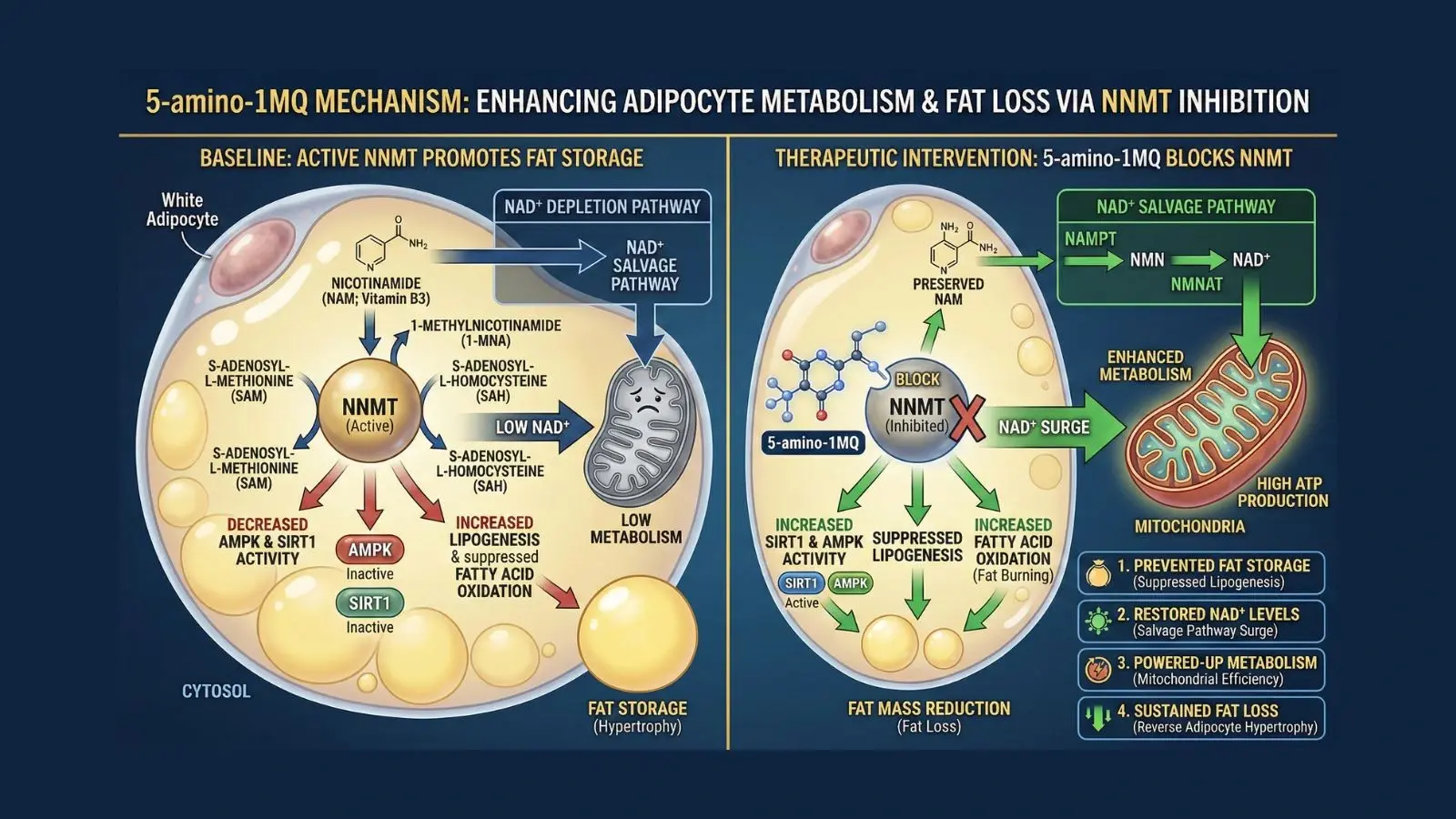
Meet 5-amino-1MQ, a small molecule that blocks this fat storage enzyme at the cellular level. By inhibiting NNMT (nicotinamide N-methyltransferase), it changes how your fat cells behave, making them more likely to release energy instead of hoarding it.
Research published in PMC shows that 5-amino-1MQ treated mice had 35% less body mass, 30% smaller fat cells, and 40% less adipocyte volume compared to untreated mice. Remarkably, these results happened without changes in food intake.
This guide explains how 5-amino-1MQ works, the science behind NNMT inhibition, proper dosing protocols, potential benefits beyond fat loss, and what you need to know about side effects and quality sourcing.
What Is 5-Amino-1MQ?
5-amino-1MQ (full name: 5-amino-1-methylquinolinium) is a small molecule compound that inhibits the enzyme NNMT.
To understand why this matters, you need to understand what NNMT does.
The NNMT Problem: Why Your Fat Cells Store Instead of Burn
NNMT (nicotinamide N-methyltransferase) is an enzyme highly active in fat tissue. When you gain weight, your fat cells produce more NNMT.
Here is what happens when NNMT is overactive:
- Your cells store more fat and burn less energy
- NAD+ levels drop (a critical molecule for energy production and cellular health)
- Insulin sensitivity decreases (making it harder to control blood sugar)
- Inflammation increases in fat tissue
- Metabolism slows down
According to research in PMC, NNMT expression is upregulated in the white adipose tissue of obese and diabetic mice. Higher NNMT activity correlates with lower levels of GLUT4 (the protein that helps cells absorb glucose), which means your body stores fat because it cannot use energy efficiently.
How 5-Amino-1MQ Blocks NNMT
5-amino-1MQ was first characterized by researchers at the University of Texas in 2017. It is a membrane-permeable molecule, which means it can easily enter cells where NNMT operates.
When 5-amino-1MQ inhibits NNMT, several positive changes happen:
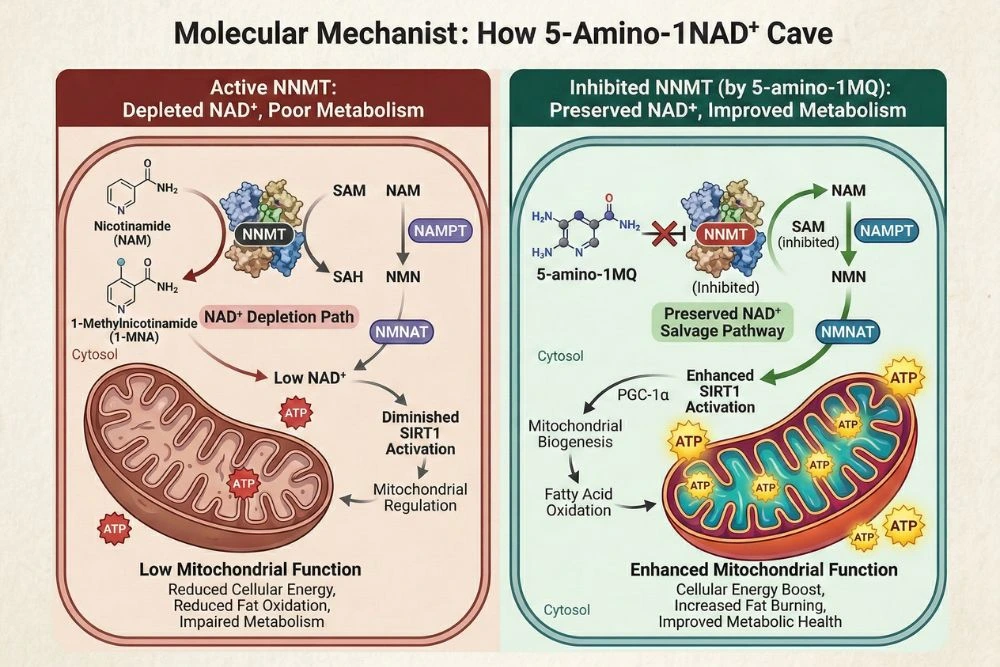
- NAD+ levels increase: NNMT normally depletes NAD+ by using it to methylate nicotinamide. When NNMT is blocked, NAD+ is preserved.
- Energy metabolism improves: With more NAD+ available, your mitochondria (cellular power plants) work more efficiently.
- Fat cells shrink: The cells start releasing stored fat for energy instead of accumulating it.
- Glucose uptake improves: GLUT4 transporter activity increases, helping your body use carbohydrates for energy instead of storing them as fat.
Importantly, 5-amino-1MQ is highly selective. It does not inhibit other methyltransferases or enzymes in the NAD+ salvage pathway, which minimizes side effects.
Want to understand more about metabolic optimization? Check out our guide on Peptides for Fat Loss.
The Science-Backed Benefits of 5-Amino-1MQ
While fat loss gets the most attention, 5-amino-1MQ offers multiple metabolic benefits.
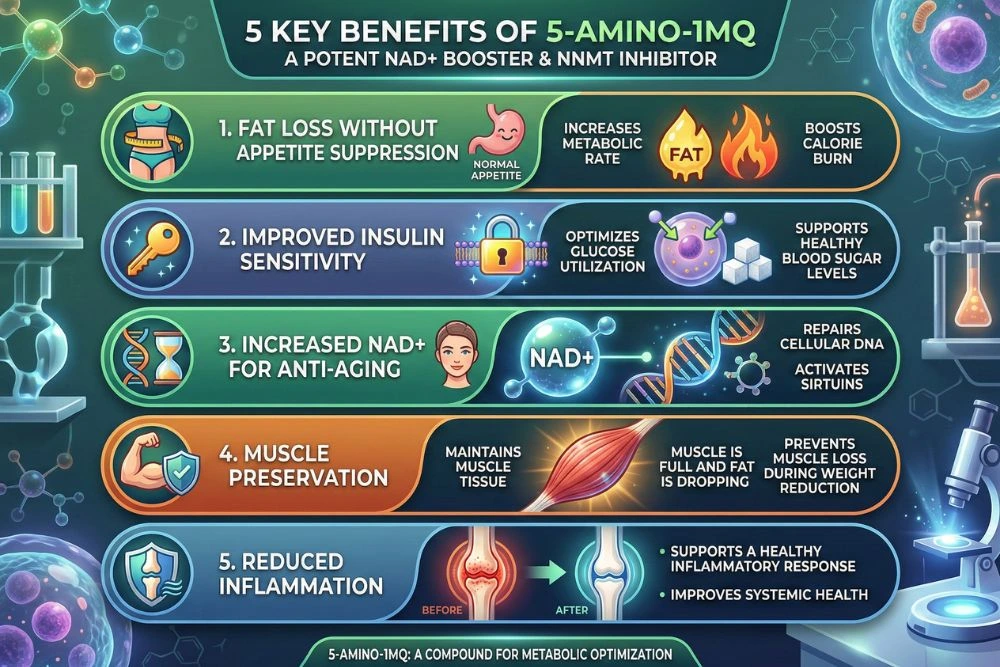
Benefit 1: Significant Fat Loss Without Appetite Suppression
The most compelling research comes from mouse studies.
In the landmark study published in PMC, diet-induced obese mice received 5-amino-1MQ at 20 mg/kg three times daily for 11 days. The results:
- 35% reduction in body mass
- 30% decrease in adipocyte size
- 40% decrease in adipocyte volume
- No change in food intake (meaning the weight loss was purely metabolic)
- Cholesterol levels normalized to those of lean mice
This is fundamentally different from appetite suppressants like GLP-1 agonists. You are not eating less. Your cells are simply processing energy more efficiently.
Benefit 2: Improved Insulin Sensitivity and Blood Sugar Control
NNMT activity is linked to insulin resistance and type 2 diabetes. By inhibiting this enzyme, 5-amino-1MQ may help restore insulin sensitivity.
Research in PMC shows that NNMT inhibition:
- Normalizes glucose tolerance
- Reduces fasting blood glucose levels
- Increases production of PAHSAs (anti-diabetic lipids)
- Improves insulin signaling in fat and muscle tissue
This makes 5-amino-1MQ particularly interesting for people with prediabetes or metabolic syndrome.
Benefit 3: Increased NAD+ Levels for Anti-Aging
NAD+ is one of the most important molecules in your body. It powers your mitochondria, activates sirtuins (longevity proteins), and supports DNA repair.
The problem is that NAD+ declines with age. By age 50, you have about half the NAD+ you had at 20.
NNMT depletes NAD+ by converting nicotinamide (a NAD+ precursor) into 1-methylnicotinamide. When you block NNMT with 5-amino-1MQ, you preserve NAD+ levels.
This has implications far beyond fat loss:
- Better mitochondrial function (more cellular energy)
- Enhanced cognitive function
- Improved muscle endurance
- Better recovery from exercise
- Potential longevity benefits
Benefit 4: Muscle Preservation and Performance
Unlike many weight loss interventions that cause muscle loss along with fat loss, 5-amino-1MQ may actually preserve or even enhance muscle function.
A study in aged mice published in Nature Scientific Reports showed that NNMT inhibition promoted stem cell activation following injury. The treated mice had:
- 2x increase in myofiber size
- 70% stronger contractile force in healed muscle
- Better muscle endurance
Because 5-amino-1MQ increases GLUT4 activity in skeletal muscle, it may improve workout capacity by enhancing glucose uptake for energy.
Benefit 5: Reduced Inflammation
Obesity causes chronic low-grade inflammation in fat tissue. This inflammation contributes to insulin resistance, cardiovascular disease, and other metabolic problems.
5-amino-1MQ acts as an anti-inflammatory agent by reducing the production and release of pro-inflammatory molecules. As fat cells shrink and metabolic health improves, systemic inflammation decreases.
Dosing and Administration of 5-Amino-1MQ
5-amino-1MQ is available in two forms: injectable and oral capsules.
Injectable Protocol (Most Common)
Standard Dosing:
- Dose: 50 to 100 mg per injection
- Frequency: Once daily
- Administration: Subcutaneous (under the skin)
- Duration: 8 to 12 weeks
- Injection site: Abdomen or thigh
The injectable form provides consistent blood levels and is the form used in most research studies.
Oral Capsule Protocol
Standard Dosing:
- Dose: 100 to 300 mg per day
- Frequency: Once or twice daily
- Timing: With or without food
- Duration: 8 to 12 weeks
Oral dosing requires higher amounts because some of the compound is lost during digestion. However, it is more convenient than daily injections.
Reconstitution for Injectable
If you purchase 5-amino-1MQ as lyophilized powder:
- Add bacteriostatic water to the vial
- Aim water at the inside wall (not directly onto powder)
- Gently swirl until fully dissolved
- Store in refrigerator for up to 30 days
Need help with dosing calculations? Use our Peptide Calculator.
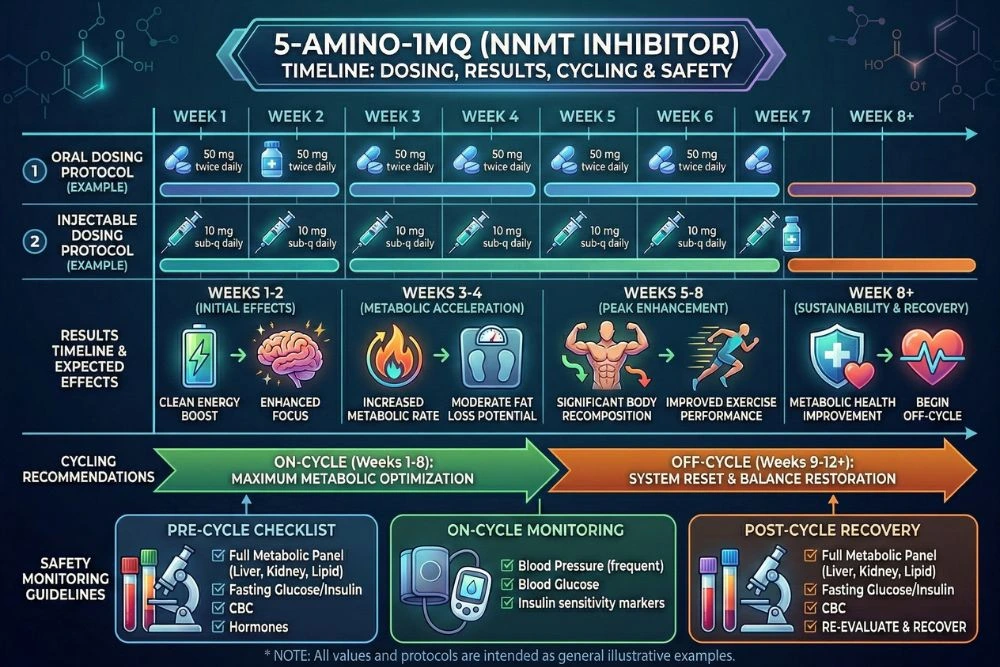
When to Expect Results
Based on research and anecdotal reports:
- Week 1-2: Increased energy and better sleep quality
- Week 3-4: Noticeable reduction in abdominal fat, improved muscle definition
- Week 6-8: Significant fat loss, better insulin sensitivity (if measured)
- Week 8-12: Maximum effects plateau, consider cycling off
Cycling Recommendations
Most protocols recommend:
- 8 to 12 weeks on
- 4 to 8 weeks off
- Reassess and repeat if needed
Cycling allows your body to maintain sensitivity to the compound and prevents potential long-term adaptations.
Side Effects and Safety Considerations
5-amino-1MQ has a relatively clean safety profile based on animal studies, but human data is limited.
Common Side Effects
Injection Site Reactions: Mild redness, swelling, or soreness where you inject. Rotate sites to minimize this.
Initial Fatigue: Some users report feeling tired for the first few days as metabolism adjusts. This usually resolves within a week.
Digestive Changes: Mild nausea or changes in bowel movements, especially with oral dosing.
Headaches: Occasional headaches, possibly related to changes in NAD+ metabolism.
Serious Concerns to Monitor
Long-term safety unknown: While mouse studies show no observable adverse effects, we do not have multi-year human safety data.
Potential interactions: Because 5-amino-1MQ affects NAD+ metabolism, it may interact with NAD+ precursors like NMN or NR. Some practitioners recommend taking them together, while others suggest avoiding combinations.
Rapid weight loss risks: Losing weight too quickly (more than 2 pounds per week) can cause gallstones, muscle loss, or nutritional deficiencies.
Who Should Avoid 5-Amino-1MQ
Do not use if you:
- Are pregnant or breastfeeding
- Have a history of eating disorders
- Have active cancer (NNMT may play a role in some cancers)
- Have severe kidney or liver disease
- Are under 18 years old
Always work with a healthcare provider who can monitor your progress and adjust protocols as needed.
5-Amino-1MQ vs. Other Fat Loss Compounds
How does 5-amino-1MQ compare to other popular fat loss options?
5-Amino-1MQ vs. GLP-1 Agonists (Semaglutide, Tirzepatide)
GLP-1 Agonists:
- Work by: Suppressing appetite and slowing digestion
- Weight loss: 15 to 20% of body weight
- Downsides: Nausea, muscle loss, rebound weight gain after stopping
5-Amino-1MQ:
- Works by: Blocking fat storage enzyme, improving cellular energy
- Weight loss: 5 to 10% of body weight (more modest but sustainable)
- Advantages: No appetite suppression, preserves muscle, improves metabolism
Learn more about GLP-1 options: Understanding GLP-1 Supplements.
5-Amino-1MQ vs. Tesamorelin
Tesamorelin:
- Works by: Stimulating growth hormone release to burn visceral fat
- Best for: Reducing deep belly fat
5-Amino-1MQ:
- Works by: Blocking NNMT to improve overall fat metabolism
- Best for: Whole-body fat loss and metabolic optimization
Many people stack these two peptides for comprehensive fat loss.
Learn more: Tesamorelin for Visceral Fat Loss.
Quality Sourcing and What to Look For
5-amino-1MQ is sold as a research chemical. Quality varies dramatically between suppliers.
Essential Quality Markers
When buying 5-amino-1MQ, verify:
- Third-party HPLC testing showing 98% or higher purity
- Mass spectrometry confirmation
- Certificates of analysis (CoA) for each batch
- Sterility testing for injectable forms
- Proper vacuum-sealed packaging
Learn to verify quality: How to Read a Certificate of Analysis.
Where to Buy 5-Amino-1MQ
We recommend verified suppliers with consistent third-party testing, positive customer reviews, and transparent business practices.
Disclosure: We may earn a commission from purchases made through links on this site. We only recommend suppliers we trust and have personally vetted.
Red Flags to Avoid
Do NOT buy from suppliers who:
- Cannot provide certificates of analysis
- Offer prices significantly below market rate
- Make outrageous weight loss claims
- Have no verifiable customer reviews
- Ship from unregulated countries
Frequently Asked Questions
How much weight can I expect to lose with 5-amino-1MQ?
Based on animal studies and anecdotal human reports, expect 5 to 10% body weight loss over 8 to 12 weeks when combined with proper diet and exercise. Individual results vary based on starting weight, metabolism, diet quality, and activity level. This is more modest than GLP-1 agonists but tends to be more sustainable with less muscle loss.
Can I take 5-amino-1MQ with other peptides or supplements?
Yes. Many people stack 5-amino-1MQ with tesamorelin for enhanced fat loss or with NAD+ precursors like NMN for additional anti-aging benefits. However, always start one compound at a time to assess individual tolerance. Consult a healthcare provider before combining multiple compounds.
Is oral or injectable 5-amino-1MQ better?
Injectable provides more consistent blood levels and requires lower doses because it bypasses digestion. Oral is more convenient but requires 2 to 3 times the dose. Both work, so choose based on your preference and tolerance for daily injections.
Will I gain the weight back after stopping 5-amino-1MQ?
Unlike appetite suppressants where weight often rebounds quickly, 5-amino-1MQ works by improving metabolic efficiency. If you maintain good diet and exercise habits after stopping, much of the weight loss should be sustainable. However, without continued NNMT inhibition, some metabolic advantages will diminish over time.
Is 5-amino-1MQ safe for long-term use?
We do not have long-term human safety data. Mouse studies showed no adverse effects during treatment periods, but extended multi-year data does not exist. Most protocols recommend cycling (8 to 12 weeks on, 4 to 8 weeks off) rather than continuous use. Work with a healthcare provider who can monitor your health markers.
Does 5-amino-1MQ work without diet and exercise?
The mouse studies showed weight loss without changes in food intake, suggesting the compound works metabolically. However, combining 5-amino-1MQ with a calorie-controlled diet and regular exercise produces significantly better results. Think of it as a metabolic enhancer, not a replacement for healthy lifestyle habits.
Conclusion: A New Approach to Stubborn Fat
5-amino-1MQ represents a fundamentally different approach to fat loss.
Instead of suppressing your appetite or forcing you to eat less, it targets the cellular machinery that tells your fat cells to store or release energy. By blocking the NNMT enzyme, it shifts your metabolism toward burning fat and preserving NAD+, a critical molecule for energy production and healthy aging.
The research is compelling. Mouse studies show dramatic fat loss without changes in food intake. The mechanism makes biological sense. Early human reports are promising.
But we need to be honest about what we do not know. Long-term human safety data does not exist. Optimal dosing is still being refined. Individual responses vary.
If you decide to try 5-amino-1MQ, do it intelligently:
- Work with a knowledgeable healthcare provider
- Start with lower doses and assess tolerance
- Source from reputable suppliers with third-party testing
- Combine with proper diet and exercise
- Monitor your results and adjust accordingly
For stubborn fat that refuses to respond to traditional methods, 5-amino-1MQ offers a scientifically grounded option worth exploring.
Want to explore other metabolic optimization strategies? Check out our Complete Guide to Peptides.
Official Research Disclaimer
The information provided in this guide is for informational and educational purposes only. 5-amino-1MQ is sold as a research chemical and is not FDA-approved for weight loss, metabolic enhancement, or any medical purpose. Research peptides and compounds are intended strictly for laboratory research and are not for human consumption or for the diagnosis, treatment, or prevention of any disease. All research should be conducted by qualified professionals in controlled environments with proper ethical oversight. The use of 5-amino-1MQ carries risks and long-term safety in humans has not been established. This article does not constitute medical advice. Always consult a licensed healthcare provider before using any research compound. Never disregard professional medical advice or delay seeking it because of information you read online. Weight loss should be approached with proper medical supervision. The author and publisher disclaim any liability for adverse effects resulting from the use or application of the information contained herein.