
Peptides and Polypeptides: Understanding the Molecular Differences
Differences between peptides and polypeptides? This guide breaks down the molecular distinctions, amino acid sequencing, & why chain length matters in research.
- Published
- Updated
- Reading time
- 6 min read
- Author
- By PeptidesFinder
On this page
In the world of biochemistry, terminology can often be the biggest barrier to understanding. You will frequently hear terms like "peptides," "polypeptides," and "proteins" used almost interchangeably. However, for researchers and students of metabolic science, these distinctions are not just semantic. They are structural.
The difference between peptides and polypeptides dictates how these molecules function, how they are synthesized in a lab, and how they interact with the human body.
This article explores the molecular hierarchy of these compounds. We will clarify the definitions, explore the importance of protein folding, and explain why a molecule's length determines its role as either a messenger or a building block.
The Amino Acid Hierarchy
To understand the difference, we must start at the foundation. All of these compounds are made of the same primary ingredient, amino acids.
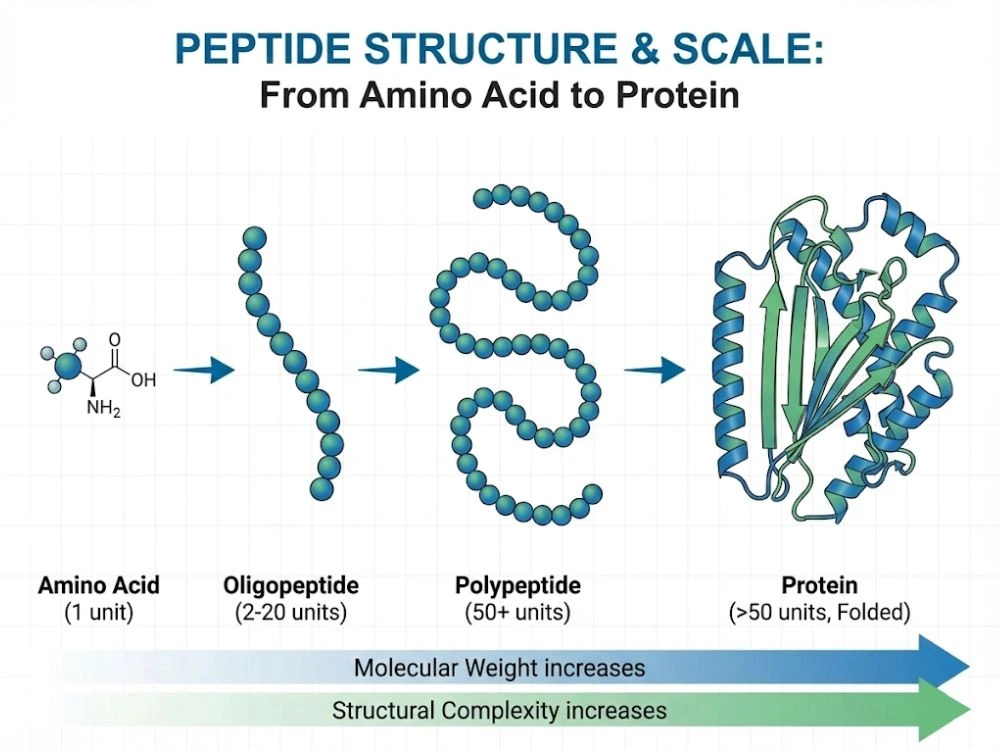
Think of amino acids as individual pearls.
- The Pearl: An Amino Acid.
- The Necklace: The chain created when amino acids link together.
The scientific classification of that "necklace" depends entirely on how many pearls are strung together.
-
Oligopeptides (The Smallest Chains)
These are the shortest chains, typically containing between 2 and 20 amino acids. When you read about research into "simple peptides" like synthetic bioregulators, you are often looking at oligopeptides. Because they are so small, they are highly stable and easily absorbed.
Learn more about the advantages of these small molecules in our guide on Simple Peptides: The Scientific Advantage of Short-Chain Research Compounds. -
Polypeptides (The Long Chains)
Once the chain exceeds approximately 50 amino acids, it is classified as a polypeptide. The term "poly" simply means "many." These longer chains have a higher molecular weight and a more complex structure. -
Proteins (The Functional End Product)
This is where the confusion often lies. A protein is made of one or more polypeptide chains that have folded into a specific 3D shape. According to the National Human Genome Research Institute, a polypeptide is just the linear chain, whereas a protein is the functional, folded biological machine.
Structure vs. Function: Why It Matters
The distinction between a peptide and a polypeptide is not just about counting amino acids. It is about folding.
Peptides (Signaling Molecules)
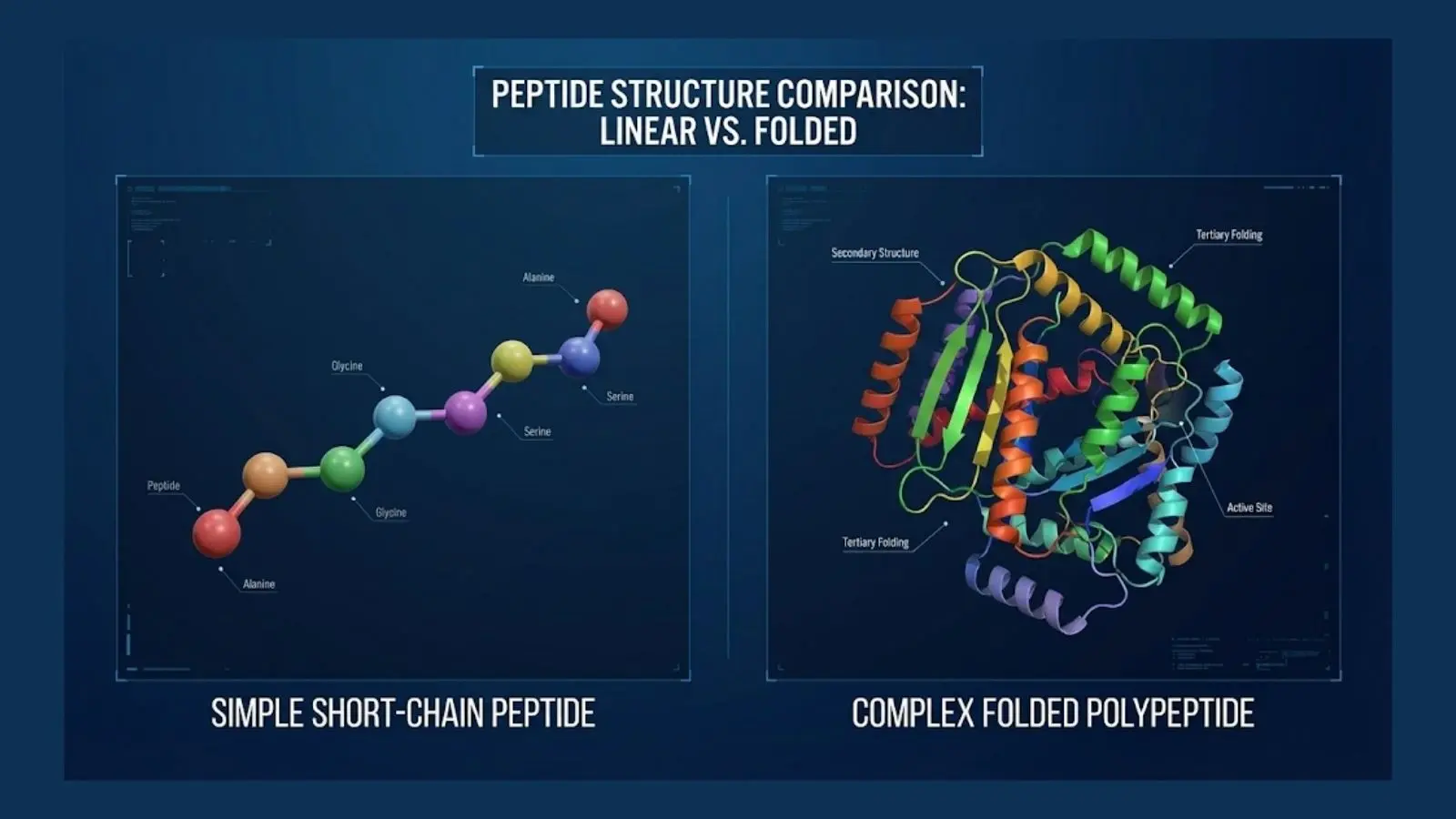
Because peptides are short, they are generally flexible and do not fold into complex, rigid 3D structures. This flexibility allows them to act as signaling molecules. They travel through the bloodstream and bind to receptors on cell surfaces, acting like a key entering a lock.
- Function: Communication. They tell the cell what to do.
- Example: GHK-Cu is a tripeptide (3 amino acids) that signals skin regeneration. Read the full science in GHK-Cu Copper Peptides: The Science of Skin Regeneration and Cellular Longevity.
Polypeptides & Proteins (Structural & Enzymatic)
As the chain gets longer (polypeptides), the amino acids interact with each other, causing the chain to twist, bend, and fold into a fixed shape. This structure allows them to perform mechanical work or catalyze reactions.
- Function: Structure and Action. They do the work.
- Example: Collagen is a massive structural protein that holds tissue together.
Synthesis in the Lab: Peptides vs. Polypeptides
For researchers, the difference in length drastically changes how these compounds are manufactured.
Short peptides are typically created using Solid-Phase Peptide Synthesis (SPPS). This is a chemical process where scientists build the chain one amino acid at a time. It is highly precise but becomes difficult and expensive as the chain gets longer.
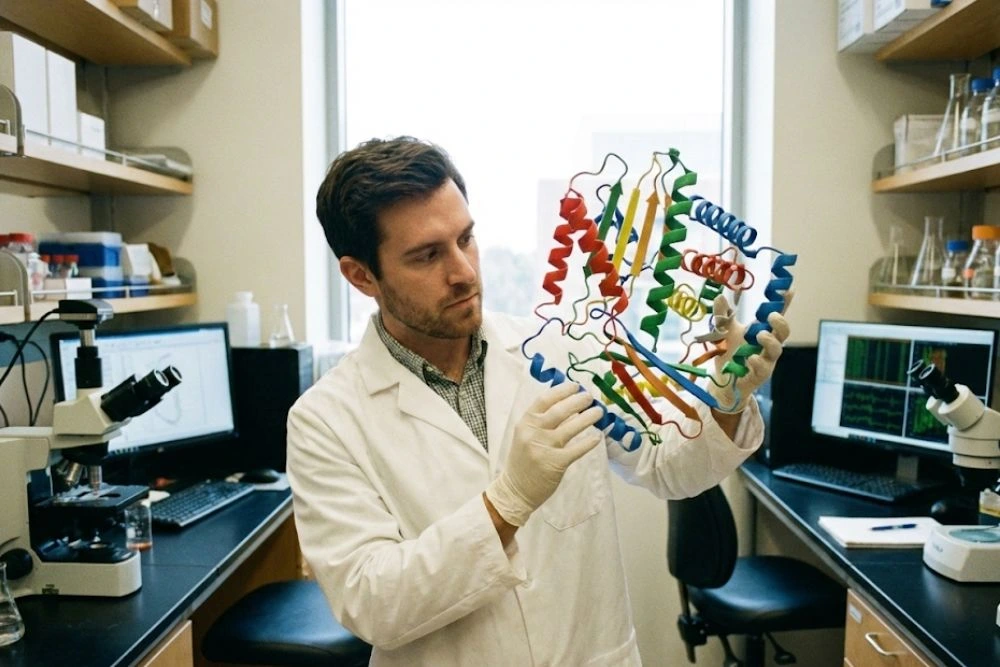
Polypeptides and proteins are often too large to be chemically synthesized efficiently. Instead, they are usually produced using Recombinant DNA Technology. This involves inserting a gene into bacteria or yeast cells, which then produce the protein naturally.
The pioneers of this field have spent decades refining these synthesis methods to make these therapies accessible. You can read about the history of these discoveries in Peptide Scientists: The Pioneers Who Transformed Modern Medicine.
The "Gray Area" in Classification
Science is rarely black and white. There is often debate about where the line is drawn. For example, Insulin consists of 51 amino acids. Some textbooks classify it as a large peptide, while others define it as a small protein.
Regardless of the label, the mechanism remains the priority. Whether it is a 3-amino-acid peptide like BPC-157 or a longer GLP-1 agonist, the goal of research is to understand how these sequences interact with human receptors.
See how BPC-157 mechanism works in BPC-157 Peptide: A Comprehensive Research Guide to Tissue Repair and Recovery.
Frequently Asked Questions
Conclusion
While "peptides and polypeptides" may sound like synonyms, they represent different scales of biological architecture. Peptides are the agile messengers, short chains that signal change. Polypeptides are the complex foundations, long chains that fold into the proteins that build our cells.
Understanding this distinction is the first step in navigating the complex world of biotechnology. As stated in a review by Nature Education, grasping the relationship between amino acid sequence and 3D structure is fundamental to modern drug design.
Official Medical Disclaimer
The information provided in this guide is for informational and educational purposes only. Peptides and GLP-1 research compounds are intended strictly for laboratory research and are not for human consumption or for the diagnosis, treatment, or prevention of any disease. All research should be conducted by qualified professionals in a controlled environment. The statements regarding these products have not been evaluated by the Food and Drug Administration (FDA). Always consult your local laws and institutional guidelines regarding the use of peptides in research. Always seek the advice of your physician or other qualified health provider with any questions you may have regarding a medical condition.