
Simple Peptides: The Scientific Advantage of Short-Chain Research Compounds
Why are researchers turning to simple peptides? We explain the stability and absorption benefits of short-chain amino acid sequences like GHK-Cu & Glutathione.
- Published
- Updated
- Reading time
- 5 min read
- Author
- By PeptidesFinder
On this page
In science, we often think that "bigger is better."
We assume that for a molecule to be powerful, it must be huge and complex. But modern research is proving that wrong. Some of the most powerful signals in the human body are actually very small.
These are known as simple peptides.
Unlike massive proteins, which can have thousands of links, these "minimalist" compounds are tiny. They often have just two or three amino acids. Yet, despite their size, they are changing how we study skin health, the brain, and healing.
This guide explains why scientists are falling in love with these short-chain sequences. We will look at why they are stable, how they get into cells, and which ones are leading the research in 2026.
What Is a "Simple" Peptide?
To see the advantage, you have to look at the shape.
Think of a standard protein, like insulin, as a giant ball of yarn. It is tangled and folded into a specific shape. If you heat it up or shake it, that shape unravels. When that happens, the protein stops working. This is called "denaturing."
In contrast, a short-chain molecule is like a short piece of string.
Definition: A chain of just 2 to 4 amino acids.
Size: Very small (low molecular weight).
Structure: Straight and flexible.
Because they are so small, they don't have a complex shape to lose. This makes them incredibly tough. They can survive in a lab setting much better than large, fragile proteins.
Internal Reference: Curious about the history of these discoveries? Read about the Peptide Scientists who first isolated these compounds.
3 Reasons Scientists Prefer Small Molecules
Why pick a small molecule over a big one? It comes down to three things: Getting inside, Staying alive, and Cost.
-
They Fit Through the Door (Permeability)
Imagine trying to move a sofa through a keyhole. That is what it's like trying to get a large protein into a cell. They often get stuck on the outside. Small molecules are like keys. They are tiny enough to slip right through the cell wall. This allows them to work inside the cell, where the real magic happens. -
They Are Harder to Destroy
Your body is full of enzymes that act like scissors. Their job is to cut up proteins. Large proteins are big, easy targets. But tiny dipeptides (two links) and tripeptides (three links) are harder for these enzymes to grab. This means they stay active in your system for longer. -
They Are Cheaper to Make
Building a massive protein in a lab is hard. It is expensive and easy to mess up. Building a 3-link chain is fast, cheap, and very pure. This makes research affordable for more labs.
Famous Examples You Should Know
You probably know some of these names already. You might not have realized they were "simple."
GHK-Cu (The Copper Tripeptide)
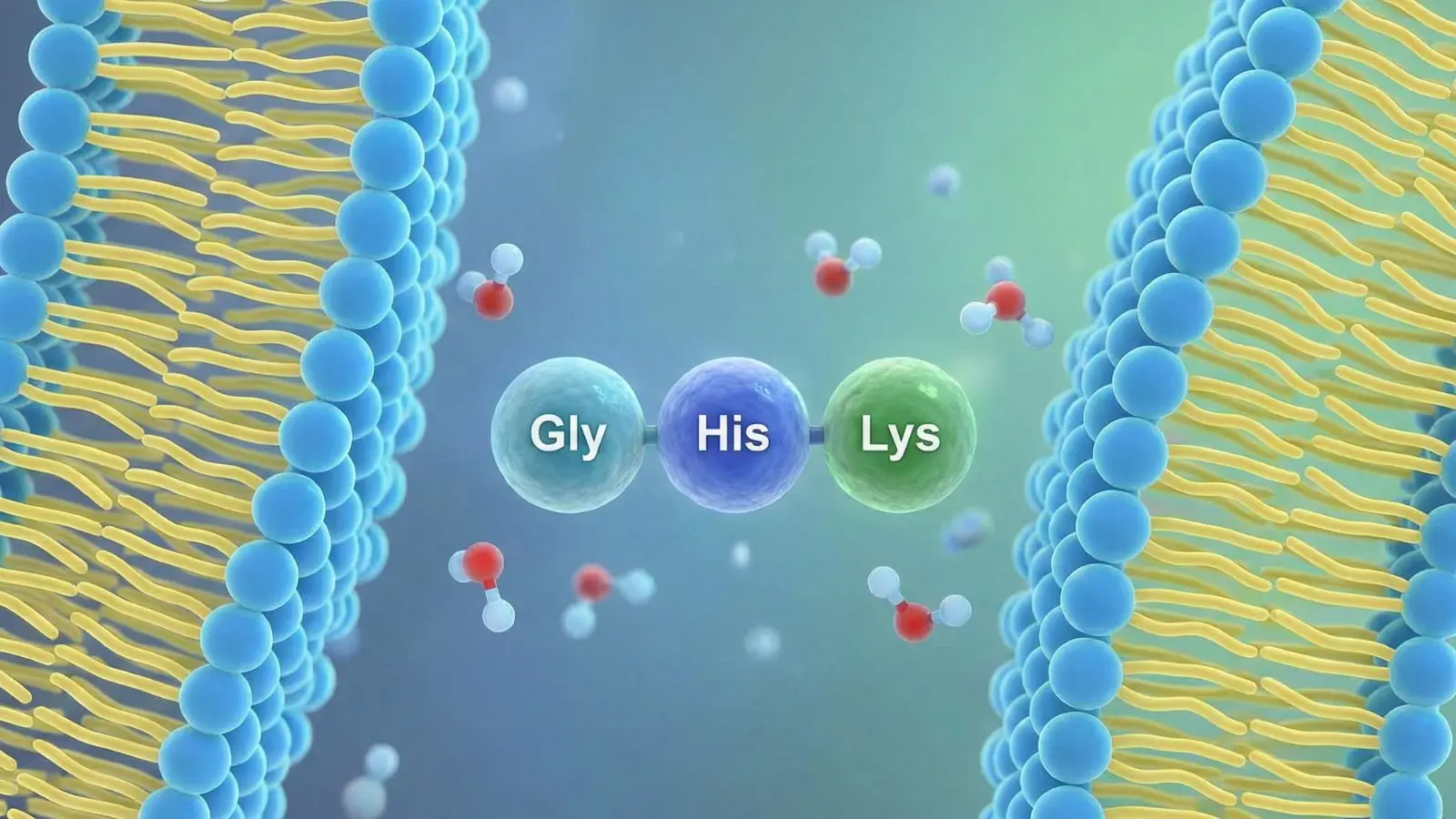
This is the most famous example. It is made of just three amino acids: Glycine, Histidine, and Lysine.
What it does: It grabs onto copper ions like a magnet. It is famous for resetting genes to a younger state and tightening skin.
Internal Reference: We wrote a full guide on this. Check out GHK-Cu Copper Peptides: The Science of Skin Regeneration.
Video: GHK-Cu Explained
Watch this breakdown to see how a simple 3-amino acid chain can have such massive biological effects.
Glutathione (The Detoxifier)
This is the "Master Antioxidant." It is a simple chain of Glutamine, Cysteine, and Glycine. Every cell in your body uses it to clean up toxins and fight stress.
RGD Peptides (The Velcro)
This sequence (Arginine-Glycine-Aspartic Acid) acts like glue. It helps cells stick to things. Doctors use it to coat medical implants so the body accepts them instead of rejecting them.
Why Accuracy Is Everything
Small doesn't mean weak. These compounds are very potent.
A common mistake is thinking you can "eyeball" the dose because the molecule is simple. This is dangerous. Researchers buy these peptides as a white powder. You must mix them with water very carefully.
If you are off by even a tiny amount, your data will be wrong.
Internal Reference: Never guess. Always use a tool to be safe. Use our Peptide Calculator to get your measurements right every time.
The Future: Less Is More
Medicine is changing. Scientists are realizing they don't need the whole hormone to get a result. They just need the "active button"—the tiny part of the molecule that does the work.
By cutting away the junk and keeping just the active fragment, we can create drugs that work better and last longer.
Frequently Asked Questions
Are small peptides easier to absorb?
Yes. Because they are so light, they pass through the gut and skin much easier than heavy proteins.
Do I need to keep them cold?
Yes. Even though they are tough, you should keep them in the fridge after you mix them. This stops bacteria from growing.
Can they cross the blood-brain barrier?
Some can. Because they are small and often love fat (lipophilic), certain dipeptides can slip into the brain. This makes them great for studying memory and focus.
Is collagen a simple peptide?
Sort of. Collagen supplements are a mix. They contain some tiny chains and some longer ones.
Conclusion
In the end, simple peptides prove a big point: you don't need to be huge to be strong.
By stripping away the bulk, these tiny chains offer a precise and stable way to do research. From healing skin with GHK-Cu to protecting cells with Glutathione, these small molecules are the unsung heroes of biology.
Official Medical Disclaimer
The information provided in this guide is for informational and educational purposes only. Peptides and GLP-1 research compounds are intended strictly for laboratory research and are not for human consumption or for the diagnosis, treatment, or prevention of any disease. All research should be conducted by qualified professionals in a controlled environment.
The statements regarding these products have not been evaluated by the Food and Drug Administration (FDA). Always consult your local laws and institutional guidelines regarding the use of peptides in research. Always seek the advice of your physician or other qualified health provider with any questions you may have regarding a medical condition.