
What Are Polypeptides? A Deep Dive into Protein Synthesis
What are polypeptides? We explain their biochemistry, how they differ from proteins, and their essential role in human cell synthesis.
- Published
- Updated
- Reading time
- 5 min read
- Author
- By PeptidesFinder
On this page
If you have ever read a biology textbook or browsed a supplement label, you have likely encountered the term polypeptide.
It is a word often used interchangeably with "protein" or "peptide," but in the precise world of biochemistry, these terms have distinct meanings. Asking "what are polypeptide chains?" is the key to understanding how your DNA actually controls your body.
These chains are the intermediate step between your genetic code and the physical tissues of your body. They are the raw, unfolded ribbons of amino acids that eventually twist and fold to become enzymes, hormones, and muscle fibers.
In this guide, we will move beyond the basics of the simple peptide bond and explore the complex machinery of protein synthesis. We will examine how the cell constructs these massive chains and the specific moment a polypeptide officially becomes a functional protein.
The Definition: A Chain of Many Links
The word breaks down into two parts:
Poly: Many.
Peptide: The specific bond connecting amino acids.
Therefore, a polypeptide is a single, continuous, unbranched chain of amino acids linked together by peptide bonds.
According to Britannica Science, the distinguishing feature of a polypeptide is its size. While a "peptide" might have 2 or 10 amino acids, a polypeptide typically contains anywhere from 10 to over 100. However, it is not yet a "protein." It is simply the linear string, like a piece of yarn before it is knitted into a sweater.
To understand the chemical "glue" holding this chain together, review our previous guide on Peptide-Peptide Bonds: The Chemistry of Connection.
How Are Polypeptides Made? (The Central Dogma)
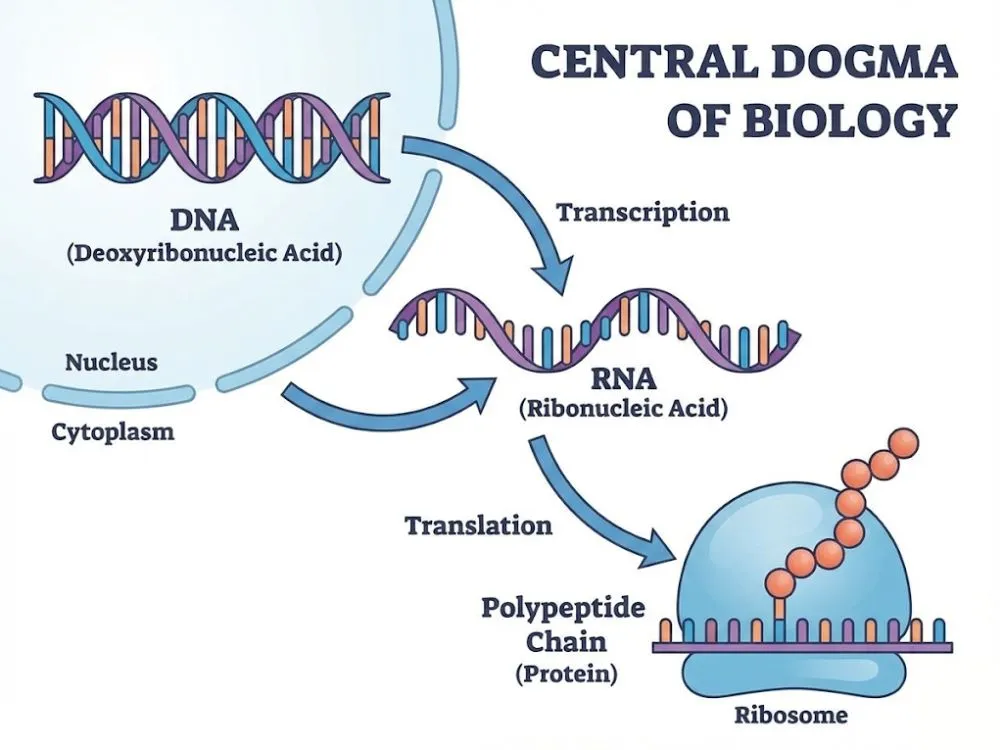
Polypeptides are not made randomly; they are manufactured by the cell through a process called The Central Dogma of Biology. This involves two major steps: Transcription and Translation.
-
Transcription (The Blueprint)
Inside the nucleus, your DNA holds the master instructions. An enzyme copies a specific gene into a messenger molecule called mRNA (messenger RNA). -
Translation (The Assembly Line)
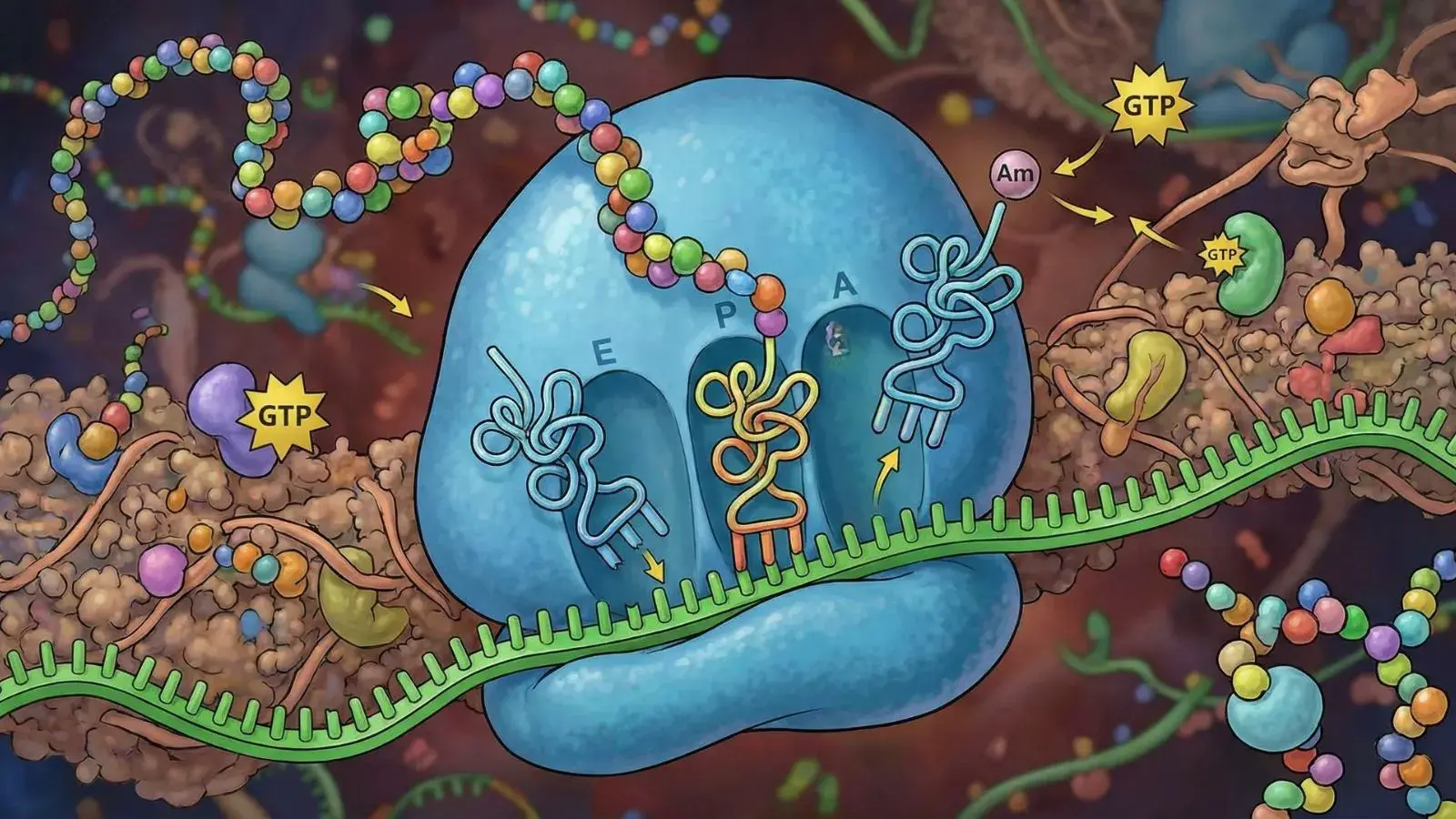
This is where the polypeptide is born. The mRNA travels to the ribosome (the cell's factory).
As detailed in the comprehensive guide by Nature Scitable, the ribosome acts like a molecular machine. It reads the mRNA code three letters at a time (codons) and matches them with specific amino acids. It then mechanically "stitches" these amino acids together via peptide bonds, elongating the polypeptide chain step-by-step.
Folding: When a Polypeptide Becomes a Protein
This is the most critical concept to grasp. A polypeptide is just a string. A protein is a machine.
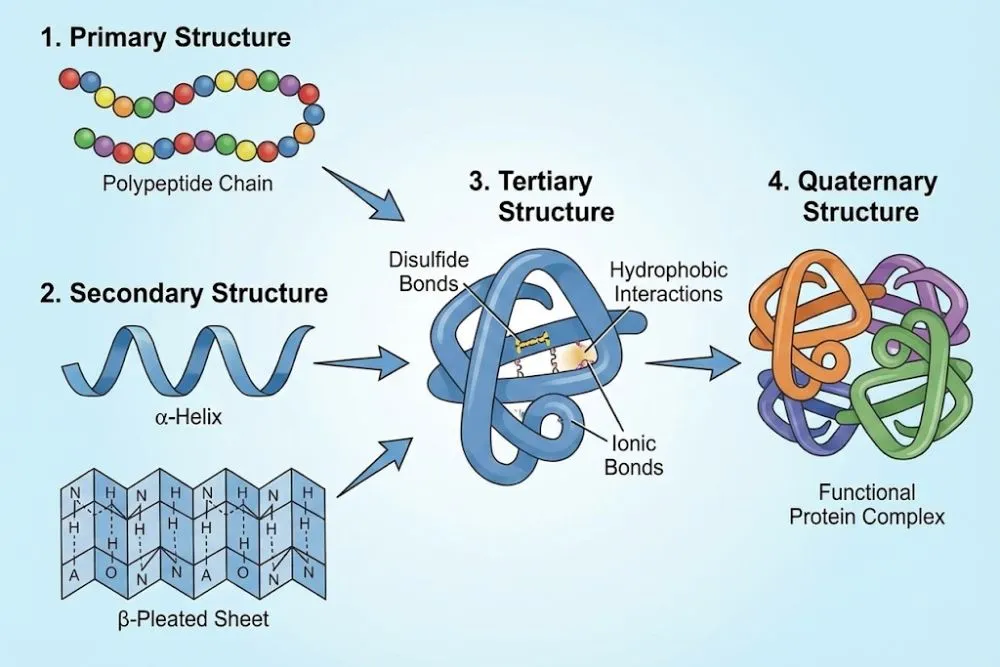
For a polypeptide to function, it must fold into a specific 3D shape. This folding is driven by the interactions between the amino acids in the chain.
Primary Structure: The linear sequence of the polypeptide.
Secondary Structure: The chain begins to twist into Alpha-helices or Beta-sheets.
Tertiary Structure: The 3D folding of the entire chain.
As explained in the textbook Molecular Biology of the Cell (NCBI Bookshelf), it is this final folded shape that determines function. If the polypeptide folds incorrectly, it is useless (or even dangerous, as seen in prion diseases).
Internal Reference: We see this folding in action with collagen, where three polypeptide chains twist together. Read more in Collagen Polypeptides: The Structural Architecture of Youth.
Synthetic Polypeptides in Research
In the lab, scientists can now synthesize polypeptides without using a cell. This is known as Solid-Phase Peptide Synthesis (SPPS).
This technology allows researchers to create custom polypeptide chains that do not exist in nature. These "designer" polypeptides are used to:
- Mimic Hormones: Creating longer-lasting versions of natural signals (like GLP-1).
- Drug Delivery: Creating polypeptide "shells" to carry drugs into cells.
- Vaccines: Synthesizing viral polypeptide fragments to train the immune system.
Frequently Asked Questions
What is the difference between a polypeptide and a protein?
A polypeptide is the linear chain of amino acids. A protein is the functional, folded end-product. Think of it this way: The polypeptide is the string; the protein is the knot. Some proteins are made of just one folded polypeptide, while others (like Hemoglobin) are made of multiple polypeptide chains stuck together.
How many amino acids make a polypeptide?
There is no strict cutoff, but generally, chains with fewer than 50 amino acids are called "peptides," and chains with more than 50 are called "polypeptides" or "proteins."
Do polypeptides have a charge?
Yes. The ends of the chain (N-terminus and C-terminus) and the side chains of specific amino acids (like Lysine or Aspartic Acid) can be positively or negatively charged. This charge is vital for how the polypeptide folds and interacts with water.
Can you eat polypeptides?
Yes. Every time you eat meat, eggs, or beans, you are eating polypeptides. Your digestive system uses enzymes (proteases) to chop these long chains back down into single amino acids so your body can absorb them.
Is Insulin a polypeptide?
Yes. Insulin starts as a single long polypeptide chain called "Preproinsulin." It is then cut and folded into two shorter chains linked by disulfide bridges to become the active insulin hormone.
Conclusion
When you ask "what are polypeptide chains," you are asking about the very fabric of life. They are the bridge between the information in your DNA and the physical reality of your cells.
Whether synthesized by a ribosome in your body or a machine in a lab, these chains represent the fundamental language of biology. By mastering this language, science is moving from simply observing life to actively engineering it for better health and longevity.
Official Medical Disclaimer
The information provided in this guide is for informational and educational purposes only.
Peptides and GLP-1 research compounds are intended strictly for laboratory research and are not for human consumption or for the diagnosis, treatment, or prevention of any disease. All research should be conducted by qualified professionals in a controlled environment. The statements regarding these products have not been evaluated by the Food and Drug Administration (FDA). Always consult your local laws and institutional guidelines regarding the use of peptides in research. Always seek the advice of your physician or other qualified health provider with any questions you may have regarding a medical condition.