
Collagen Polypeptides: The Structural Architecture of Youth
What are collagen polypeptides? We explore the triple-helix biochemistry of these proteins, how they maintain skin elasticity, and why breakdown leads to aging.
- Published
- Reading time
- 6 min read
- Author
- By PeptidesFinder
On this page
When we look in the mirror and see the first signs of aging, fine lines, sagging skin, or joint stiffness, we are witnessing a structural failure.
We often think of aging as "wear and tear," but biologically, it is a degradation of your body's internal scaffolding. The steel beams holding up the building are beginning to rust. In the human body, those beams are made of collagen polypeptides.
While the market is flooded with "collagen powders," few people understand the actual biochemistry of the molecule itself. What makes this protein so strong? How does a string of amino acids become a load-bearing cable capable of holding your skin tight against gravity?
This guide dives into the microscopic architecture of youth. We will explain the unique "triple helix" of collagen polypeptides, the amino acid code that defines them, and how to protect this vital infrastructure as you age.
Defining the Term: What Are Collagen Polypeptides?
To understand the polypeptide, we must zoom in on the hierarchy of protein structure.
Collagen is not just one blob of protein. It is a complex rope made of smaller strands twisted together. These individual strands are the collagen polypeptides, often referred to by biochemists as "alpha chains."
The Hierarchy of Strength:
- Amino Acids: The individual bricks (Glycine, Proline).
- Polypeptide Chain (Alpha Chain): A long string of amino acids linked together.
- Tropocollagen: Three polypeptide chains twisted into a helix.
- Collagen Fibril: Many helices bundled together (like a steel cable).
When you hear the term "collagen polypeptides," it refers to those individual strands before they are bundled. These chains are the primary "thread" from which the fabric of your body is woven. If you want to understand exactly how these chains differ from other peptides, check out our guide on Peptides vs. Polypeptides: Understanding the Molecular Differences.
The "G-P-Hyp" Motif: The Secret Code
What makes a collagen polypeptide different from a muscle polypeptide? The answer lies in its specific amino acid sequence.
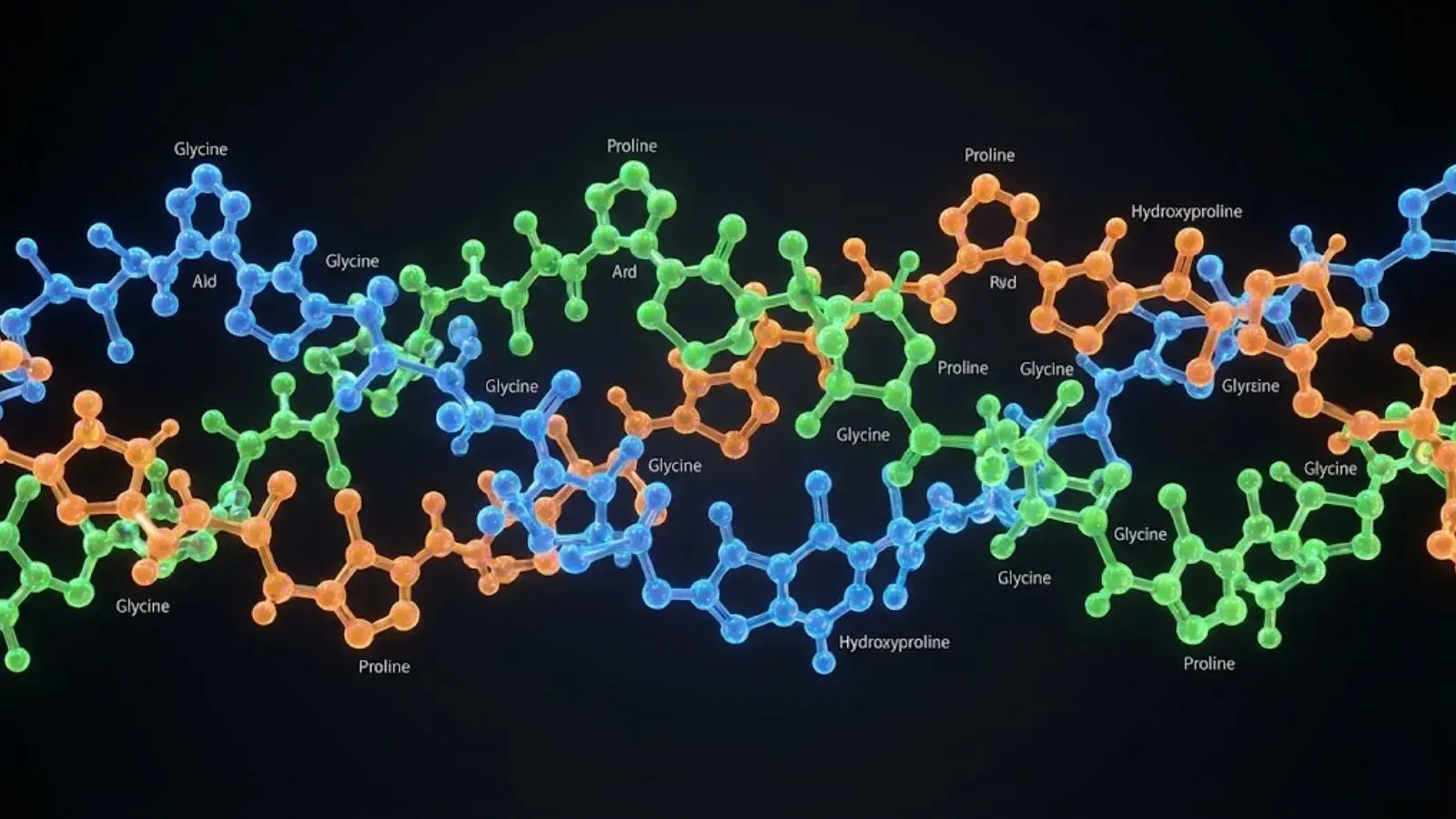
Collagen is unique because it follows a strict, repetitive code known as the Gly-X-Y motif.
- Gly (Glycine): Every third amino acid is Glycine. It is the smallest amino acid, allowing the chain to bend and twist tightly.
- X (Proline): Usually Proline, which adds stiffness and stability.
- Y (Hydroxyproline): A modified version of Proline that acts like "glue," stabilizing the triple helix through hydrogen bonding.
According to the National Center for Biotechnology Information (NCBI), this specific repeating sequence is what allows the three polypeptide chains to wind around each other so tightly that they become stronger than steel gram-for-gram.

The Triple Helix: Nature's Rope
The magic of collagen happens when three of these polypeptide chains come together. They twist around a central axis to form a triple helix.
This shape is not accidental. It is the most efficient design for tensile strength (resistance to being pulled apart). This is why collagen is found in tissues that need to stretch and recoil, like your skin, tendons, and arteries.
The Vitamin C Connection
You cannot build this helix without Vitamin C. The enzyme that creates Hydroxyproline (prolyl hydroxylase) requires Vitamin C as a cofactor. Without it, the polypeptide chains cannot stick together. The helix falls apart, leading to weak tissue—a condition historically known as scurvy.
Aging: The Fragmentation of Polypeptides
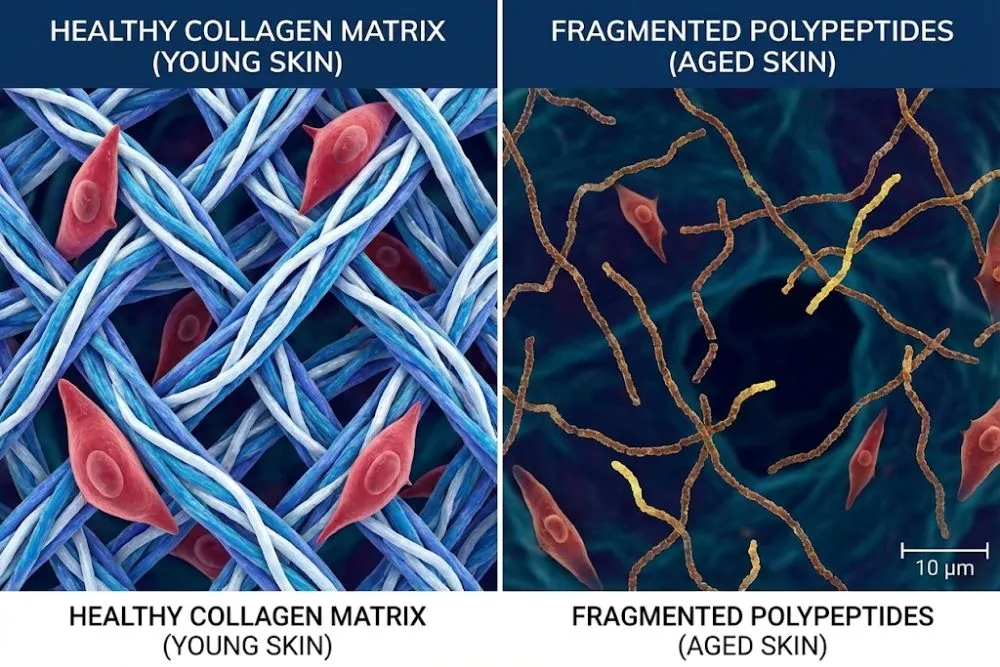
In youth, your collagen polypeptides are long, organized, and tightly bundled. This is what gives young skin its "snap" and firmness.
As we age, two things happen:
- Reduced Synthesis: Your fibroblasts (the builder cells) slow down production.
- Increased Fragmentation: Enzymes called Matrix Metalloproteinases (MMPs) start snipping the long polypeptide chains into smaller, useless fragments.
According to research published in the International Journal of Molecular Sciences, UV radiation (sunlight) dramatically accelerates this process, increasing MMP expression and literally cutting the "ropes" that hold your skin up. This fragmentation causes the structural collapse we see as wrinkles.
Can You Supplement with Polypeptides?
This brings us to the most common question: Can you just eat collagen polypeptides to replace the old ones?
Yes and No. You cannot eat a whole polypeptide chain and have it paste itself directly into your skin. Your digestive system is designed to break proteins down.
However, when you ingest Hydrolyzed Collagen (which is collagen polypeptides pre-cut into smaller pieces), you are flooding your bloodstream with that specific "G-P-Hyp" amino acid code. This high concentration of Glycine and Proline acts as a signal. It tricks your fibroblasts into thinking your body is losing collagen, triggering them to wake up and synthesize new polypeptide chains from scratch.
This mechanism is why many biohackers combine oral collagen with signaling peptides like GHK-Cu Copper Peptides to maximize the repair signal.
Frequently Asked Questions
Conclusion
Collagen polypeptides are the silent heroes of human anatomy. They are the microscopic cables that keep us upright, flexible, and youthful.
While we cannot stop the clock, understanding the biochemistry of these chains gives us the power to slow the breakdown. By protecting our existing collagen from sun and sugar, and fueling our body with the right amino acid precursors, we can maintain our structural architecture for as long as possible.
Official Medical Disclaimer
The information provided in this guide is for informational and educational purposes only. Peptides and GLP-1 research compounds are intended strictly for laboratory research and are not for human consumption or for the diagnosis, treatment, or prevention of any disease. All research should be conducted by qualified professionals in a controlled environment. The statements regarding these products have not been evaluated by the Food and Drug Administration (FDA). Always consult your local laws and institutional guidelines regarding the use of peptides in research. Always seek the advice of your physician or other qualified health provider with any questions you may have regarding a medical condition.